
Article
Culture
Digital
Fun & play
4 min read

Fun is dead

When video games turn play into work, we need to play without fear of consequences.

Simon Walters is Curate at Holy Trinity Huddersfield.

A woman stand in front of a large video screen displaying the Space Invaders title, hold her hands out in front of her.
Photo by Andre Hunter on Unsplash.

Imagine there’s been a sudden change in plans. The evening meeting is cancelled at the last minute, or your friend is sick and can’t come round. There are no looming tasks that need doing, so you set out to have some fun. What do you do? 

Karen Heller’s recent article in the Washington Post suggests that we don’t really know how to answer that question. ‘Fun is dead’, proclaims the headline, and her analysis is simultaneously insightful and depressing. Weddings have become stressful extravaganzas, holidays require a constant stream of activity, retirements should have a purpose and a plan. Our fun, our play, requires a reason to exist. Can we have fun without it having some larger purpose? Can we play without needing to post it on social media? Everyone else, it seems, is having much more fun than we are. 

Take video games. You might think this ought to be the very definition of a playful activity, one with no particular end or purpose in mind. But even here, it seems we don’t know how to have fun without some type of incentive. Conversations about video games online are frequently so self-serious and toxic that you’d be forgiven for thinking that it was a matter of life and death, not differing preferences about fun. Some of the world’s biggest games – things like Fortnite, Genshin Impact, and EA Sports FC – give rewards to players who turn up to play every day. It sounds generous until the psychological hooks of these methods grip you far past the point of fun. Players talk about not being able to sustain more than one of these types of games, because otherwise they won’t be able to keep up. What starts as play quickly turns into a form of work. 

The world of play is a world of grace, where we are free to find pleasure in an activity on its own merits. 

I am as much a sucker for this method as the next person. I find myself drawn to games which start out as free and fun, but the fun inevitably seems to turn into a chore that I cannot dislodge. There is an unwritten pressure to turn up to play every day to complete daily tasks and keep up with the competition. I end up feeling guilty for wasting my time playing games, and anxious to keep up with what’s required when I do. No wonder, with all these contradictory pressures on play, I find myself more often than not vegetating in front of Netflix rather than really playing. 

This is all a bit of a first world problem and might seem like another depressing indictment of modern society, but perhaps it shouldn’t be that surprising. As humans, we are always looking for some way to justify ourselves, some way of finding proof that what we do matters. Play, by contrast, demands that we step into a different sort of world. The world of play is a world of grace, where we are free to find pleasure in an activity on its own merits, and not for anything we might get from it in the end. Play, in its best sense, is purposeless apart from the joy of playing. "When we try to give our playful activities some wider purpose for why they matter, we are turning them into something else." 

The world of the Christian faith is not often seen as a playful one. It seems so very serious, dealing as it does with matters of life and death. But within the serious world of the Church, a space for play emerges. After all, it is first and foremost a world of forgiveness from what we have done wrong in the past, present, and future. This forgiveness takes away the fear of failure. Whether I am greatly successful or not I am loved and forgiven by God. This is God’s gift, which cannot be earnt and cannot be lost. 

The result, perhaps surprisingly, is that I am free to play, because I do not need my play to achieve anything for me. As the theologian Simeon Zahl puts it,  

In play a person is free to engage with the world creatively, actively, energetically, but without fear of ‘serious’ consequences. The Christian is free to play with things that once seemed deadly serious, to find delight in what were formerly objects of fear, and to take themselves much less seriously. 

In the world of video games, this idea is perhaps most clearly seen in the games produced by the Japanese game developer Nintendo. Their games, from Mario to Zelda, epitomize a vision for gaming which is driven by creating joy for whoever is playing, and not unnecessarily burdensome tasks. One of their best games of last year, The Legend of Zelda: Tears of the Kingdom, doesn’t offer a prescriptive path for how players should approach its challenges. Instead, the player is given a toolkit and set loose to use it in the world as they see fit. The result is a sense of joyful freedom, a feeling that its world is full of delight and even silliness. It gave me some of the most fun playing games in recent years, without me even coming close to finishing it. 

It's this playful attitude that I want to take into the rest of my life. What would it look like for us to see the world as a playground rather than an exam hall? The result wouldn’t just be a lot more fun. I think it would also be deeply Christian. 
Snippet
Comment
Politics
Work
3 min read

Who’d be an MP today?

A vulnerable vocation that we should all consider

Jamie is Vicar of St Michael's Chester Square, London.

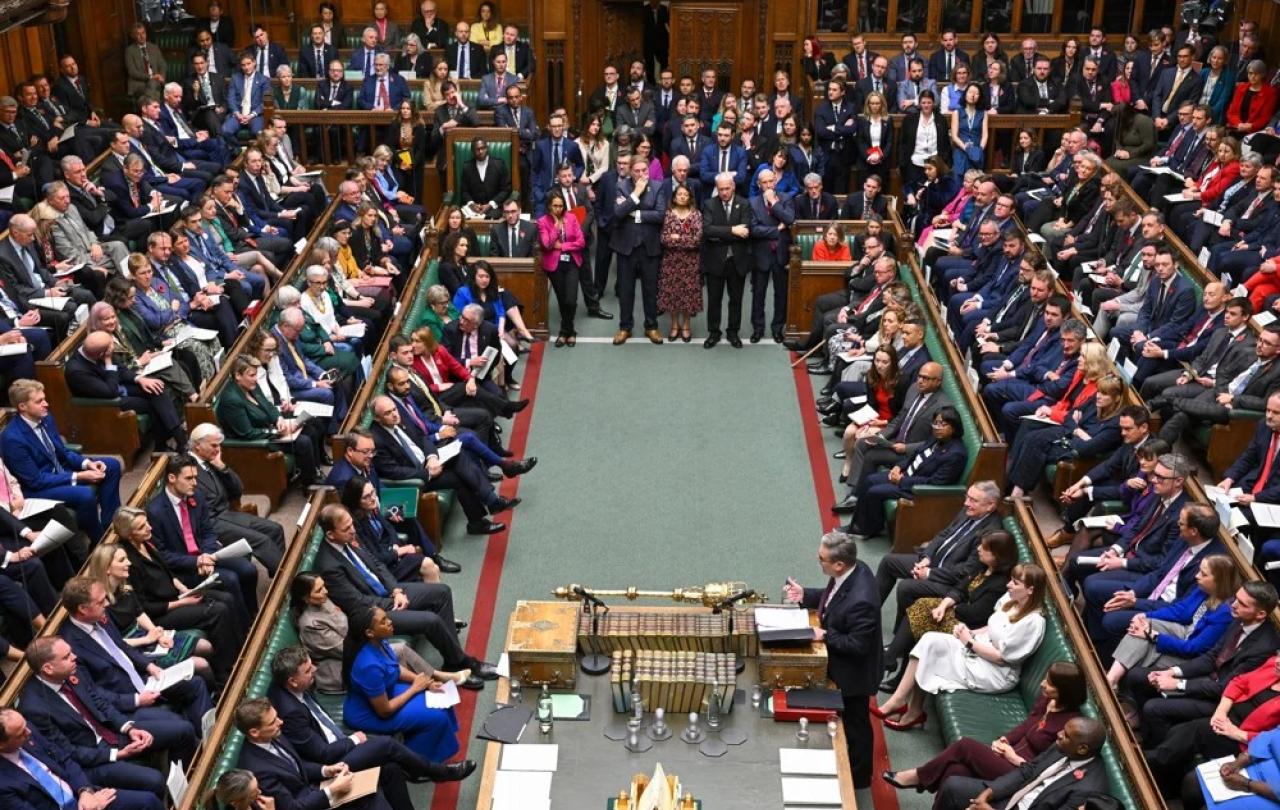
MPs sit and stand in a crowded parliament.
The House of Commons sits, and stands.
Houses of Parliament.

Last year, 132 Members of Parliament headed for the exit. Of course, the reasons for this vary, but the unsustainable nature of the role must be factored in. As the Westminster Parliament returns for another session, who on earth would want to be an MP in today's day and age?  

Most starkly, we saw the murders of Jo Cox and Sir David Amess, with the latter writing in 2020 that the fear of attacks "rather spoilt the great British tradition of the people openly meeting their elected politicians". Herein lies much of the issue of being an MP today: accessibility. They might be highly insulated within the Palace of Westminster, but within their phones and outside of those gates they are always available, and always on, with slings and arrows that are verbal and violent. 

The combination of abuse and accessibility is a potent force. It's not limited to the MPs themselves. Dr Ashley Weinberg, an occupational psychologist from the University of Salford, said that 49.5 per cent of MPs' staff suffering from distress was double the level experienced by the general population. Those in vocation-based work need some boundaries as capes don't come with the parliamentary pass.  

And if the exit sign is so alluring, how do we remove barriers to entry? In Why We Get the Wrong Politicians, Isabel Hardman writes that seeking a seat is 'the most expensive and time-consuming job interview on earth'. Only to be met by remuneration that doesn't quite make up for the package deal. Of course, there's the uber-keen. Morgan Jones, writing in The New Statesman, notes 'People who want to be MPs really want to be MPs. They are willing to try and try again: in the footnotes of the careers of many now-prominent politicians, one finds unsuccessful first tilts at parliament.'  

Being adopted, working class, a mum, a carer, and a cancer survivor didn't stop Conservative MP Katherine Fletcher from standing as an MP. In fact, it all contributed to it: 'You stand on a podium and say, "Vote for me please!" To do it properly you have to bring your whole self.' The sense of calling to a vocation comes from a frustration, where she found herself yelling at the TV, intersecting with our core experiences and values. 

Even with five-year terms, there's an inherent reactivity in the daily nature of being an MP. Where is the space to think? To really reflect. In a plaintive but not totally despairing summer article, Andrew Marr, the veteran observer of politics, wrote more broadly about British society: 'What is new and disorientating is that we have so few storytellers to shake us or point a way ahead… This means that we push our anxieties, our frustrated hopes and our confusion even more on to the shoulders of political leaders who are entirely unsuited to bearing the weight.' As we lack imaginative drive, 'The fault is not in our stars but in ourselves.'  

We need everyone from poets to plumbers to make this society work. And there's the question of vocation: where does my gifting and passion meet the needs of our society that solves problems or inspires others to? 

We rightly have high expectations of our leaders, and project our hopes and fears onto their blank canvases. But their canvasses aren't blank. They are crammed with the urgent and important. We can't expect our politicians to do and be everything - and we all need to play our part. Our blame-and-shame culture finds hysterical, theatrical representation at Prime Minister's Questions. Sir Tony Blair said that 'A private secretary would come in and say: "Well, Prime Minister, a grateful nation awaits." I would follow him out feeling as if I was going to my execution.' The agonistic, antagonistic design of the House of Commons, where one side is pitted against the other, has ripples in our society with an increasingly antagonistic public discourse.  

In pointing the finger we have three pointing back at ourselves. As Jesus famously said, 'Why do you look at the speck of sawdust in your brother’s eye and pay no attention to the plank in your own eye?' 

Our vote at the ballot box may be our exercise of judgement. But before scathing our members of parliament, it's worth us first asking 'what have I done as a member of the public?' 

Support Seen & Unseen

Since Spring 2023, our readers have enjoyed over 1,500 articles. All for free. 
This is made possible through the generosity of our amazing community of supporters.

If you enjoy Seen & Unseen, would you consider making a gift towards our work?
 
Do so by joining Behind The Seen. Alongside other benefits, you’ll receive an extra fortnightly email from me sharing my reading and reflections on the ideas that are shaping our times.

Graham Tomlin
Editor-in-Chief