Article
Assisted dying
Comment
Culture
Politics
5 min read

The assisted dying debate revealed the real role of Parliament

MPs from areas where people are vulnerable and at risk were more sensitive to the dangers.

Mehmet Ciftci has a PhD in political theology from the University of Oxford. His research focuses on bioethics, faith and politics.

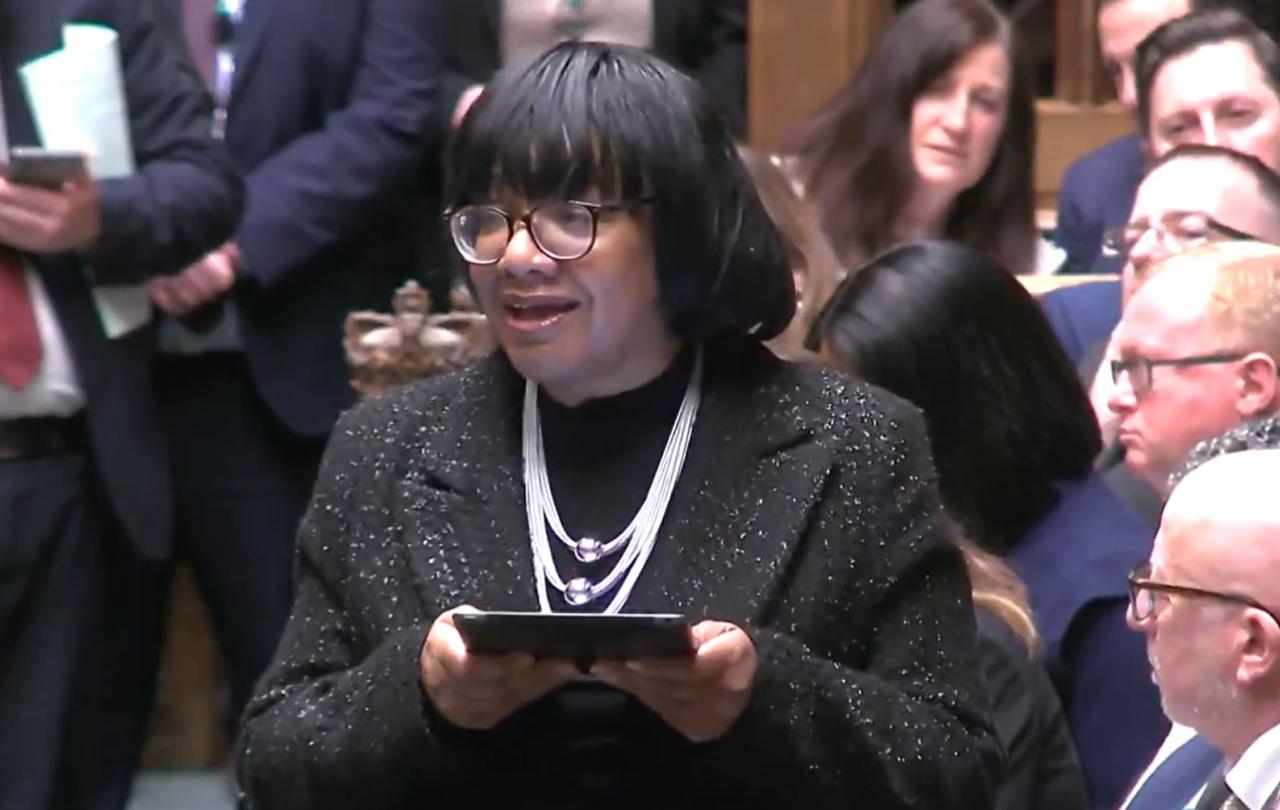
An MP stands and speaks in a parliamentary debate.
MP Diane Abbott speaks in the debate.
Parliament TV.

What would be the effect of allowing assisted suicide for those ‘people who lack agency, the people who know what it is to be excluded from power and to have decisions made for them’, asked Danny Kruger MP, as he wrapped up his speech? ‘What are the safeguards for them? Let me tell the House: we are the safeguard—this place; this Parliament; you and me. We are the people who protect the most vulnerable in society from harm, yet we stand on the brink of abandoning that role.’  

His words capture an important aspect of Friday’s debate: what is the point of Parliament? Do MPs meet to turn public opinion polls into policies? If the majority are in favour of something, do MPs have nothing left to do but to follow the public and sort out the fine details? We might instinctively say ‘Yes!’ It seems right and democratic to treat those whom we elect as people we select and send to do our bidding. And the polls do seem to show the majority of people supporting assisted suicide, at least in principle – although there are good reasons to be sceptical about those figures and about the conclusions drawn from them.   

But there are numerous times when the majority are known to be in favour of something but politicians refuse to endorse it. Polls repeatedly show that a majority are in favour of reintroducing the death penalty. Why might it be right for MPs sometimes to ignore what the purported majority thinks and to use their own judgement?  

Because Parliament is not just a debating chamber.  

An older way of referring to it was to call it the ‘High Court of Parliament’ because ‘parliament, classically, was where individuals could seek the redress of grievances through their representatives,’ as law lecturer Dr Robert Craig writes. It performed its function admirably in response to the Horizon scandal: a legitimate grievance was brought to its attention, and it responded to redress the wrongs done to the sub-postmasters by passing a law to ‘overturn a series of judgments that could only have been obtained, and were only obtained, by a toxic, captured and wilfully blind corporate culture’.   

Friday’s debate featured many MPs who understood what they were there to do. They acknowledged the ‘terrible plight of the people who are begging us for this new law’ as Danny Kruger said. But they also spoke up for those who were in danger of being harmed and wronged by the bill: the disabled and the dying, and all the vulnerable who were not there to speak on their own behalf.  

Many echoed the concerns expressed by Diane Abbott about coercion: ‘Robust safeguards for the sick and dying are vital to protect them from predatory relatives, to protect them from the state and, above all, to protect them from themselves. There will be those who say to themselves that they do not want to be a burden. …  Others will worry about assets they had hoped to leave for their grandchildren being eroded by the cost of care. There will even be a handful who will think they should not be taking up a hospital bed.’ And evidence of coercion is hard to find and trace: ‘Coercion in the family context can be about not what you say but what you do not say—the long, meaningful pause.’  

An analysis shared on X by law lecturer Philip Murray found an association between the level of deprivation in a constituency and how likely a Labour MP was to vote against the bill. He also shared figures showing that 2/3 of MPs from ethnic minorities voted against it. In other words, MPs from areas where people are vulnerable and at risk were more sensitive to the dangers of helping people to kill themselves.  

The second reading of the bill on Friday was a crucial moment for them to decide whether the bill would fix an injustice or whether it would itself cause harm.

But it seems that many MPs did not appreciate what the debate was about or what they had gathered to do. Layla Moran MP said: ‘The media are asking all of us, “Are you for or against the Bill?”, but I urge hon. Members to think about the question differently. The question I will be answering today is, “Do I want to keep talking about the issues in the Bill?”’ But James Cleverly MP intervened: “she is misrepresenting what we are doing at this point. We are speaking about the specifics of this Bill: this is not a general debate or a theoretical discussion, but about the specifics of the Bill.” He was right to be impatient. Unlike the Oxford Union, the vote has consequences. Parliamentarians are not there merely to debate. As the term ‘High Court of Parliament’ suggests, when MPs (either on their own initiative or as a government) propose bills, what they are often doing is conveying a plea to redress some grievance, and their debates are to decide whether to respond by making laws to grant justice to the wronged.  

The second reading of the bill on Friday was a crucial moment for them to decide whether the bill would fix an injustice or whether it would itself cause harm, because the scrutiny that the bill will undergo in the following stages is not likely to be as rigorous as with government bills. As a Private Member’s Bill, the assisted dying proposal is free to be scrutinised by a committee selected by the MP who has proposed the bill, i.e. Kim Leadbeater. When the bill reaches the stage for a final vote in the Commons at the third reading, no further amendments can be made and the time for debate is likely to be short.   

It is rare but bills are sometimes defeated at the third reading. With eighteen abstentions on Friday and at least thirty-six MPs claiming they might change their minds later, there is still hope.  

Each sitting of the Commons begins every day with a prayer by the Speaker’s Chaplain, who prays that MPs ‘may they never lead the nation wrongly through love of power, desire to please, or unworthy ideals but laying aside all private interests and prejudices, keep in mind their responsibility to seek to improve the condition of all mankind.’  

We can only hope and pray that at their next opportunity, MP will consider this bill in light of their responsibilities as the country’s High Court, charged with protecting the most vulnerable in society from harm. 
Review
Culture
Film & TV
5 min read

Captain America's impossible task

Brave New World struggles despite some acting heroics.
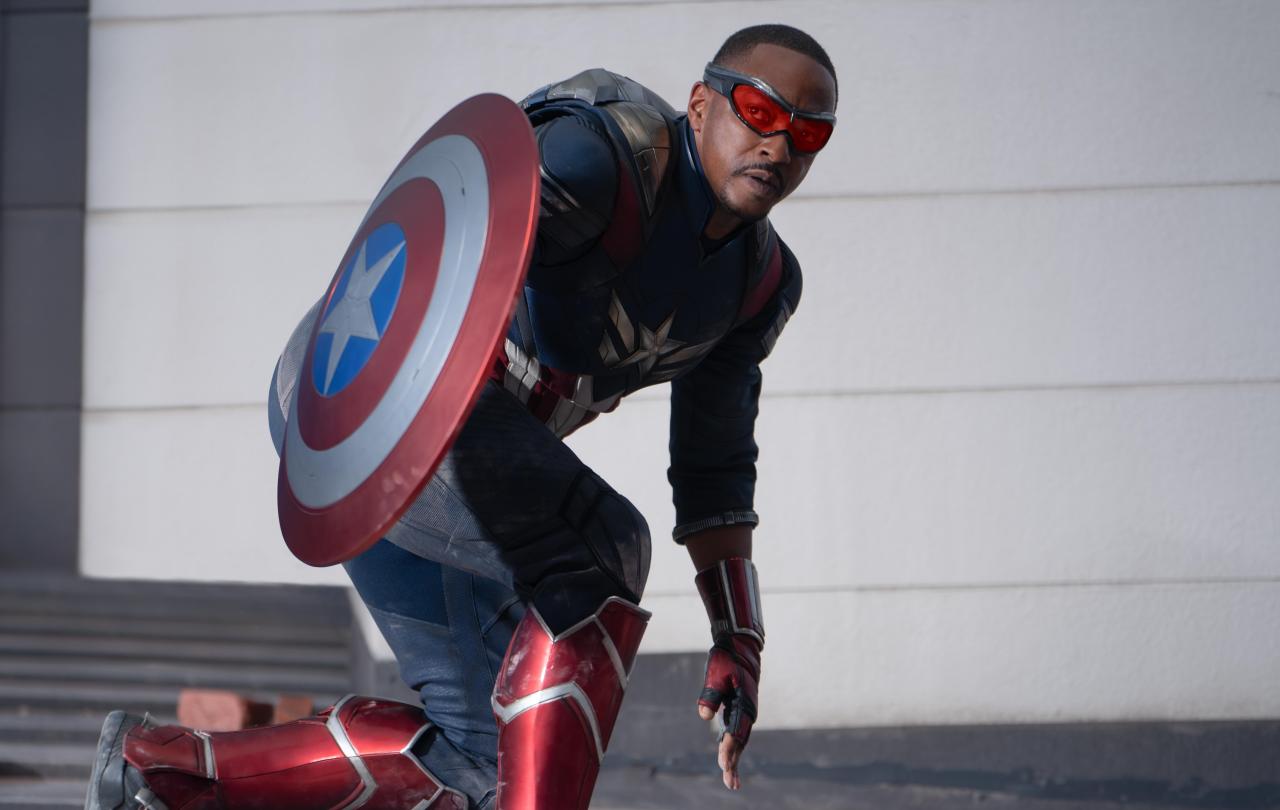
Captain America crouches expectantly beside his shield
Ready for the next review.
Marvel Studios.

Captain America: Brave New World is the thirty-fifth film in the Marvel Cinematic Universe (MCU), and the fourth film focusing on the character of Captain America. It’s also something of a sequel to a passible Marvel TV series. There is so much baggage, so much lore, so much build-up to this film; a production which has the unhappy task of honouring the seventeen years of previous storytelling, setting up plot points that can be explored in future films, and giving us a satisfactory stand-alone cinematic spectacle. I wouldn’t wish such a burden on anyone – an impossible task. 

Brave New World sees Sam Wilson fully inhabiting the role of superhero Captain America, a mantle bestowed on him by his friend and original Captain, super soldier Steve Rogers. Still doubtful of his worthiness and abilities, he seeks to wield the Vibranium Shield with style. He is sent on a mission to retrieve a stolen military secret from a group of mercenaries. He does so – with a few decent action set pieces – and is rewarded with an invitation to the White House.  

The newly elected President, General Thaddeus ‘Thunderbolt’ Ross, is seeking to shed his past reputation as a warmonger by negotiating an international peace treaty. A newly discovered resource has the capability of changing the face of medicine, technological innovation, and especially warfare. Every great power covets it, and Ross wants to foster collaboration for the betterment of the planet. The gala event is ruined when Sam’s friend Isaiah Bradley, a super soldier from the Koren War who was wrongly imprisoned, goes all Manchurian Candidate and shoots at the President. 

The peace treaty is in jeopardy. The President’s inner circle is compromised. There are secrets and lies that will not stay buried. There is a shadowy villain operating behind the scenes, determined to destroy the President’s reputation. Only one man can fight for truth, justice, and the American way: Captain America. 

This is as much as I can say without spoiling the entire film. 

Not that it would matter. The film is a bit of a mess.  

Sam is proposed as an underdog (having not actual superpowers, only a suit of armour), but is shown to be essentially indestructible…he literally disables a missile by flying into it headfirst. There is no sense of tension or risk. This is not helped by lacklustre action and some genuinely appalling CGI. The plot is all over the place – a result of some rather obvious reshoots featuring green screen that even the most amateur filmmaker could’ve improved. Most of the secondary storylines peter out. New characters and introduced and given almost no personality or progression. 

The script compensates for this by giving characters long monologues where they deliver clunky plot exposition and background information. This was inevitable. To understand the plot and characters requires one to have been a careful watcher of the previous films and television shows. I was somewhat impressed how the film managed to give a gentle introduction to the casual viewer, but it is very much at the expense of pacing and character development. 

All of this is a great shame, as the performances are rather good. Anthony Mackie has always been a magnetic screen presence and manages to combine both charisma and pathos is an uncharacteristically restrained performance. Tim Blake Nelson enjoys himself as the puppet-master villain, oozing bile and sympathy in equal measure. Every minor friend and villain delivers their lines with real feeling. Bloody hell…even lovable grump Harrison Ford looks like he’s actually trying as President Ross. 

Unfortunately, no amount of charisma can make up for a film that has no sense of itself. The shambles of a plot is matched by the shambles of a theme; a sadness, as there is so much potential. Sam Wilson is one of only a handful of black superheroes, and his friendship with Isaiah Bradley is partly based on their shared experience of race and discrimination in the face of honour and duty. This was introduced in the TV show and could’ve been explored further. Sam’s lack of superpowers could have been explored, had he been put in positions of genuine peril. His sense of inadequacy and overwhelming responsibility are mentioned, only to be quickly dismissed with a pep-talk from a throwaway cameo character. The concepts of conspiracy and disillusionment with authority are hinted at, but they formed the thematic thread of the previous three Captain America films, and when this film does approach them, it is by echoing the better storytelling of previous films. 

There is one plot thread, one theme running through the story, which goes some way to redeeming the film. President Ross is haunted by his past. A patriot, a soldier, and tireless worker for American security, Ross has a past littered with sins and mistakes. His anger, his bullishness, his obstinacy (physically manifested at the end of the film), has left him all alone. His daughter doesn’t trust him, Sam doesn’t trust him, and his international partners don’t trust him. He is seeking to become a better man, working towards cooperation rather than force and violence. However, his past life and secrets continue haunt him and stall his progress at self-improvement. 

In the end, by being open and honest and taking responsibility for his mistakes, Ross does achieve a certain amount of peace. He is able to be the figure of nobility and unity that he longs to be by sacrificing his power and prestige, and truly atoning for his misdeeds. Despite all the problems with the film, this (admittedly underdeveloped) bit of character study kept me engaged. Perhaps it was Harrison Ford’s performance. Perhaps it was because we’re approaching Lent, when Christians make an extra effort to acknowledge their past mistakes and resolve to do better. Whatever it was, it furnished the film with a truly sympathetic and improving theme. I wouldn’t spend money in the cinema, but wouldn’t mind seeing it in the TV guide in the future. 

2.5 stars. 

​​​​​​​Join with us - Behind the Seen

Seen & Unseen is free for everyone and is made possible through the generosity of our amazing community of supporters.

If you’re enjoying Seen & Unseen, would you consider making a gift towards our work?

Alongside other benefits (book discounts etc.), you’ll receive an extra fortnightly email from me sharing what I’m reading and my reflections on the ideas that are shaping our times.

Graham Tomlin

Editor-in-Chief