Article
Community
Culture
Football
Friendship
4 min read

As the season starts, here's why fans go mad for football

The game is part of life, but not all of life

Henry Corbett, a vicar in Liverpool and chaplain to Everton Football Club.  


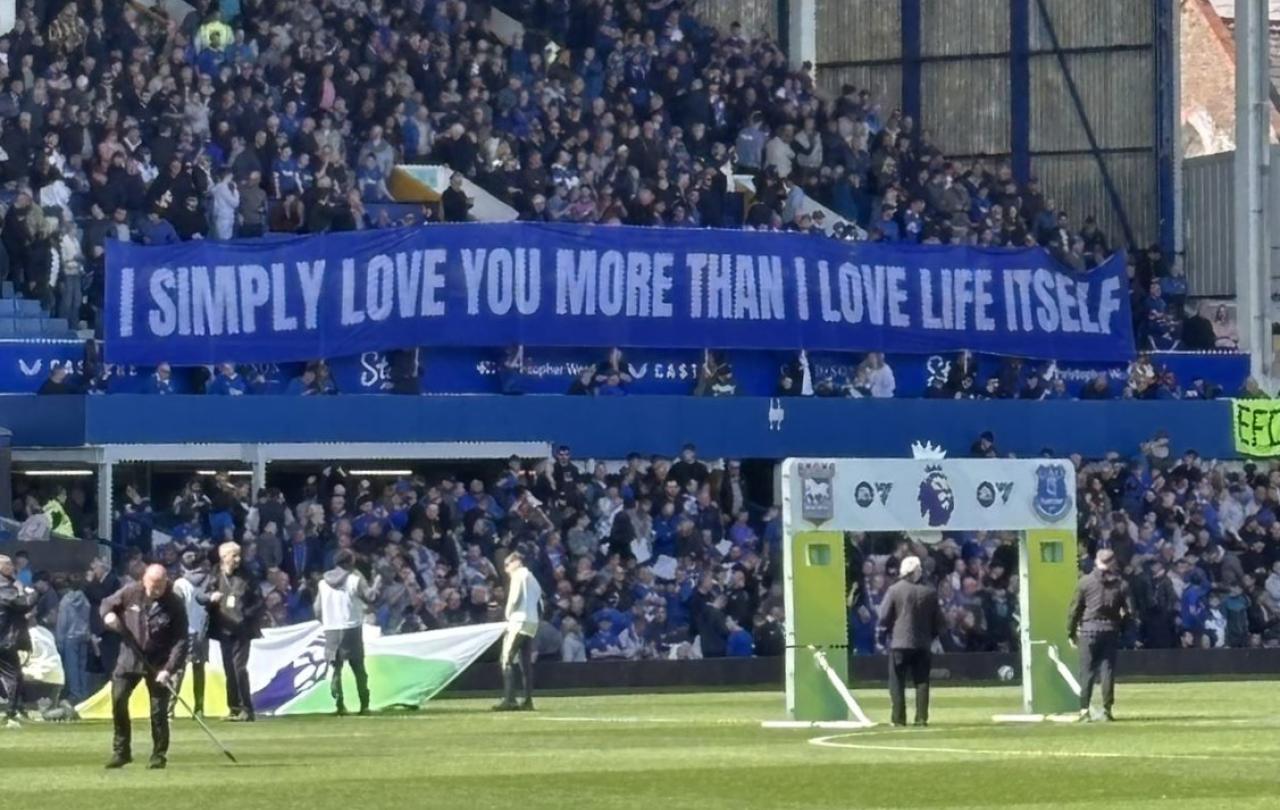
A football stand displays a long banner with text on it.
Everton F.C.

“I hate football,” said the mother of two mad keen footballing children. The clue to the hatred is maybe in the ‘mad keen’. Why do children and adults care so much about football? 

“That Champions League music is so pompous…!” 

“It’s only a football match! They make it too important. If their team loses then they are miserable for the whole weekend.” 

“We can’t plan holidays until the fixtures come out.” 

The money spent, the jobs refused, lost or short-changed, all because of football. A giant banner at a recent Everton home game read “I simply love you more than I love life itself”. 

And there is football manager Bill Shankly wisdom: “Football is not a matter of life and death. It’s more important than that.” At least that was a typical Shankly quip, hyperbole for effect.  

Why do some of us love football so much? 

It often goes back to childhood. Playing with mates, scoring a goal, saving a goal, enjoying the togetherness, the shared aim, the friendships formed. Then there’s that first experience of going to a match. Up the stairs and there before you is a great huge rectangular expanse of green grass. Back in the day, it was maybe not so green, but still way more impressive than your back garden or the local park. Then comes the drama, unscripted, of the game. The sways of emotion, the joy, the frustration, and all experienced as part of a bigger community. When you kick a ball with your mates aged 50, or go to a game aged 80, you are doing something that connects you with your childhood enthusiasm, joy and wonder. 

Then there are the family connections. You may have gone to that first match with your Mum, Dad, Grandad, older brother or sister. When Everton supporters were asked about their feelings at the last Premier League game at Goodison Park, again and again they referenced family members who they had gone to the match with. Some passed away, some no longer able to go, even some whose ashes were buried behind the goal. 

There are the great memories of games seen or even played in. That win from 2-0 down, that last minute goal, the euphoria of a Cup win against the odds. And the memories are shared ones, with family, with friends. Football can write some miserable scripts, 0-0, 0-1, 0-6, but it can also write some wonderful memorable dramas.  

Love for family, for friends, for a team, for players is a deep emotion and when that love is linked to victory or defeat the stakes are raised. 

There is another reason which can touch us all, football-lovers or football-haters. Deep down we all want to be winners in life, not losers. The feeling of victory, not defeat, is such a treasured one. And the win, or loss, is a shared one: we are part of a group together, an identity together. Love for family, for friends, for a team, for players is a deep emotion and when that love is linked to victory or defeat the stakes are raised. In life we want goodness to win over evil, kindness to win over cruelty. The reason every Church shows the symbol of the Cross is because there was the ultimate demonstration of purposeful love, the sacrifice for the sins of the world, down the ages, across the world. When the apostle Paul writes to beleaguered, persecuted Christians facing death at the hands of Emperor Nero, he tells them “We are more than conquerors,” more than winners.  

Football, playing or watching, taps into that deep feeling of victory. “We’re on the march with (manager’s name here!) army…. And we’ll really shake them up when we win the FA Cup…” When my team faced the prospect of relegation I wondered why I was feeling butterflies, and more than butterflies, in my stomach. Why did I care so much about this game of football, and the result at the weekend? Yes, because it affected people’s lives, because it would mean loss of income and job losses at the club if relegation happened. But also, because the feeling of defeat, of failure, would hang over us, and that feeling goes deep, to the pit of the stomach.  

So why do some of us care so much? Because football taps into deep feelings; of family and friendship, joy and elation, togetherness and identity, and that wonderful feeling of victory… or the sorrow of defeat. Those feelings go deep. The problem is that football, unlike the Cross, sometime delivers, but definitely doesn’t always. That’s a reason why the mum of those those two mad-keen football-loving children should try and make sure that her two sons have other interests besides football, another faith beside faith in their team. Football is part of life, but not all of life. I also hope she stops hating what can be a beautiful, enchanting, community-fostering game, with many a helpful story to tell. 

Support Seen & Unseen

Since Spring 2023, our readers have enjoyed over 1,500 articles. All for free. 
This is made possible through the generosity of our amazing community of supporters.

If you enjoy Seen & Unseen, would you consider making a gift towards our work?
 
Do so by joining Behind The Seen. Alongside other benefits, you’ll receive an extra fortnightly email from me sharing my reading and reflections on the ideas that are shaping our times.

Graham Tomlin
Editor-in-Chief
Review
Culture
Film & TV
Freedom of Belief
Politics
4 min read

Anna Politkovskaya took on the Kremlin and she paid the ultimate price

The Russian journalist who became a martyr for truth

Simon is Bishop of Tonbridge in the Diocese of Rochester. He writes regularly round social, cultural and political issues.

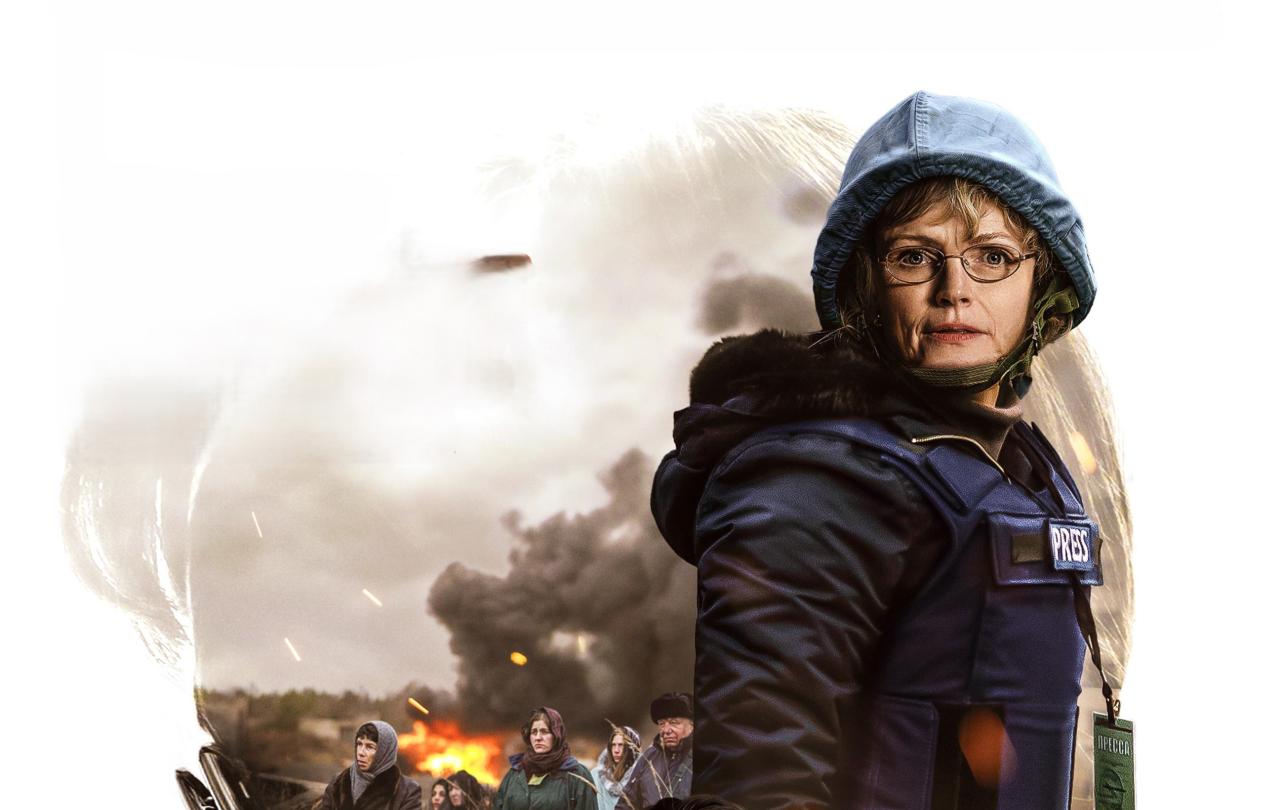
A journalist wearing a body armour and a helmet looks defiant
Maxine Peak plays Anna.
Rolling Pictures

While truth recedes as a global public good, a war on journalists is taking shape. In 2024, the Committee to Protect Journalists recorded the highest number of journalists killed since collecting data thirty years ago. A large number of these were killed in Gaza, but there were deaths elsewhere: in Mexico, Syrian, Pakistan, Haiti, Myanmar.  Many more than these at least 124 journalists were physically threatened and abused online; an unknown number have been imprisoned and abused by state authorities, shadowy militias or criminal gangs. 

The illiberal tide is more powerful than the flow of liberal ideas today in the unregulated online market of opinion. A groundswell of distrust in so-called mainstream media has been effortlessly generated by sources with no obligations to impartiality and fewer professional standards round fact checking and evidence gathering. While every news source needs to be assessed for accuracy and fairness, the labelling of journalists as ‘enemies of the people’ by President Trump in his first term strayed into language used by the world’s despots. Territory occupied for many years by Vladimir Putin’s Russia. 

The 2025 film Words of War tells the story of Anna Politkovskaya, reporter for the Russian independent newspaper Novaya Gazeta who rose to fame, and therefore to the attention of the Kremlin, through unvarnished despatches from the first Chechen war that uncovered terrible war crimes. Moscow learned its lesson for the second war in Chechnya by declaring the whole region off limits to reporters. For Politkovskaya, this provided an extra incentive to be there, returning to the country over forty times to document ever more awful crimes of disappearance, rape, and torture. 

‘I witness very grave events and no-one else is reporting on them. I can’t not write about it’, Politkovskaya told the BBC’s Sarah Rainsford when they met. The meeting ended with some blunt Slavic advice: instead of interviewing a journalist about the war in Chechnya, the interviewer should be going there herself.   

Words of War has an unreal quality to it. The actors are English, but the scenes are entirely Russian. It is a reminder of Armando Iannucci’s dark comedy The Death of Stalin and even shares an actor in Jason Isaacs, who swaps General Zhukov’s blunt Yorkshire accent for the more cultured tones of Politkovskaya’s anxious husband, Sasha.  

Politkovskaya was a force of nature, and a devout Christian. She knew the kind of people she was messing with and what they were capable of, but she carried on the same, driven by an implacable will to truth. On flying to cover the appalling school siege at Beslan in 2004 – a scene the film begins with - she became violently ill, almost certainly a targeted poisoning like Alexei Navalny suffered on a plane over Siberia. 

I get intimidating calls, people hovering in my hallway, she observed. There’ve been so many threats, there was a time when my editors decided my life really was in danger.  But I’m used to it.  If the FSB is so opposed to me, it only proves that what I’m doing is effective. 

On October 7, 2006, Anna Politkovskaya was shot dead as she entered her block of flats with a handful of groceries. It was Vladimir Putin’s birthday. Five men were eventually found guilty of organising and carrying out the murder, but the person who ordered the killing was never found out. Speculation round how high the order came from is, in a way, superfluous: this is the nature of Russia’s state in the twenty first century.     

Elena Kostyuchenko is a millennial writer who features in the film as a young Novaya Gazeta intern and was inspired by her contact with Politkovskaya, ensuring a legacy in a younger generation: 

She was the first person I saw when I came to the Novaya Gazeta editorial offices. Tall, radiant, with silver-white hair, flying down the hall. I didn’t recognise her. I was just struck by her beauty. 

Stalin’s alleged mantra: no person, no problem, remains barely deniable Kremlin policy. The late politicians Boris Nemtsov and Alexei Navalny are simply the highest profile of a large cohort of individuals barely known in the west who have opposed Putin with stunning levels of bravery. Caricaturing Russians as corrupt, rapacious and violent – as well as being a lazy trope - is to abuse the names of an untold number who retain their dignity, integrity and agency. 

New histories are written in nations where regimes fall, but whether they tell a truthful story about the past depends on the environment the new authorities allow. The human rights group Memorial began this work in the early post-Soviet era, only to be shut down by Putin’s police officers. Words of War should have been made in Russia by Russians. One day maybe it will be, and Anna Politkovskaya will be seen across Russia for what she is: a martyr for truth.  And not an enemy of the people. 

Support Seen & Unseen

Since Spring 2023, our readers have enjoyed over 1,500 articles. All for free. 
This is made possible through the generosity of our amazing community of supporters.

If you enjoy Seen & Unseen, would you consider making a gift towards our work?
 
Do so by joining Behind The Seen. Alongside other benefits, you’ll receive an extra fortnightly email from me sharing my reading and reflections on the ideas that are shaping our times.

Graham Tomlin
Editor-in-Chief