Article
Attention
Comment
Psychology
6 min read

Paying attention to ADHD– is it really just a fad?

Media fixation with ADHD caught Henna Cundill’s eye, so she decided to investigate its struggles and superpowers.
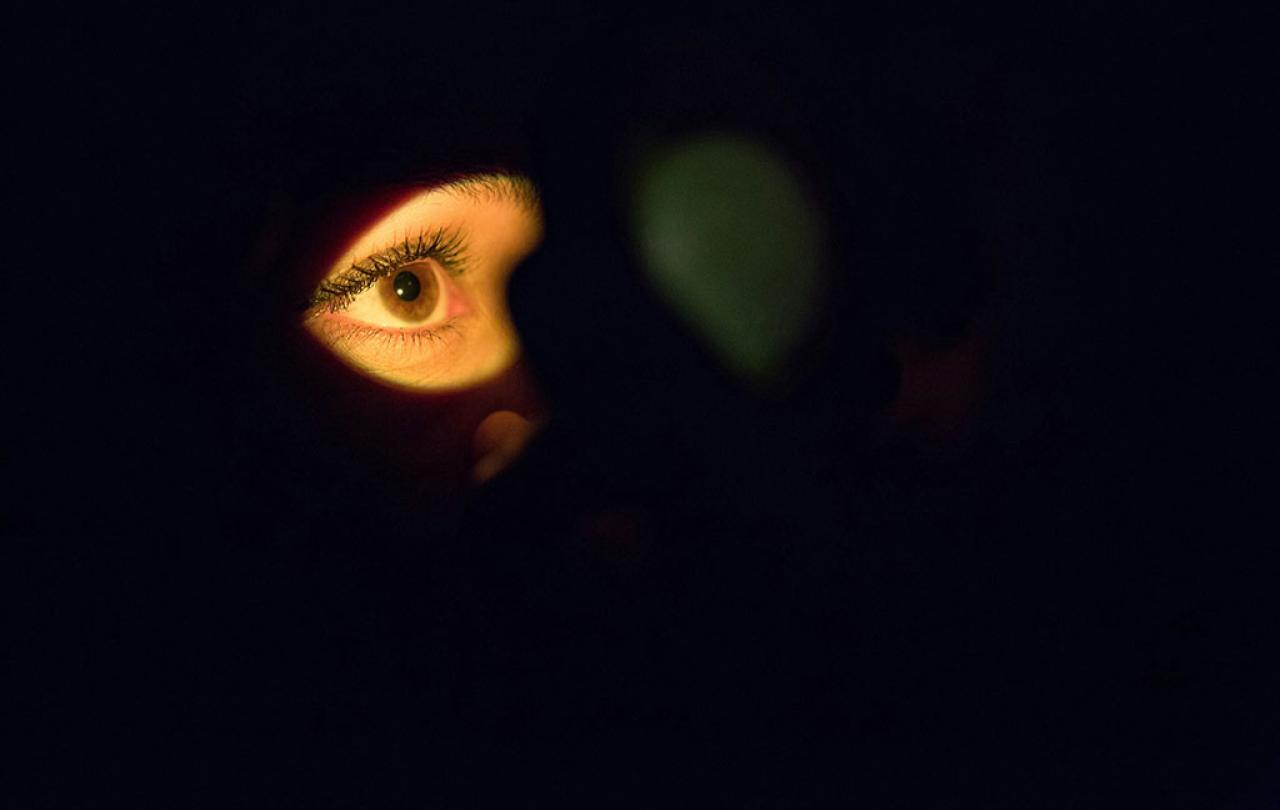
From a darkly shadowed face, a single illuminated eye stares.
Brands&People on Unsplash.

In a feat of irony, attention deficit hyperactivity disorder (commonly known as ADHD) is now getting a lot of attention. For example, between 28 and 31 January The Times newspaper published one article per day about ADHD. Intrigued, I looked back over the past few months, and I found that The Times has averaged 8 to 10 articles per month which are either partly or exclusively about this topic. These range from celebrity diagnoses to handwringing over the “troubling rise” in incidents of the condition, to concerns about parents gaming the system to get their children disability payments or extra time in exams.  

With all this media hype, it is little wonder that some commentators are inclined to dismiss ADHD as a fad. Scroll through the comments beneath each article, and you will reliably find the rallying cry of, “We didn’t have ADHD in my day!” followed by the patient responses of those who try to correct this fallacy.  

While the high public profile of ADHD is new, the condition itself is not. As early as the mid-1700s a Professor of Medicine called Melchior Adam Weikard was describing patients who were “unwary, careless, and flighty” – behaving in ways governed by impulse, and showing poor skills in punctuality, accuracy, and having an inability to complete tasks, to the detriment of their mental health. His description is of its day. For example, and somewhat amusingly, Weikard (himself German, but at this point living in Russia) also described his patients as follows:  

Compared to an attentive and considerate person such a jumpy person may act like a young Frenchman does in comparison to a mature Englishman. 

Even so, Weikard did not unconsciously adopt all the prejudices and stereotypes of his context: he broke firmly with existing medical consensus when he diagnosed these patients as having a “dysregulation in cerebral fibres” – rather than attributing their difficulties to astrological misalignments or demon possession.  

By characterising ADHD as a brain-based condition, Weikard was ahead of his time, and we’ve come a long way since then. This is not the place to chart the whole biography of ADHD, suffice to say that when someone rolls their eyes and declares dismissively, “We didn’t have ADHD in my day…” – they are either over 300 years old or not talking like a mature Englishman, even if they read The Times.  

The negative side of the condition as being in a constant fight with one’s own thoughts and senses – these are doughty opponents, they always know where to find you, and they only sleep when you do. 

Another thing that is not new, despite what cynical commentators might seek to imply, is the treatment of some aspects of ADHD with medication.  

Doctors have been prescribing amphetamines to patients with ADHD since at least the 1950s. Yet now those medications are in short supply. Contrary to the media hype, fewer than 1 in 10 people with an ADHD diagnosis take prescribed medication, but for some of those who do it can be a lifeline – calming down a washing machine mind that is stuck on constant spin.  

One acquaintance of mine has taken to anxiously touring the local pharmacies, driving to neighbouring towns and villages, desperate to get her prescription filled.  

Another is passing her own tablets on to her son, whose prescribed supply ran out sooner. Sharing prescription medication is, I am duty-bound to add, an illegal practice – but it is hard to expect a parent to medicate themselves whilst seeing their own child struggle to attend school, to complete exam papers and to just generally feel (and I quote) “like a normal person.”  

People who have ADHD sometimes describe the negative side of the condition as being in a constant fight with one’s own thoughts and senses – these are doughty opponents, they always know where to find you, and they only sleep when you do.   

This is not to overlook that there are positives to ADHD too – it is often pointed out that the condition entails a degree of “superpower.” A person living with ADHD may have an incredible ability to focus on one difficult problem to the exclusion of all else, and thus solve it, perhaps devising creative solutions that elude those with a more pedestrian style of thought.  

Also, it is common for people who live with ADHD to be dynamic conversationalists, with high social intelligence and empathy, priming them for success at tasks like broadcasting and debating. Many elite athletes also live with ADHD and say that they able to strive for excellence due to their restless energy and resilience in the face of tough training regimes.  

Given the mixed bag of struggles and superpowers, there is a raging debate about whether ADHD should even be considered as pathology, or just as a neurodivergent way of being human. I suspect there is no right or wrong answer to this – for each person who lives with ADHD it depends on their own experience and how they feel it helps or hinders them to live the life they choose. Neither is it a binary choice: more than one of my own acquaintances who live with ADHD has described themselves as being in a “love-hate relationship” with their neurodivergence.   

ADHD challenges me to unfold my mind too – to become ever more aware and appreciative of the fact that there are many ways to be human. 

Neurodiversity, like any kind of diversity, challenges the way we live to together in communities, choosing or refusing to show empathy towards those who are perceived as ‘other’. There are several places in the Bible where human interconnectedness is likened to the human body – made up of many different parts, with each member dependent on the other for the wellbeing of the body as a whole. In one of his letters, St Paul wrote, “If the whole body were an eye, where would the hearing be? Or if the whole body were an ear, where would the sense of smell be?” Society needs problem solvers, communicators, high achievers, even while society also needs people who can structure, plan and maintain consistency – and above all, society needs these different neurotypes to work together with a certain amount of mutual understanding and trust.  

Reflecting further on the body metaphor, Paul also wrote this: “If one part of the body suffers, the whole body suffers with it.” It is estimated that about 5 per cent of people in the UK has ADHD, so it is likely that includes someone you know. The majority don’t take regular meds, but if you are connected to someone who is usually reliant on these, the next few months may be a time of particular stress and anxiety, as the current medication shortage is expected to continue into late spring. This affects not just those living with ADHD, but all of us, as we live together in our families, communities, and networks. Not everyone chooses to be open about having an ADHD diagnosis, but if they are, now might be a good time to ask them how they experience this condition, both with its positives and negatives, and how you can support them if they are managing without their usual prescription. 

The body metaphor, and Paul’s teaching around it, reminds us that diversity is no accident, God has always been attentive to those who feel divergent or far from the centre, as Jesus affirmed when he announced his ministry would be for the poor, the prisoners, the disabled and the oppressed. The psalmist too, observes that God’s attention and concern for us is so complete, that one is “…hemmed in, before and behind” – even if one strays to the very ends of the Earth, or drives to the pharmacy in the next village. Thus, while the media circus may be new, we can be sure that God has always been attentive to those with ADHD, and wider society is called to be likewise. 

Writing for The Times, Esther Walker describes ADHD as “…the health story that keeps unfolding.” Well, certainly every time I unfold my newspaper, there it is again. But ADHD challenges me to unfold my mind too – to become ever more aware and appreciative of the fact that there are many ways to be human: usually complex, sometimes difficult, often brilliant, and always interconnected.  
Column
Attention
Comment
Community
7 min read

The art of being inconvenienced

In our fast-paced attention-deficient society, Elizabeth Wainwright reflects on the value of inconvenience as a safeguard against the commodification of life.

Elizabeth Wainwright is a writer, coach and walking guide. She's a former district councillor and has a background in international development.

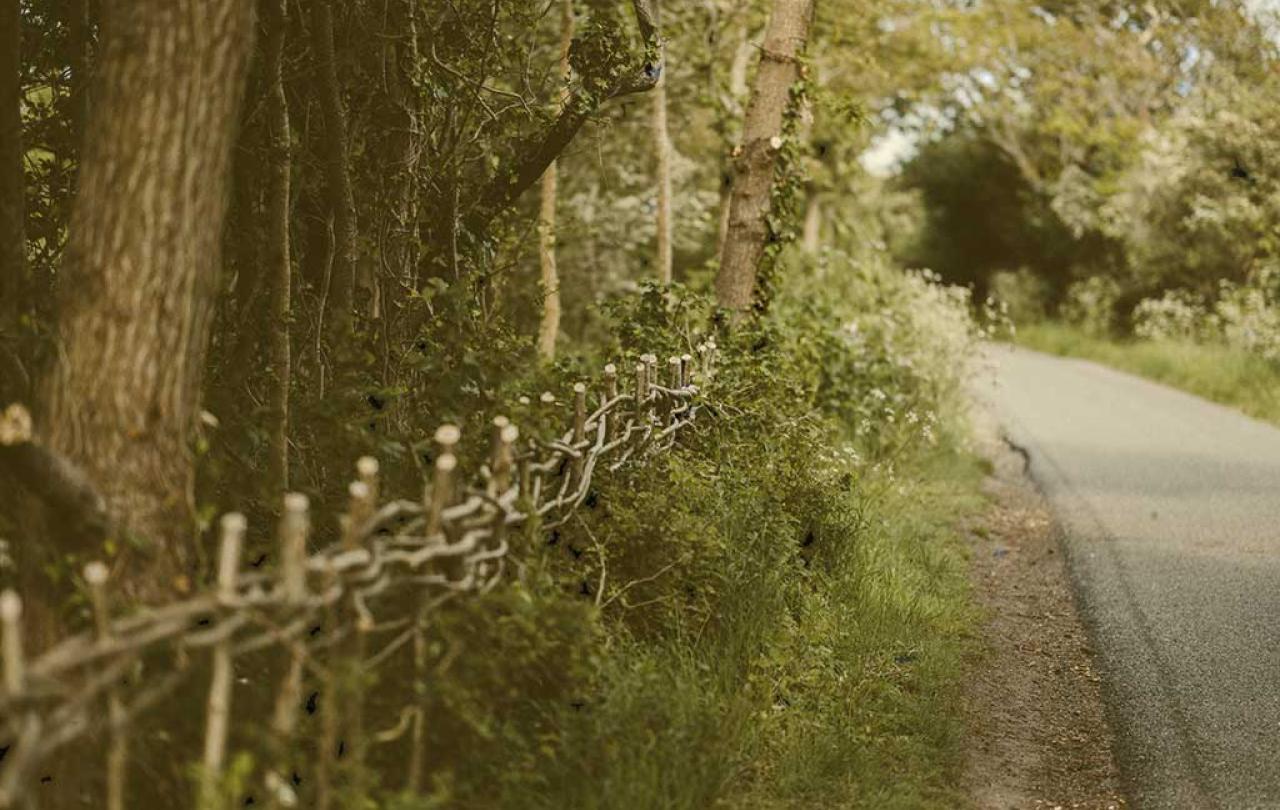
a newly laid hedge merges into an older one, next to a road
Photo by Annie Spratt on Unsplash.

It’s May as I write this, and I’m noticing Iris flowers everywhere. They don’t flower for long, but they are glorious when they do. There is another kind of Iris too - our newborn daughter Iris, born in May under a full moon; appropriately named the ‘flower moon’ in some cultures. And it really was a time of flowers - in her name, and in the Devon hedgerows outside which were bursting into life and nurturing a rainbow of wildflowers - pink campion, creamy hawthorn, yellow celandine, bluebell, violet, endless green. These hedgerows are ancient. ‘Hooper’s formula’ can give an estimate of just how ancient - counting the number of woody shrubs and trees in a 30m section and multiplying by 100 gives a rough estimate (one species for every 100 years). This makes the hedges and sunken earth-banked lanes around us well over 1000 years old, thousands of years in places. They feel essential to the structure of this place.  

The layers of land in this part of Devon are overlain and interwoven, sometimes reinforcing what was there before, sometimes obliterating it. Today the threat of obliteration looms larger than ever - development, forestry and rapidly changing agricultural practices all squeeze rural communities and landscapes to the edge. But these old hedgerows and earth banks seem to resist the march of development and ‘progress’ – continuing a line of resistance that stretches back to the local Celtic people resisting Anglo-Saxons, who in turn resisted the Normans. The hedges represent old ways, they hold their ground and ask us to slow down and prioritise other things than convenience and blind progress.  

Because for local farmers, it is not convenient to farm these small wonky fields with their thick-hedged edges. In other parts of the country, fields got bigger and bigger as hedges were ripped out, especially during the Second World War when food production was a priority. And the size of fields kept pace with the growing machinery used to farm them. Farmed fields in some parts of the country are now vast. But not here. Outside the window huge tractors thunder past, but they look out of place in these narrow lanes and small fields - old spaces that are less and less able to resist the damage of modern machines.   

I think inconvenience is good for love and for neighbourliness. Loving and knowing our neighbours are beautiful intentions, but they can quickly become easy words and abstract concepts.

But whilst these ancient hedgerows are inconvenient for modern farming, they are convenient for life, because things can exist here that wouldn’t if the hedges were removed - biodiversity, soil structure, shelter and food for countless species through the year; species that are under threat from intensive agriculture elsewhere. It is the inconvenience of the hedges and fields here that leaves room for life. 

I think about how this is true of other things; how inconvenience might bring life, how it might even be essential for our relationship with things that matter. Two specific things come to mind.    

First, I think inconvenience is good for love and for neighbourliness. Loving and knowing our neighbours are beautiful intentions, but they can quickly become easy words and abstract concepts. Putting the idea of neighbourliness into practice will be inconvenient - it will have an impact on me and my life, it will take time and might be awkward at first - but it is where the love and I think the hope is. The future has lately been sounding bleak - heatwaves and wildfires and temperatures higher than climate modelling has predicted; economies in turmoil; never ending conflicts. Loving our neighbour isn’t about niceness, or just for when it’s convenient – it’s for right now as the world burns, it’s for helping us know the world through the lives of others, it’s for rebuilding affection and life on earth.   

Second, I have found that inconvenience is good for knowing the Bible. When I first began reading it — curiously but non-committaly as a young adult — the thing that kept me coming back was its beauty. Much of its meaning was lost to me, but its sound and rhythm wasn’t. The Bible is inefficient, inconvenient. It is often impenetrable, mysterious, poetic. And poetry is often inconvenient - it asks us to slow down, to pay attention, to engage imagination and heart and feeling, to re-read something that might not at first be clear. And when its meaning or imagery sticks then it remains, I do not forget it. If the Bible’s authors wanted readers to understand something, to believe something, there are shorter and clearer ways to do so which might even guarantee particular outcomes like belief. But the Bible turns towards poetry and beauty and depth - not transfer of information, not efficiency, not convenience. It asks the reader to slow down and listen, to reach beyond the immediacy of information to another way of being and knowing. 

Another Iris speaks - not flower, not daughter, but a singer through our kitchen speakers - Iris Dement is singing a song called Working on a World I May Never See. It makes me think about the importance of investing in hedgerows and neighbours, a declaration of belief that their possibility offers more than the efficiency and productivity they sacrifice. Because we are not made for efficiency, or blind progress, or productivity. I think we are made to love, and to work on a world we may never see; an ask that I increasingly see requires not just ‘development’ and technology and financial investment, but investment in love and neighbours and place. But as the world hurtles on, love seems diminished, its power underestimated or increasingly it seems, unknown. I notice talk of love sometimes met with cynicism, as if it’s a warm fuzzy idea but not something to take seriously, as if it might be world-shaking. But I think it is — or it could be if we let it.   

And so I welcome inconvenience, I welcome the courage and patience it teaches me.

The hedgerows and my neighbours and parts of the Bible remind me to take love seriously. They slow me down with their long-way-roundedness, their use of 100 words or species where one would be more efficient, their conjuring of feeling and images where information might be quicker. They ask me to pay attention, they offer beauty, they bring my gaze to things they matter.   

In Eric Fromm’s 1956 book The Art of Loving he examines various kinds of love, and then explores the disintegration of love in the modern western world, which is in part he says because:   

“Modern man has transformed himself into a commodity; he experiences his life energy as an investment with which he should make the highest profit, considering his position and the situation on the personality market. He is alienated from himself, from his fellow men and from nature. His main aim is profitable exchange of his skills, knowledge, and of himself, his "personality package" with others who are equally intent on a fair and profitable exchange. Life has no goal except the one to move, no principle except the one of fair exchange, no satisfaction except the one to consume.”

(All this written before the arrival of the ‘personality market’ of social media, and before Amazon’s all-consuming invitation to consume).  

In examining this commodification of life, and in a line that touches on our fondness for convenience, Fromm says:

“Modern man thinks he loses something—time—when he does not do things quickly. Yet he does not know what to do with the time he gains—except kill it.” 

He goes on to argue that love is not a sentiment but a practice; one that involves discipline, concentration, and patience. These aren’t things that a fast-paced attention-deficient society leaves much room for. He says too that

“Love is not primarily a relationship to a specific person; it is an attitude, an orientation of character which determines the relatedness of a person to the world as a whole…” 

The hedgerows outside and the poetry of Bible teach me patience and concentration, and they shift my centre of relatedness outwards, from my own need for convenience, from focus on my life and just the people in it, to the wider world - worlds seen and unseen.    

Fromm says

“To be loved, and to love, need courage, the courage to judge certain values as of ultimate concern—and to take the jump and to stake everything on these values.”

And so I welcome inconvenience, I welcome the courage and patience it teaches me. The life-giving ‘inconvenience’ of the ever-changing hedgerows, and neighbourliness, and the Bible, and many other things help me to slow down and pay attention, they help me to know and to love, they help me to work on a world I may never see.