Review
Ageing
Belief
Books
Culture
4 min read

Mine eyes have just read the best novel of the year

Quentin Letts’ Nunc! is a beautiful, moving and funny exploration of life, death and first century Jewish cuisine.
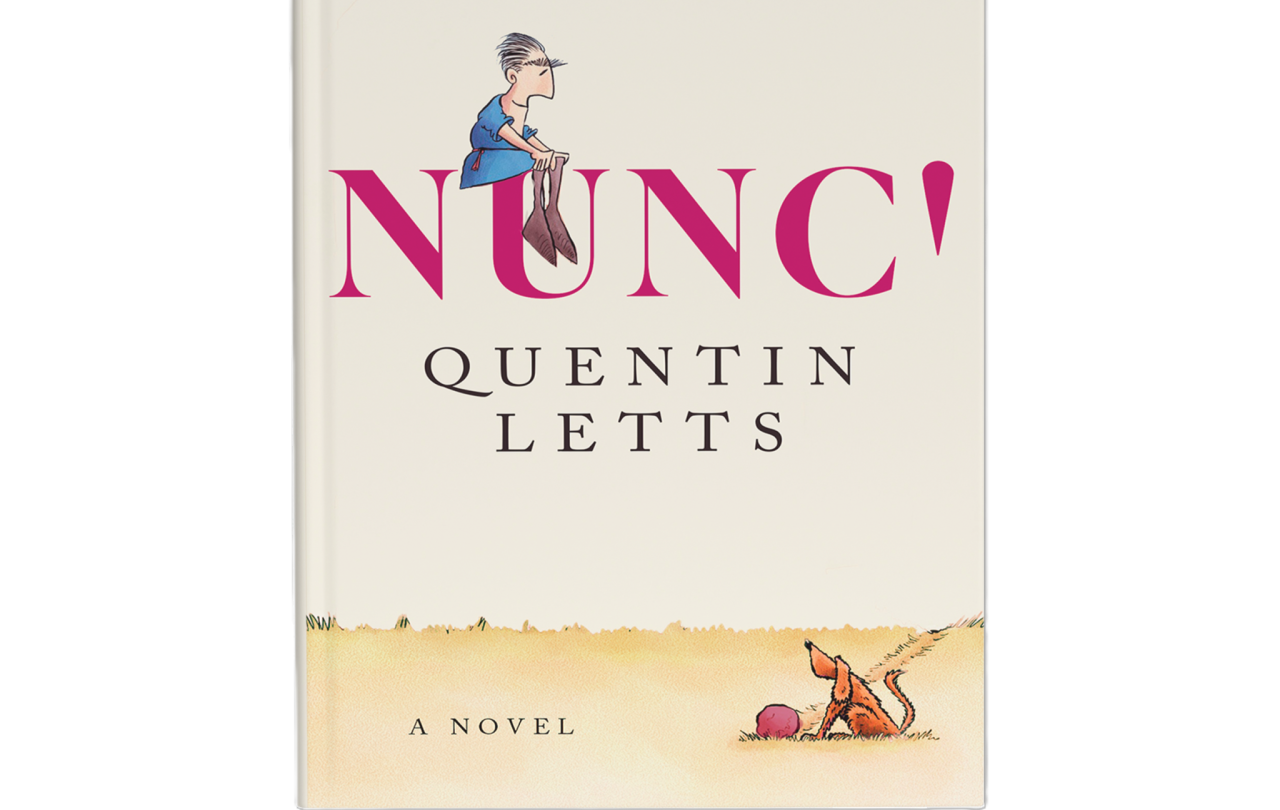
A book cover shows a cartoon man sitting on the title text while a dog sits below.

Historical fiction is my favourite genre of novel. Make it biblical historical fiction and you’ve sold me before I’ve cracked the spine! I bought a copy of Quentin Letts’ NUNC! without having read a single review or knowing anything about it… and what a sensible decision it was. Letts has produced a novel that combines his rapacious satirical wit, theological and historical acumen, and a beautiful sentimentality – the novel is dedicated to his brother Alexander, who died of cancer. 

It is inspired by the words of the Nunc Dimittis, as translated in the Book of Common Prayer. Sung by Simeon, as he holds the Christ child in his arms, they are words that are full of joy, because God has promised Simeon that he will not die until he has seen the Messiah. “Lord, now lettest thou now thy servant depart in peace,” it begins: words that are spoken or sung at every Evening Prayer in the Church and have provided hope and comfort for generations.

The novel opens with the character of Symons (no, I didn’t misspell it), a titanic literary concoction of corduroy, wax jacket, and mild middle-aged irritation, who lives in a classical English cathedral town. He receives a terminal cancer diagnosis. He has an argument with his wife, Anne (the typology is strong in this novel). He gets pissed. As he totters home from his local wine bar, he passes the cathedral and is captivated by the sound of singing.  

Upon entry he realises the choir is rehearsing the canticles for Evensong. He hides behind a pillar and kneels down in a pew. The Nunc Dimittis is rehearsed, and the heady combination of high emotion and fine wine sends him into a prayerful stupor. We are transported to first century Jerusalem and spend most of the rest of the novel in the company of Simeon and a cadre of his friends, acquaintances, and opponents. 

What follows is a series of hilarious vignettes, featuring a wide array of brilliantly sketched characters. Spending much of our time in ‘Deuteronomy Square’ we meet Rueben the tea seller, Tambal the slave (who has a fondness for Roman cuisine and a horrid aversion to gefilte fish), Noor the mad garlic seller, Jonah the hypocritical Pharisee, and Shlomo the dog. Through them, and many others, Letts allows the reader to explore the social, political, religious, and dietary life of the inhabitants of Jerusalem. 

The humour never vanishes, the confessional power never overwhelms, the lightness of touch is always present; and yet the novel takes on a new intensity...

How did the Judeans feel about the Romans? Were there ever friendships between Jew and Gentile oppressor? How did the average man or woman feel about Herod? What was their attitude to a priestly and religious hierarchy? Were the Wise Men buffoons? Letts weaves such themes through a narrative laden with the humour and heart-warming episodes that mark the best ‘slice-of-life’ writing. The people of first century Jerusalem might be separated from us by time, space, language, culture, and cuisine, but their highs and lows, their gripes and loves, their daily search for happiness and meaning, are no different to ours. 

Underpinning the story is Simeon’s daily watch for the promise of the Christ. Letts has ten verses from the Gospel of Luke as a foundation to build his protagonist, and four of these are a song. Undeterred, Letts uses Simeon as a cypher to explore further and deeper themes: youthful indiscretion, regret, passion, love, shame, faith, doubt.  

Letts also allows for a certain frisson of imaginative licence to round out his back-story. What was Simeon’s profession? Who were his parents? Did he know Anna the Prophetess? Why had God given him this task of watching and waiting, praying and hoping? Never overexplaining or labouring the point, Letts grants the reader a few moments of memory and introspection from the old man, but otherwise invites us to understand Simeon through his daily dealings with those around him.  

By the end of the novel we have not only one of the funniest characters of modern fiction, but one of the most spiritually and emotionally complex. I prepared to leave Simeon – encountering Mary, Joseph, and the infant Christ – feeling as if he was a member of the family.  

Letts concludes the novel with Simeon’s great biblical performance: ten verses which suddenly take on a remarkable poignant weight. The novel quietly switches gear to become a theological meditation worthy of any spiritual writer. The humour never vanishes, the confessional power never overwhelms, the lightness of touch is always present; and yet the novel takes on a new intensity and seriousness that took me by the hand and led me to look upon the mystery of life, death, truth, beauty, and goodness.  

It took me a while to make it through the final two chapters…my eyes kept misting with tears.  

If you only read one novel this year, please let it be NUNC! 

Celebrate our 2nd birthday!

Since Spring 2023, our readers have enjoyed over 1,000 articles. All for free. 
This is made possible through the generosity of our amazing community of supporters.

If you enjoy Seen & Unseen, would you consider making a gift towards our work?

Do so by joining Behind The Seen. Alongside other benefits, you’ll receive an extra fortnightly email from me sharing my reading and reflections on the ideas that are shaping our times.

Graham Tomlin
Editor-in-Chief
Article
Belief
Books
Comment
Film & TV
5 min read

I’m not sure Christopher Nolan has actually read The Odyssey

The director has drunk the Kool-aid of modernity, and done so deeply
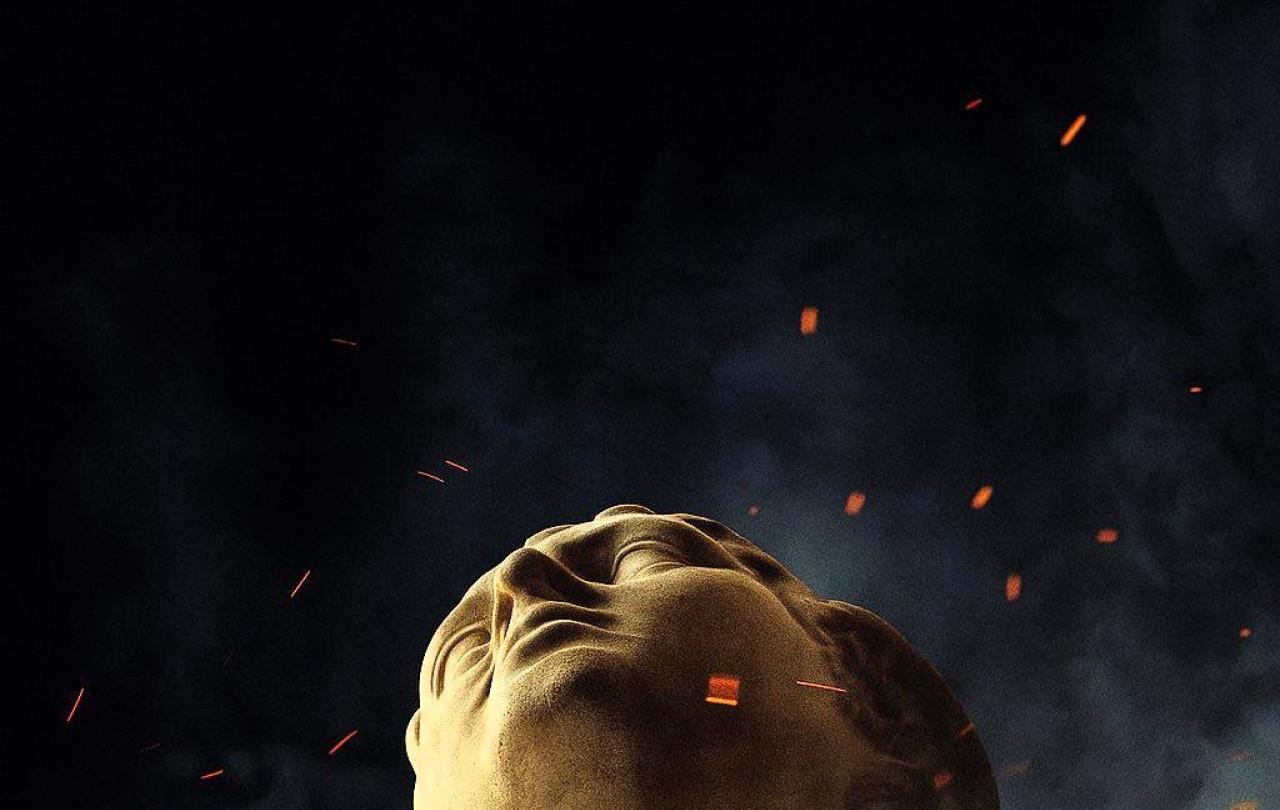
the head of a classical statue looks up amid embers around it.
The odyssey poster.
Universal Studios.

Greek myths are full of hubris. Full of it. I feel like ‘hubris’ isn’t a word you hear very often anymore. It means excessive pride or self-confidence that leads to a downfall, in case you were wondering. “Boris Johnson’s hubristic underestimation of the effects of ‘Partygate’ was the final nail in his political coffin,” we might say.  

In one myth, Icarus is imprisoned, but given wings held together by wax in aid of his escape. He is warned not to fly too close to the sun, because the heat will melt the wax. Guess what he does? Yep! Flies too close to the sun. The wings melt and he falls to his death. Hubris

Another myth tells the story of Prometheus. No, not the slightly underrated Alien prequel. (That’s right, I said underrated, but that’s another article for another day). Prometheus defies the Greek gods by stealing fire and giving it to humans. As punishment, Zeus ties Prometheus to a rock and has an eagle eat his liver, only for it to grow back overnight so the eagle can come back the next day and start again. Hubris. 

Greek myths are full of hubris. Full of it. 

And so, this is why I find the new poster for Christopher Nolan’s upcoming adaptation of Greek epic The Odyssey so … bizarre. But then I’ve been nervous about Nolan’s adaptation since it was announced. Nolan is a wonderful filmmaker, but he’s also deeply naturalistic in the messages he conveys. By this, I mean that all his films suggest that nature – the physical, material world of atoms and things – is all there is. Even when he has opportunity to explore themes of the mystical, or magical, or the supernatural, he only does so when a purely ‘natural’ explanation for such things is possible.  

For example, in The Prestige (and HUGE spoilers for the film here: it’s incredible, please watch it if you haven’t), Nolan tells the story of two rival magicians, played by Hugh Jackman and Christian Bale. Robert Angier (Jackman) is trying to work out Alfred Borden’s (Bale) teleportation trick. The secret? (Seriously: big, big spoilers here). Science. Nikola Tesla has invented a device that can clone someone but send the clone to a different location. The trick – the mysterious MacGuffin at the film’s heart – has a natural, scientific explanation. Magic isn’t real and you’re a fool if you think otherwise. 

Perhaps this is also why Nolan directed the wonderful Dark Knight trilogy. After all, Batman’s superpower is just wealth: it’s entirely naturalistic, with nothing that can’t fit into a scientific way of understanding the world. Or we could point towards the science fiction that underwrites Inception, Interstellar, and Tenet. For a filmmaker so gifted at tension and intrigue, he has surprisingly little truck with mystique, mystery, and the divine. But this is a problem when it comes to The Odyssey. A huge problem.  

Let’s return to that poster I mentioned earlier. It shows the head of a classical Greek statue, flames ember underneath it. The caption? Defy the Gods. And it’s at this point I start to wonder if Nolan has actually read The Odyssey. Because The Odyssey takes questions of divinity and their authority very, very seriously. Like many Greek myths and poems, the message of The Odyssey isn’t ‘defy the Gods’. No: it’s ‘trying to defy the gods is an unbelievably stupid, futile, and dangerous thing to do’. Nolan would seemingly have us raze Mount Olympus to the ground.  

Look, all we have is a poster so far. Nolan might prove me wrong. But we shouldn’t be surprised if Nolan reworks The Odyssey in such a way that ‘defy the Gods’ becomes its central message. Because Nolan is a quintessentially modern filmmaker.  

In a 1965 book called Freud and Philosophy, French philosopher Paul Ricœur described the modern period as dominated by a climate of suspicion or scepticism. Within this ‘climate of thought’, the straightforward understandings of things are actually deceptive, instead hiding hidden, deeper, and ‘truer’ meanings. He described Sigmund Freud, Friedrich Nietzsche, and Karl Mark as the ‘masters of suspicion.’ And so the world around us is to be approached suspiciously, to uncover the ‘truer’ meanings about our subconscious (so Freud), our false, religiously imposed morals (so Nietzsche), or our exploitative economic systems (so Marx). 

Each of Ricœur’s ‘masters of suspicion’ might be mapped on to one of the villains in Nolan’s Dark Knight trilogy. Liam Neeson is Ra’s al Ghul, a Freud-like figure who helps Bruce Wayne navigate the psychological effects of his parents’ murders in childhood. Heath Ledger’s mesmeric Joker is Nietzsche’s stand-in, exposing our misguided systems and structures of ethics, tethered to a religious framework we no longer hold to. Tom Hardy’s Bane is Marx, freeing Gotham’s proletariat from the economic structures that oppress them so. 

It's not a perfect fit, but I think there’s more than enough evidence to say that Nolan has drunk the Kool-aid of modernity, and he has drunk so very deeply. And this would be fine – absolutely fine – if he wasn’t planning to adapt The Odyssey. Because, as a quintessentially modern filmmaker, Nolan’s work emerges out of and celebrates a culture wherein ‘defy the gods’ is a slogan that can only be heard as heroic, courageous, and noble, rather than dumb and futile, as The Odyssey would stress to us. 

Defying divinity is not heroic. The Odyssey knows this and knows it well. Defying the gods never ends well for humans stupid enough to try in Homer’s work. Our modern sensibilities encourage us to be suspicious of institutionalised power, especially when that power takes a religious shape. We are predisposed to imagine that invocations of the divine are nothing more than thinly-veiled power-grabs. And sometimes they are. But The Odyssey is right to say that divinity itself is not to be trifled with. Renounce your creator at your peril. 

Like all his other films, Nolan’s The Odyssey is likely to be tense, wrought, and cinematographically immaculate. But also like his other films, I worry it will be deeply naturalistic in the way it handles the inescapably divine and supernatural elements present in Homer’s epic. The Odyssey has an important message for our increasingly hubristic society. I just worry that Nolan’s not the man to convey it as it deserves. 

Support Seen & Unseen

Since Spring 2023, our readers have enjoyed over 1,500 articles. All for free. 
This is made possible through the generosity of our amazing community of supporters.

If you enjoy Seen & Unseen, would you consider making a gift towards our work?
 
Do so by joining Behind The Seen. Alongside other benefits, you’ll receive an extra fortnightly email from me sharing my reading and reflections on the ideas that are shaping our times.

Graham Tomlin
Editor-in-Chief