Article
Character
Culture
Film & TV
Music
4 min read

Love is all you need. Really?

We want to feel the main character energy of each of the Beatles

Jamie is Vicar of St Michael's Chester Square, London.

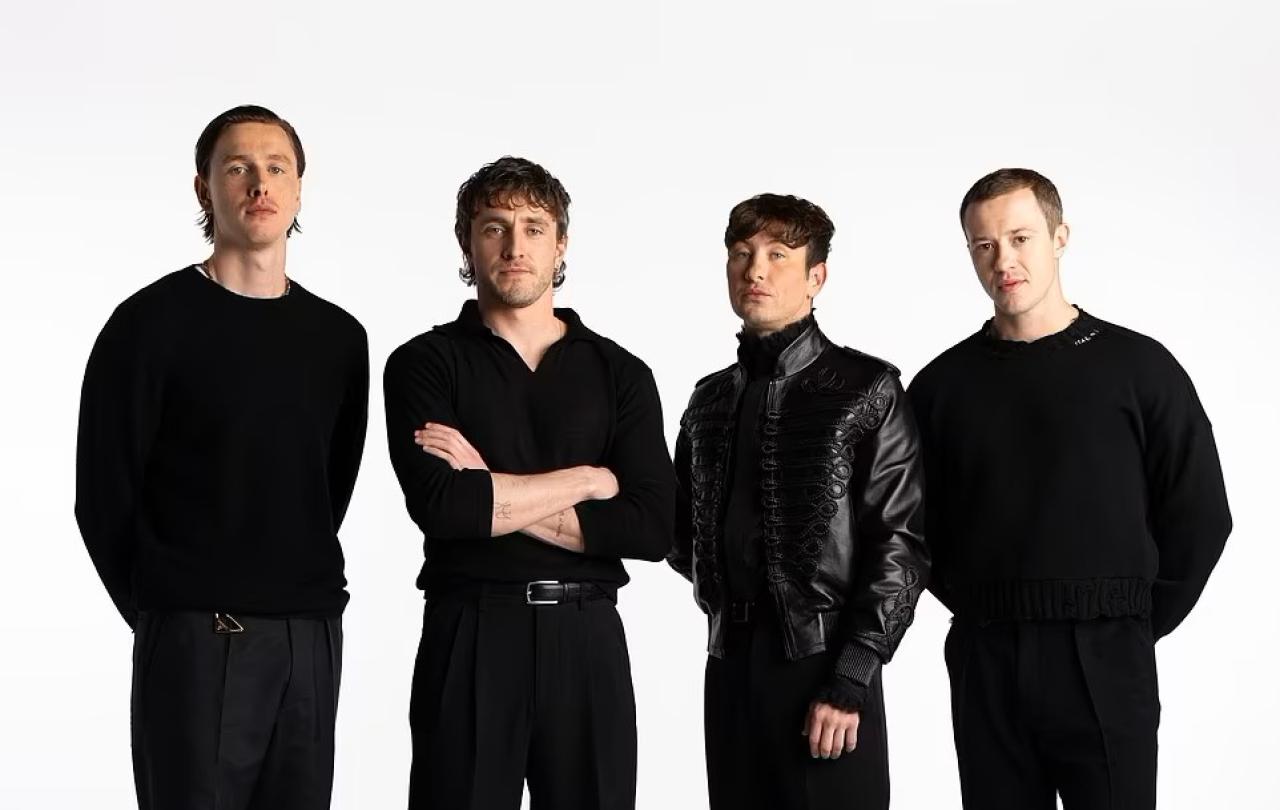
Four actors dressed in black stand together
The new cast.
Neal Street Productions.

One of the joys of moving into central London is the nostalgia. You can 'remember' anything in London, but for a Beatles fan like me (one year I was in the top one per cent of listeners globally on Spotify - impressive, I know - and it was before I had kids), the aesthetic of central London is deeply connected to the fab four. I'm aware it's not Liverpool but look what London has to offer fans of the fab four.  Abbey Road’s crossing, the rooftop performance in Savile Row, or the amount of time the fab four spent just here for the famous launch of Sgt Pepper. Walking around these streets with my headphones in, it's impossible not to smile at music that is faultlessly happy-making. 

Sir Sam Mendes, however, is taking the immersive Beatles experience to a whole new level. Four coordinated films will be released in 2028 in a stunning act of ambition and delayed gratification. Mendes' production company says it will be the first 'bingeable theatrical experience.' 

Now that the cast have been revealed, lots of questions remain: How long will the films be? Will they all be released at exactly the same time? Will there be Lord of the Rings viewing marathons? By the way - did you hear about the failed pitch for a Lord of the Rings film starring John as Gollum, Paul as Frodo, George as Gandalf and Ringo as Sam? We've missed that particular masterpiece, as Tolkien turned it down, as did Stanley Kubrick for that matter. The man it did fall to, Peter Jackson, recently also released a Beatles television experience in Get Back. Even for Beatles diehards like me I've not made it through all 468 minutes. But I saw enough to see Shakespeare being written. 

Screenwriter Peter Straughan (Wolf Hall, Conclave) said that the different script writers for the not-so-imminent upcoming four films were "firewalled off from each other", so we receive four takes truly inhabiting the shoes of each protagonist. Band members wanting their own 'main character energy'? Surely not! 

Only Mendes knows how the films will tie together. "Each one is told from the particular perspective of just one of the guys," Sir Sam told CinemaCon in Las Vegas on Monday. "They intersect in different ways - sometimes overlapping, sometimes not." 

"They're four very different human beings. Perhaps this is a chance to understand them a little more deeply. But together, all four films will tell the story of the greatest band in history." 

An omnipresent director still has infinite attention for each one us within a grander narrative arc. 

Lennon and McCartney are undeniably geniuses. But with the Beatles, they were always greater than the sum of their parts. Even the songs that were solos were credited to Lennon/McCartney. Their solo works, no disrespect, never quite reached the dizzying heights of their collective efforts. 

But a biopic for each bandmember is a terribly 2020s take. We want to feel that main character energy pulsing through our veins. While we want to feel part of something bigger, we want to feel that our lives are unique and distinct, not derivative (the latter not being a problem for The Beatles). 

But a quartet of films, "challenging the notion of what constitutes a trip to the movies", harmonising in new ways (remind you of anything as subversive and groundbreaking?) provides an utterly lovely step-change in cinema. There's been no shortage of Beatles biographies and films, but this new concept comes closer to art imitating life. Our lives have to be lived independently, but are somehow made more meaningful and rich in connection and collaboration with others.  

The philosopher Tom Morris wrote: "There are two striking human passions, the passion for uniqueness and the passion for union. Each of us wants to be recognised as a unique member of the human race. We want to stand apart from the crowd in some way. We want our own dignity and value. But at the same time, we have a passion for union, for belonging, even for merging our identities into a greater unity in which we can have a place, a role, a value.” 

Can those passions be held in tension? The Christian faith, while commending us to be outward-focused, does more than polyphonic films. It says that each of us are worthy of our own 'cinematic events'. Yes, we mightn't have started living until we have broken free from our own confines to the concerns of broader humanity, as Martin Luther King said, but an omnipresent director still has infinite attention for each one us within a grander narrative arc. 

All you need is love, they sang. But that love needs the perfect perspective of someone else. 

Celebrate our 2nd birthday!

Since March 2023, our readers have enjoyed over 1,000 articles. All for free. This is made possible through the generosity of our amazing community of supporters.
If you’re enjoying Seen & Unseen, would you consider making a gift towards our work?
Do so by joining Behind The Seen. Alongside other benefits, you’ll receive an extra fortnightly email from me sharing my reading and reflections on the ideas that are shaping our times.
Graham Tomlin
Editor-in-Chief
Article
Belief
Community
Culture
Music
1 min read

Oasis: it's all gone a bit biblical at this summer’s musical moments

We’re reaching for some ancient vocab to describe our experiences together

Belle is the staff writer at Seen & Unseen and co-host of its Re-enchanting podcast.

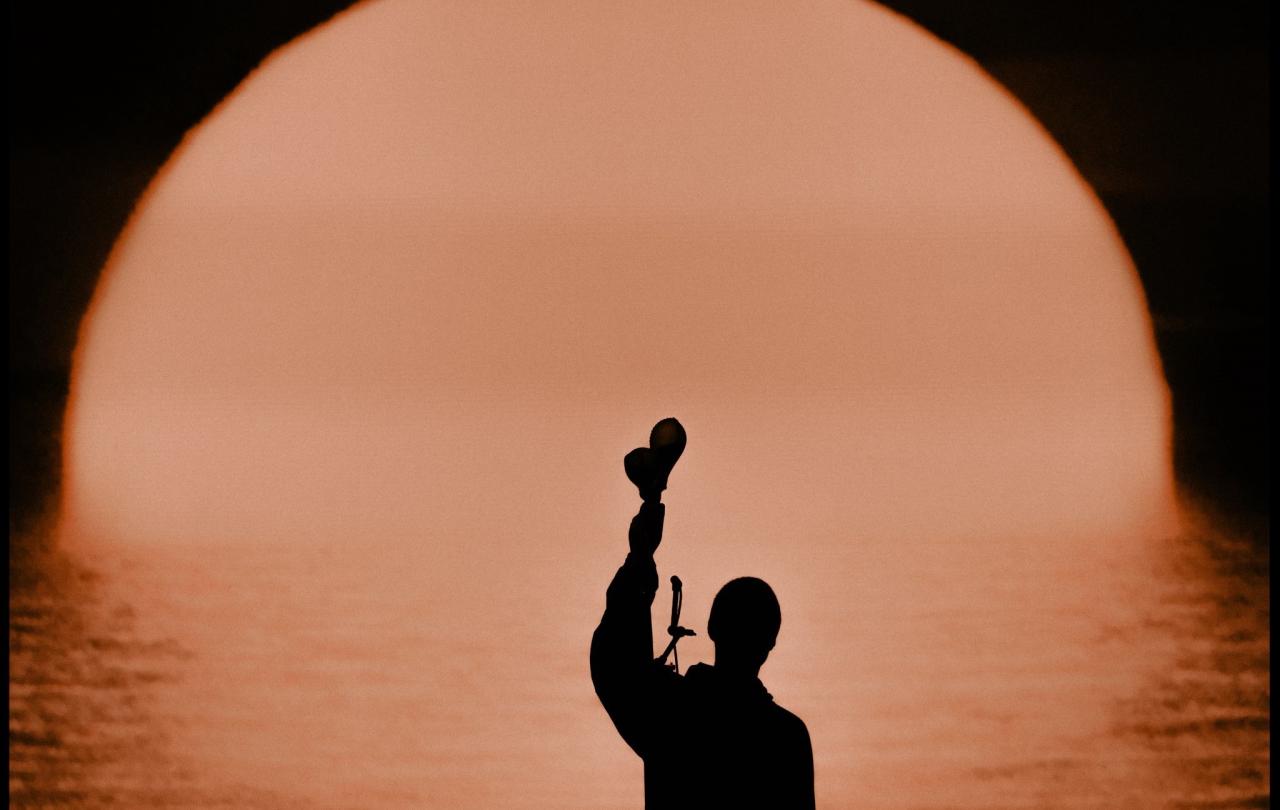
A silhouette of a musician holding up shakers.
'Cast no shadow'.
x.com/oasis

A biblical narrative keeps whirring around my mind.  

In the first century, Paul – planter of churches, writer of letters, spreader of the way of Jesus – finds himself in Athens, the Graeco-Roman city where meaning is made. He wanders around this city, soaking up its culture, noticing its priorities, watching its habits. But he doesn’t do so silently. Paul pulls out his usual party trick; yelling about Jesus here, there, and pretty much everywhere, eventually catching the attention of the local philosophers. They want to hear more, and Paul finds himself thrown in front of the Areopagus, the meaning-making council at the heart of the meaning-making city. The cultural epicentre of the Graeco-Roman world, one could argue.  

Never one to miss an opportunity, Paul gets to his feet and unleashes a monologue for the ages, kicking off with this line: ‘People of Athens! I see that in every way you are very religious…’ 

Quite the opener, isn’t it? 

It’s that opening line that my imagination seems to have gotten snagged on.  

There is so much going on around me – right here and right now, in 2025 - that makes me want to find a place into which I can scream the exact same thing. There and then, here and now, I can see that in every way we are very bloomin’ religious.  

What Paul and I don’t mean by such an assertion is that everyone our contexts are signed up – hook, line, and sinker - to an organised religion. Such an assertion would be silly, considering the data tells a different story. What I’m pretty sure Paul meant, and what I know I mean is this – in every kind of way, people are searching for that which is bigger, deeper, truer than ourselves. We are directing our attention, our energy, our worship in certain directions. We are seeking ritual and practice, wrapping ourselves in stories that give meaning to our day-in-day-out experiences, stories that tie our lived reality into something that transcends it. We’re grasping for a world that is more full of beauty, truth, and sense than we imagined; pledging allegiance to our inkling that there is something more. Yup. In every way, we, the good old human race, are very religious.  

Paul said it with his chest then, I think he’d say it with his chest now. 

There are a hundred different places that I could go in order to pluck some ripe evidence for my theory – but for now, my evidence of choice is the language being used to describe the long-awaited Oasis reunion.  

‘Biblical’ 

That’s the word being used – in national headlines and personal Instagram captions alike, ‘biblical’ is the adjective of choice.  

Isn’t that strange?  

I don’t really know what people mean by it, to be honest. According to my research, they’re taking their cue from Liam Gallagher himself, who was the first to describe the band as such. Stay humble, Liam.   

Is using ‘biblical’ as the descriptor of choice a reference to the reconciliation of warring brothers? That’s certainly a biblical motif, which I guess is being played out in real-time, witnessed by those who could afford the £400 ticket (no, I’m not bitter). Is it implying that this event is so monumental, it should be canonised somehow? Written about? Memorialised? Poured over for millennia to come? Or is it a reference to the fact that what we are witnessing is the fulfilment of rumours, prophecies, hopes and expectations?  

Maybe it’s all of the above, maybe it’s none of the above. It doesn’t really matter. What matters, at least to me, is that people are wanting to express that these gigs are more than the sum of their parts; there’s something transcendent about them, something awe-inspiring, wonder-infusing. Something that feels, dare I say it, religious about them.  

It gets even more interesting, because such sentiments aren’t reserved for the reunification of the Mancunian brothers.  

I’m still stunned, curious to the point of distraction, about the fact that we – in a secular, materialist, rational culture – cannot help but stretch toward spiritual language. 

In a podcast episode recorded in the days leading up to this year’s Glastonbury festival, the DJ and broadcaster, Annie Mac, described the event as ‘communion’, explaining that ‘when you don’t go to church, you need to get that somewhere.’ On the flip side, in the days following the festival, another DJ and broadcaster, Miquita Oliver, teased the endless Glastonbury posts that were filling up her social media feeds – she jokingly stated that ‘it all gets a little churchy after Glastonbury… like “it’s heaven on earth”… can we all relax?’  

So, here we have it again – people reaching for religious language to describe significant musical events. Be it the Oasis reunion or Glastonbury – I’m fascinated by the fact that we’re not content with stating that these gigs are merely talented people doing what they do well, and in so doing, giving us an enjoyable time. Such language may be factually accurate, but it doesn’t feel true enough to us. Rather, we’re grappling with the feeling that these events feel like something we were made to experience somehow, they they’re tapping into the deepest parts of us, perhaps?  

In the past, I’ve wondered whether this is down to the sense of profound togetherness that these events provide – how they have the ability to remind us that we’re bound to each other, only if for a night. They’re a direct afront to individualism, the biggest and sturdiest lie of our age. I’ve also reflected on the fact that they instil as sense of awe within us: raw awe. An elusive emotion that can be hard to come by, but that we were made to feel. I still think all of that comes into play. 

I’ve pondered this a thousand times and yet I’m still stunned, curious to the point of distraction, about the fact that we – in a secular, materialist, rational culture – cannot help but stretch toward spiritual language. Nothing else quite hits the spot; nothing else feels quite deep enough, big enough, true enough. Religious references and language, we’re determined to keep them in our repertoire, aren’t we? Our reliance upon them betrays us. Indeed, I’ve come to see our unceasing usage of them as a crack in the façade of disenchantment. 

Oh, people of 2025 and beyond, I can see that in every way you are very religious.  

Support Seen & Unseen

Since Spring 2023, our readers have enjoyed over 1,500 articles. All for free. 
This is made possible through the generosity of our amazing community of supporters.

If you enjoy Seen & Unseen, would you consider making a gift towards our work?
 
Do so by joining Behind The Seen. Alongside other benefits, you’ll receive an extra fortnightly email from me sharing my reading and reflections on the ideas that are shaping our times.

Graham Tomlin
Editor-in-Chief