


Re-enchanting... the universe
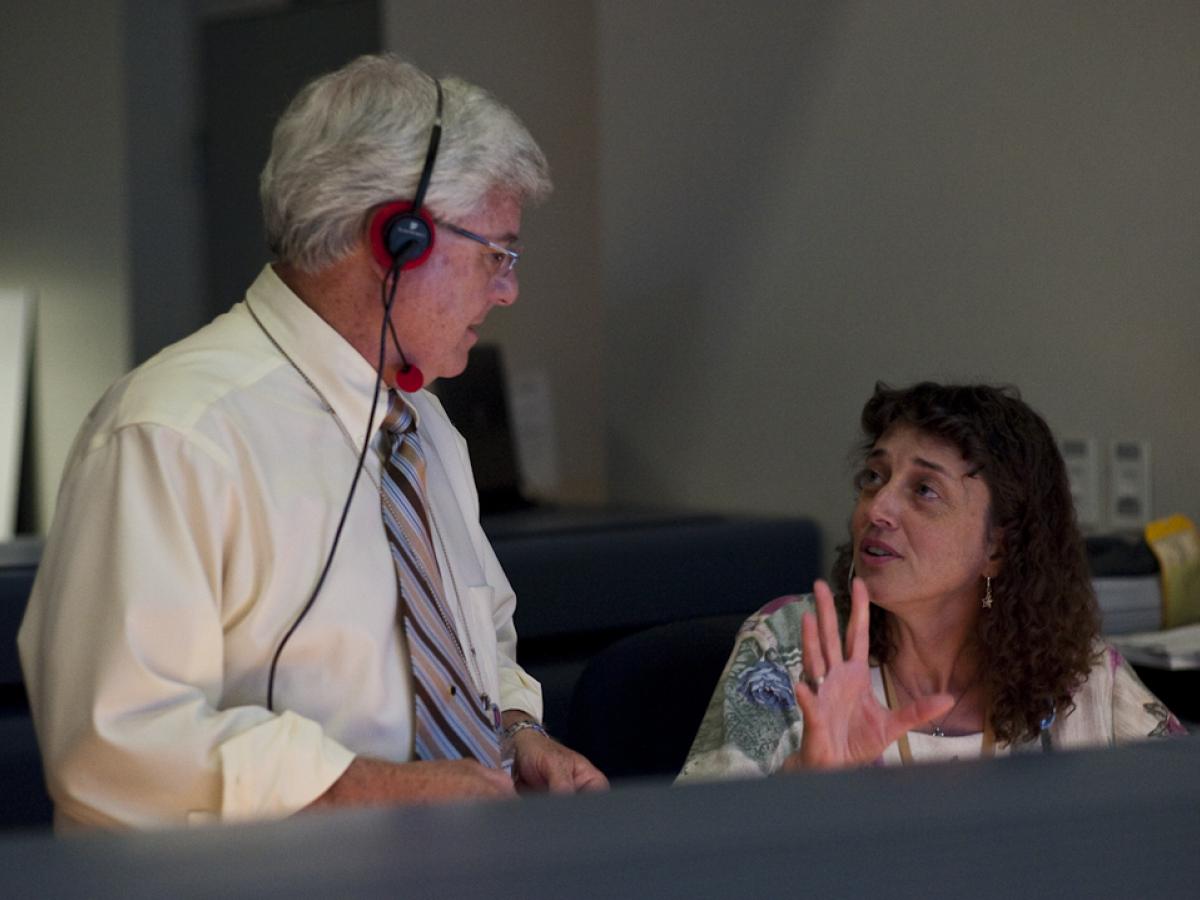
In this third episode of Re-enchanting, Belle and Justin talk all things space with astronomer, author, and speaker, Dr Jennifer Wiseman.
1 min read
It’s something of a running joke that the popular animated series The Simpsons can predict the future – so much so that this was addressed by Time magazine. It is far from the only show that has a take on our pending fate. There is no shortage of dystopian futures available to us – nuclear war, rising sea levels, zombie apocalypse, super-contagious virus… Some of these no longer feel quite as fictional or remote a possibility as we might like. Such storytelling allows us to consider what it might mean for us to live through such scenarios and, perhaps, think more carefully about how we might prevent them.
I’m sure there are movies, games, books, or TV shows that spring to mind for each of us when we think about this. For me, it is the Hunger Games and the Divergent book series by Suzanne Collins and Veronica Roth, respectively. Even when these stories offer us a hopeful possibility of redemption, they do so in the wake of disasters that humanity has failed to prevent. We are invited to dwell in the worst parts of humanity and human nature. In some stories we destroy ourselves. In others, we find ourselves simply destroyed. I find it all too easy to become preoccupied by the potential horrors in our near or distant future.
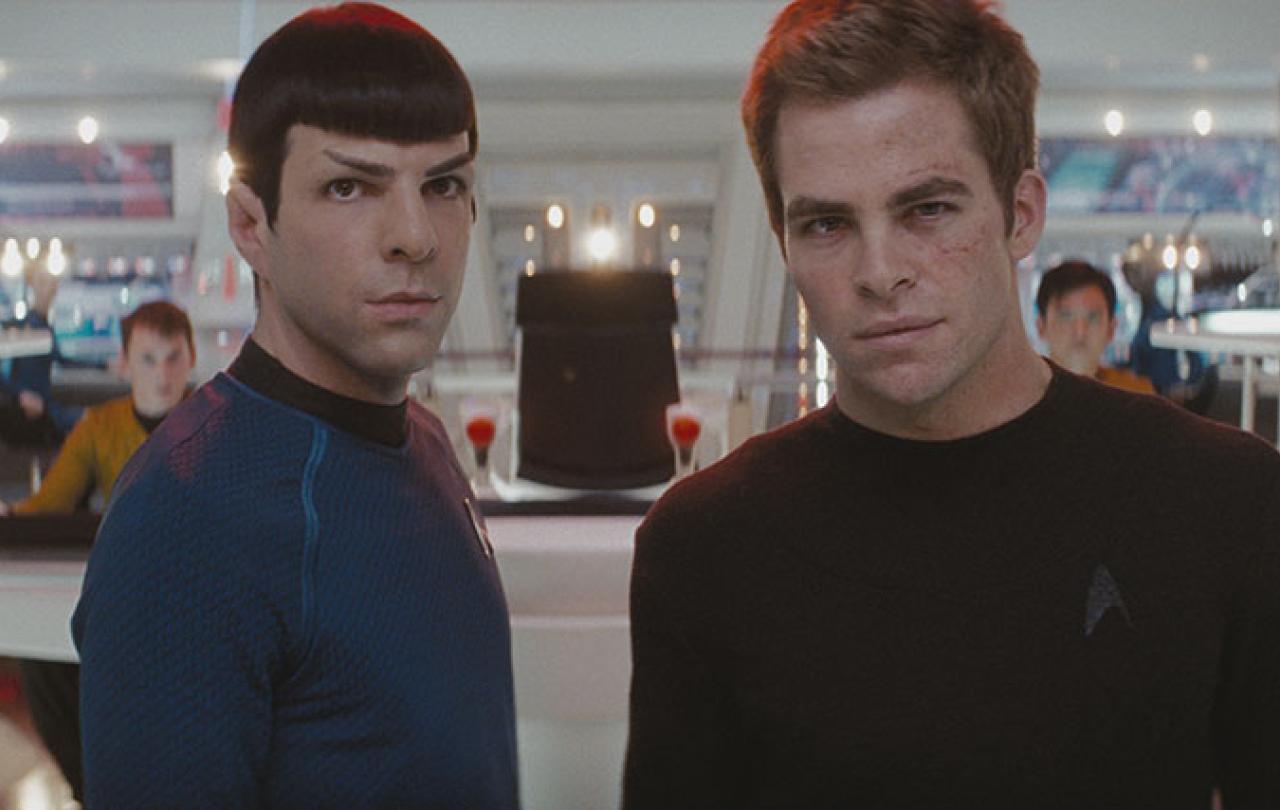
This is why I’m so drawn to the vision of the future that the Star Trek franchise offers. There’s a hopeful message at the heart of the series that makes our continued existence seem plausible but doesn’t discount the changes we need to collectively make to achieve this. I am slowly making my way through Star Trek: Deep Space 9, having now completed The Original Series (TOS) and The Next Generation, and I’m always struck by this ultimately hopeful view for our future. It’s a not-quite utopian view of the future. We don’t achieve perfection in any way but we do learn to survive and thrive despite the challenges presented to us.
What do we pass on to our literal next generation? What morals, what values? What hope for a future in which we both survive and thrive? This, I think, is the crucial point.
It's certainly not perfect. There are definitely things that are uncomfortable on the show – the portrayal of women, for one thing, often misses the mark in TOS. But I do think it represents a beginning, a promise that things can get better. I’m reluctant to write any line that begins “for its time”, but I think there is something in that here. I also defer to the judgement of someone who was actually there, contributing to the formation of the Star Trek universe: Nichelle Nichols, who played Lt. Uhura. She wrote compellingly about the importance of diverse representation in the cast and what it meant to viewers in her autobiography Beyond Uhura. She reflected there:
Like all of Gene’s characters, Uhura embodied humankind’s highest values and lived according to principles that he was certain would one day guide all human endeavor. In Star Trek Gene created a work of fiction through which he communicated a timely, yet timeless message about humankind’s power to shape its future. But most important, he gave that vision to the world: to writers, to enlarge upon; to directors, to dramatize; to actors, to personify and make real; and to audiences, to enjoy, cherish, and incorporate into their own hopes for the future and for humanity.
For all its flaws, TOS set up a universe where we could see a better and fairer future for ourselves. In this early series, there are certainly problematic elements that would be written differently today. But there is, at least, hope.
What speaks most clearly to me is the idea of stewardship. For those unfamiliar with the franchise, it began when TOS originally aired in 1966 and follows the crew of the star ship Enterprise on a five-year exploratory mission through space. On the bridge, Captain James T. Kirk is accompanied by some of the best crew Starfleet has to offer. We follow them through the stars, visiting new people(s) and places and getting into an uncanny number of scrapes.
Airing in 1987, The Next Generation shows us the new and improved Enterprise is now captained by Jean-Luc Picard and a whole new crew with new skills and talents but the principles are the same – a crew that looks out for one another and their ship, caring for their home away from home. The Enterprise changes and different people take the helm, but the common goals remain.
Perhaps if we contemplate our world to be something like this: if we consider that we might each be given a collective opportunity to hold the fate of our planet, how should we act to make sure that we hand over the best possible future to those that come next? What do we pass on to our literal next generation? What morals, what values? What hope for a future in which we both survive and thrive? This, I think, is the crucial point
There are some key messages that we can draw from Star Trek’s view of our future. Captain Kirk frequently talks fondly of an Earth that has eradicated poverty and many unjust power structures. What might need to change for us to get to a position where we hold the same values? Where might we need to sacrifice personal gain in order to create a more sustainable world? I cannot help but think that we are not acting on this as quickly as we should be. The BBC recently published an article focusing on the episode of Star Trek: Deep Space Nine in which 2024 is shown to be a year of riots and unrest on Earth. Even in our sci-fi not-quite-utopian future, our progress is slow.
I’d like to conclude with a reference to the 2009 movie reboot of Star Trek. Captain Pike says to a young Jim Kirk:
“your father was Captain of a star ship for twelve minutes. He saved eight hundred lives, including your mother's. And yours. I dare you to do better.”
What if we looked at our stewardship of our planet in the same way? We briefly, collectively, have a chance to make a difference. We have a chance to do better. We need, therefore, to boldly go.
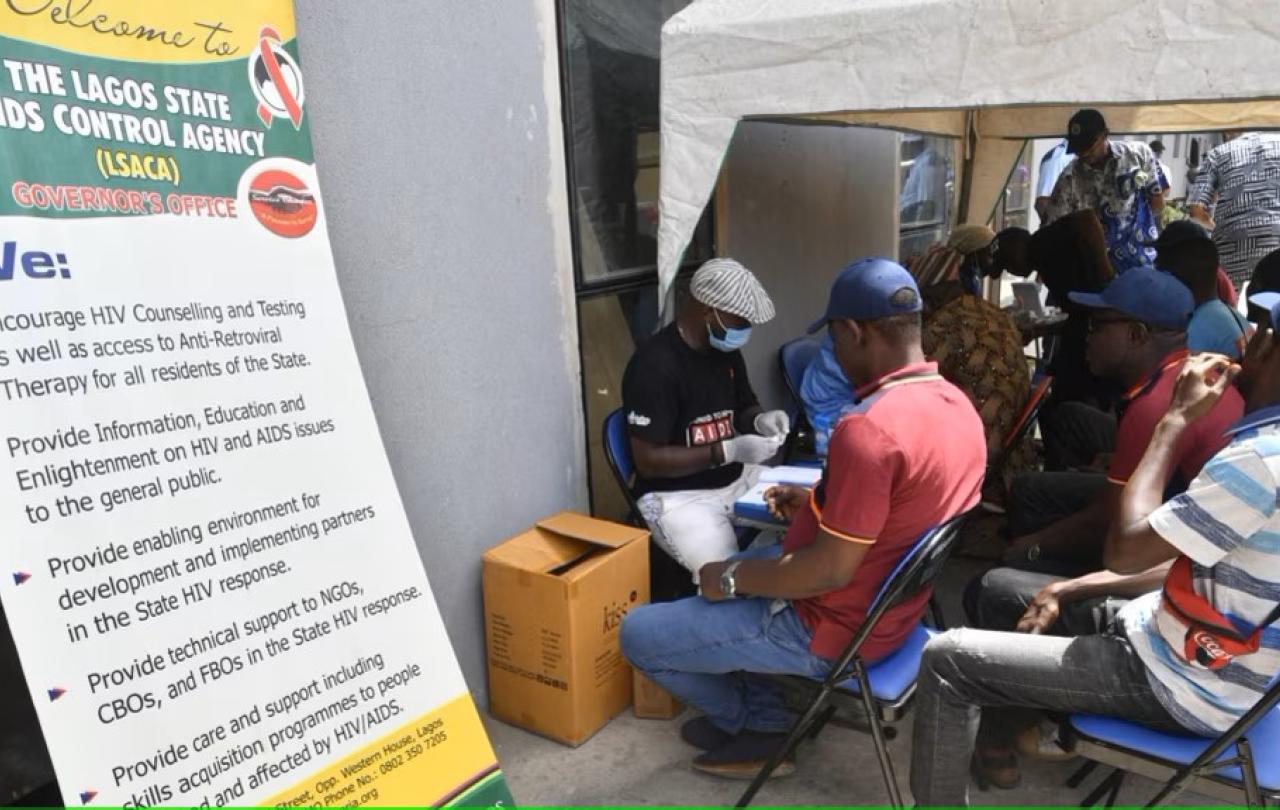
Christendom, the global community of over 2.5 billion Christians living worldwide, has many geographical capitals. Nigeria, like the United States, is one of them. Upwards of 100 million people living in Nigeria identify as followers of the Christian religion. These Nigerians belong to Christian denominations like Roman Catholicism, Anglicanism, Baptist Christianity, and Pentecostalism. On 6 February the Trump Administration announced plans to downsize USAID, the US government agency that administers foreign aid. In 2023 it managed over $40 billion, and has played a significant role in delivering aid and development support in Nigeria for decades.
Nigeria has one of the world’s lowest levels when it comes to spending on social issues. Its government’s underspending has trapped tens of millions of Nigerians in horrific, inescapable mazes of poverty. The significant challenges Nigeria faces are well-documented -socioeconomic, geopolitical, and religious ones. The protracted and infamously bloodthirsty Boko Haram insurgency (headquartered in the northeastern corner of the country) has led to the deaths of tens of thousands of Nigerians and displaced over two million people, disproportionately affecting vulnerable women and children.
Abandoned by the government, many Nigerians look to their ethnic communities, religious groups, and even other state’s agencies and charities for the support and solutions they require to survive.
In 2021 USAID commemorated 60 years of providing development assistance to Nigeria. Its historical activity has prioritised agriculture and food security, democracy, human rights, and governance, public health, and energy production. In just 2021, USAID provided Nigeria with more than $787 million in development and humanitarian assistance.
Whilst USAID support for Nigeria has historically been blind to religion, the Trump-led downsizing of development and humanitarian assistance for millions of people living in Nigeria will especially impact tens of millions of Christians, They struggle to lead lives in a country rife with Christian suffering that is ignored by powerful global actors with the financial, political, and military resources to intervene in substantive and peace-generating ways.
Southern Nigeria is disproportionately developed compared to the North. Lagos, the economic capital responsible for a third of Nigeria's GDP, sits in the southwestern corner. The south contains a majority of the leading private universities, many of which are owned and funded by Christian churches, and is home to Nigeria's largest international airport. Literacy levels among Christians in Nigeria dwarf literacy levels among Muslims, especially when compared to Muslims living in the religiously archconservative northern states.
The southern region of Nigeria has an appetite for development and the political will needed to implement an inclusive development vision that simply does not exist up north. Downsizing USAID activity in Nigeria will disproportionately affect Christians in Nigeria who for historical and contemporary reasons have been able to benefit from USAID assistance in ways developing themselves to help Nigeria compete in the global economy.
In the current 21st century geopolitical climate US-Nigeria relations are far more likely to become more rather than less relevant.
Muslims in Nigeria, if unbridled by extreme religious dogma, could just as easily undergo the processes of self-development needed to excel in 21st century economic marketplaces. However, as Nigeria's religious landscape stands today, tens of millions of Muslims simply lack access to opportunities to gain the education, training, and work experience that could unleash the full potential of the legendary Nigerian human capital famous globally.
Millions of educationally and professionally ambitious Nigerian Christians view their work in vocational terms. Inspired by scripture and theological resources like Catholic Social Teaching and the Pentecostal Doctrine of Prosperity, these Christians intentionally seek out educational and professional opportunities because they believe their faith in Christ commands them to provide for their households and invest into their communities. They believe contributions to their homes and communities double as offerings to God himself. For over six decades, USAID has administered development and humanitarian assistance in Nigeria in ways hugely benefitting millions of Christians ignored by their government.
Administering USAID aid in Nigeria has never been perfect. Bad actors, many of them government officials exploiting the authority of their offices, have stolen development funds intended for marginalized Nigerians and used it to fund their kleptocratic networks and lavish lifestyles. However, in the current 21st century geopolitical climate US-Nigeria relations are far more likely to become more rather than less relevant. USAID support provides a valuable source of American soft power able to win over the hearts of vulnerable Nigerians whose children might one day seize the reins of state power. It also continues the postcolonial project of assisting in the sociopolitical and economic development of the Giant of Africa.
Downsizing USAID assistance to Nigeria undercuts investment in the lives of millions of Nigerian Christians disproportionately positioned to drive the country in the direction of evolving into just the kind of capable ally in Africa the US wants to work with long term.
Seen & Unseen is free for everyone and is made possible through the generosity of our amazing community of supporters.
If you’re enjoying Seen & Unseen, would you consider making a gift towards our work?
Alongside other benefits (book discounts etc.), you’ll receive an extra fortnightly email from me sharing what I’m reading and my reflections on the ideas that are shaping our times.
Graham Tomlin
Editor-in-Chief