Article
Comment
Politics
Truth and Trust
5 min read

The ancients had the right words for Trump’s tussle with the BBC

Can the truth be concealed?

Hal is a theologian and writer based in London.

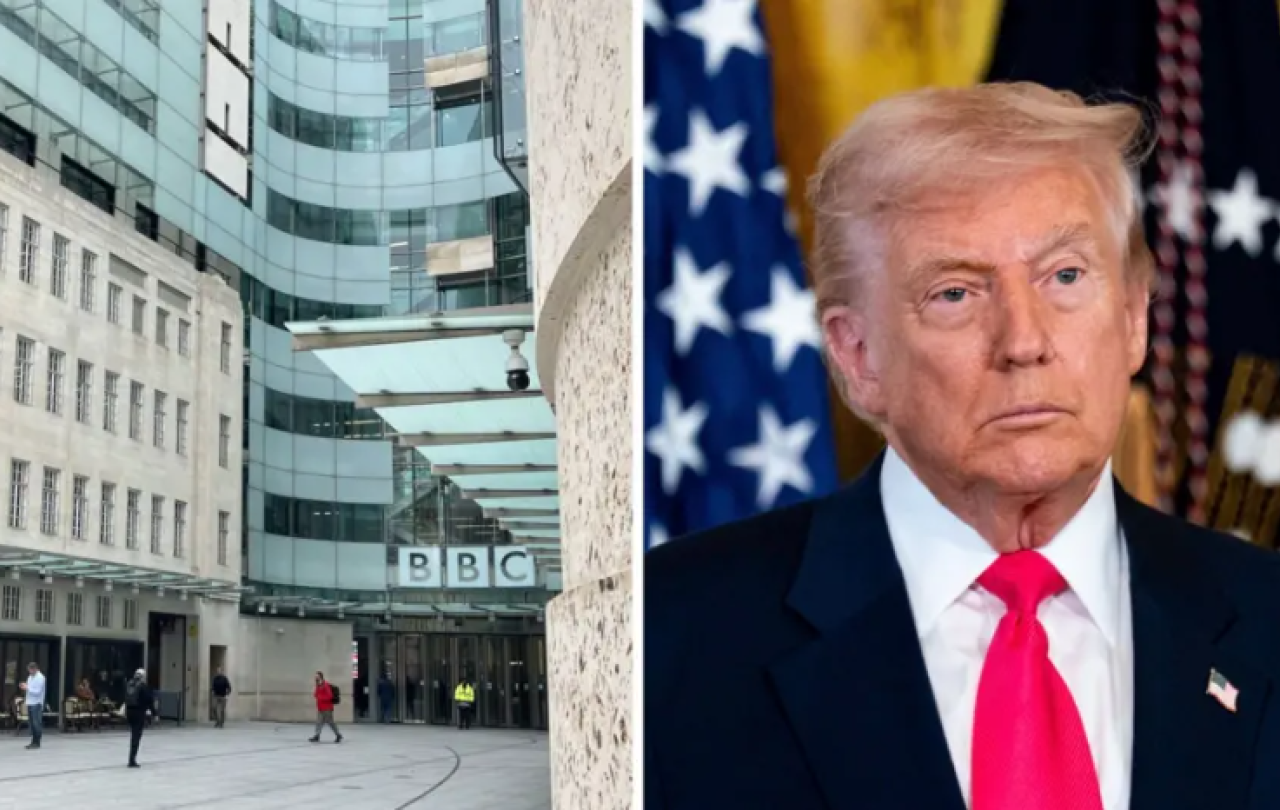
A composite images shows the entrance to the BBC on one side and Donald Trump on the other
BBC.

The recent controversies surrounding the BBC's leadership and the lawsuit brought by Donald Trump may appear, at first glance, to be merely another chapter in the ongoing drama of contemporary politics and media. Yet for those with eyes to see, something far older and more profound lies beneath the surface turbulence—a perennial struggle concerning the very nature of truth itself, one that reaches back to the dawn of Western thought and touches the deepest springs of our common life. 

The sequence of events is itself instructive. The disturbances at the Capitol occurred on January 6, 2021. More than three years thereafter, the BBC's Panorama programme broadcast an investigation examining the relationship between Mr Trump's rhetoric—his exhortation to "fight like hell"—and the violence that ensued. The programme did not fabricate a narrative but rather sought to interpret one, attempting to hold words and their consequences together within a coherent moral framework. This work was, in its essence, what the pre-Socratic philosopher Parmenides termed Aletheia: truth understood as 'unconcealment', the patient labour of bringing into public view that which has been hidden or obscured. 

A vocation 

When the crisis deepened, the BBC's then Director of News, Deborah Turness, reaffirmed the Corporation's mission as the pursuit of truth "with no agenda". It was a well-intentioned defence, though perhaps insufficiently bold. For the BBC's founding vision was never a pursuit of neutrality as an end in itself, but rather the pursuit of truth in service of the common good—a vision given permanent expression in the inscription carved into the very walls of Broadcasting House: 

"This Temple of the Arts and Muses is dedicated to Almighty God... It is their prayer that good seed sown may bring forth a good harvest... that the people, inclining their ear to whatsoever things are beautiful and honest and of good report, may tread the path of wisdom and uprightness." 

This inscription is no mere ornament. It constitutes a theological statement concerning the vocation of public speech. The call to sow "good seed"—echoing Jesus’ parable of the sower in St Matthew's Gospel—the summons to attend to whatsoever things are "honest and of good report" as St Paul exhorts in his letter to the Philippians, and the call to walk "in wisdom and uprightness" from the book of Proverbs—all these speak to a moral order in which words are meant to bear fruit. Panorama's investigation may be understood as a contemporary attempt to fulfil this sacred charge: an inevitably human and imperfect effort to unconceal the connection between language and its consequences in the world. 

The ancient force of oblivion 

Mr Trump's response, however, embodies a different and equally ancient force: Lethe—the personification of oblivion and forgetfulness in Greek thought. His lawsuit is not simply a defence against an allegation he finds unwelcome. It represents, rather, a strategic campaign to enforce forgetfulness. What Trump has chosen to bring into the light is not his own intent or action, but rather the BBC's editorial process. By directing all attention toward the matter of editing, he seeks to bury and render forgotten the original and far more consequential question: the demonstrable connection between his words on the sixth of January and the violent response of his supporters. The strategy is to employ a minor unconcealment—the technical matter of the edit—in order to accomplish a major concealment: the causal chain linking rhetoric to riot. 

This, then, is the quiet heart of the matter. The lawsuit functions as a modern political instrument deployed within an ancient philosophical conflict. It represents a deliberate choice for Lethe over Aletheia, aiming to dissolve the connection between word and reality, and to immerse the most uncomfortable truths in the waters of oblivion. 

For Christians, this struggle occupies familiar ground. To stand for truth is not to claim infallibility—a pretension that belongs to God alone—but rather to participate in the slow, difficult work of revelation: to bring things into the light for the sake of healing and restoration. Whether in journalism, the Church, or the wider public square, truth remains first a vocation before it becomes a verdict. 

The crisis at the BBC, therefore, is not merely about institutional governance or corporate reputation. It serves as a reminder that the pursuit of truth is always a contested act of unconcealment, perpetually threatened by the seductive pull of forgetfulness. In an age tempted by distraction and denial, even imperfect truth-telling becomes an act of faith—a wager that reality is trustworthy, that words have weight, that consequences follow causes. 

A reason to persevere 

This ancient struggle between unconcealment and oblivion offers perspective on our present moment. For those who hold religious faith, it recalls St John's testimony that "the light shineth in darkness, and the darkness comprehended it not"—a conviction that truth ultimately prevails. For those who do not share such faith, the argument stands on its own philosophical ground: that truth-telling, however costly and imperfect, serves something greater than partisan advantage or institutional survival. 

The inscription at Broadcasting House speaks to both believer and non-believer alike. Its prayer for "good seed" and "good harvest", its call to attend to things beautiful, honest, and of good report, articulates a civic ideal that transcends particular creeds. It suggests that public institutions bear a responsibility—not to be infallible, but to resist the gravitational pull of forgetfulness, to maintain the connection between words and their consequences, to choose unconcealment over oblivion. 

Whether one grounds this commitment in theological conviction or in secular principle, the work remains the same: the slow, difficult labour of bringing uncomfortable truths into the light, trusting that a society capable of facing reality is stronger than one that retreats into comfortable fictions. In an age tempted by distraction and denial, this may be reason enough to persevere. 

Support Seen & Unseen

Since Spring 2023, our readers have enjoyed over 1,500 articles. All for free. 
This is made possible through the generosity of our amazing community of supporters.

If you enjoy Seen & Unseen, would you consider making a gift towards our work?

Do so by joining Behind The Seen. Alongside other benefits, you’ll receive an extra fortnightly email from me sharing my reading and reflections on the ideas that are shaping our times.

Graham Tomlin
Editor-in-Chief
Article
Comment
Community
Migration
Politics
5 min read

Our problem with immigration is not open or closed borders but the decline of Christianity

Christianity doesn’t provide immigration policy, but it could still unite our communities

Graham is the Director of the Centre for Cultural Witness and a former Bishop of Kensington.

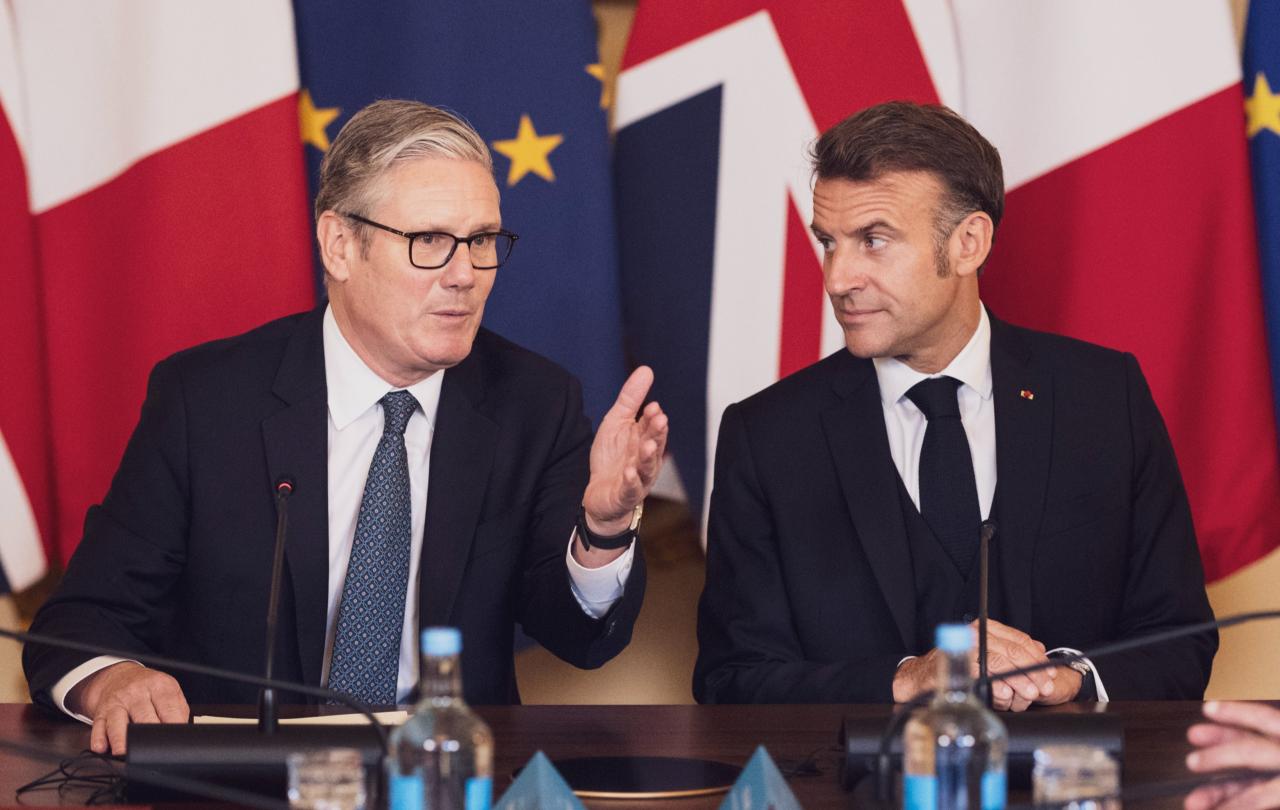
Keir Starmer and Emmanuel Macron in front of flags.
Starmer and Macron announce their deal.
10 Downing Street.

So Keir Starmer and Emmanuel Macron have done a deal on migrants. One in, one out. The EU might yet block the plan, and it may fail as many have before it. The Conservatives’ Rwanda idea never got off the ground. Will this one? Labour hail it as a breakthrough with the French agreeing to take back some migrants for the first time. The right-wing media complain this is a drop in the ocean and will make precious little difference. 

What interests me is the role Christianity plays in this debate, invoked as it is on both sides of the argument.  

On the right, the argument runs like this: Britain is (or used to be) a Christian country. It is now in danger of being overrun by people who do not share that faith, or the values that are rooted in Christianity. Therefore, we must put a rapid halt to excessive immigration, especially migrants from conservative Islamic countries such as Afghanistan, Somalia or Pakistan. If we don’t, we will see the UK change dramatically and lose its distinct Christian identity.  

So, in a speech last year, Reform leader Nigel Farage claimed that “Judeo-Christian values” are at the root of “everything” in Britain. These values, he said, were that “the family matters, the community matters, working with each other matters, the country matters.” 

I’m sure they do. Christianity has shaped the character of the UK over centuries. And there is undoubtedly a sense in many places, especially more deprived ones, that communities have changed and are becoming unrecognisable from what they were. The chattering classes in Hampstead and Chipping Norton are hardly likely to feel the pinch, yet Bradford or Burnley can feel very different now than they did 50 years ago.  

Yet it’s hard to identify Farage’s values as distinctly Christian. Many Muslims would claim much the same, and it would be difficult to describe his list as an adequate summary of the message of Jesus. ‘Judeo-Christian values’ are often identified on the right as being the same as ‘British values’, which are defined by the UK government as “democracy, the rule of law, individual liberty, and mutual respect and tolerance of those with different faiths and beliefs.” It’s hard to imagine anyone getting crucified for preaching that.  

Yet Christianity is also used on the left. While he was Labour Leader in 2019, Jeremy Corbyn invoked Jesus in a call to welcome migrants: “The refugee crisis is a moral test. Jesus taught us to respect refugees. He himself said 'welcome the stranger…’ And the Bible says, 'the foreigner residing among you must be treated as your native-born'. 

He had done his homework. It’s a better account of the teaching of Jesus. Yet on the left, the welcome of the refugee is often part of a wider and deeper value of ‘diversity’ as a good in itself. Multiculturalism, the kaleidoscope of cultures found on many high streets with Indian, Thai, Italian, Moroccan restaurants, or the image of kids from different countries and religions happily running around a school playground is a beloved trope of secular progressive liberals.  

The trouble is that it is not how it feels to many in parts of Luton or Leicester. The residents of Hampstead and Chipping Norton can embrace multiculturalism because it does not fundamentally threaten their way of life.  

“The ebbing away of the faith is greeted with barely a fraction of the passion which accompanied Brexit.” 

Bijan Omrani

Embracing strangers is easier if you have a settled place to welcome them into. A home where the family gets on well, where the parents are united, the kids are content, is much more likely to be able to welcome in unknown guests with a proper curiosity to learn from them. A family full of tension and bickering is unlikely to welcome the stranger at all, as the newcomer will strain existing tensions even further. 

As theologian Oleg Dik writes: “A society which loses a sense of shared broad and strong identity is unable to welcome a stranger…. What makes us different is enriching only as long as we are all aware that we have something uniting us. In the absence of a uniting bond, difference turns out to be threatening.” 

The vision of the left – of diversity as an end in itself, held together only by a loose idea of tolerance or secularity which no-one thinks is worth dying for, threatens to erode the ties that bind us, as it gives no clear centrifugal core that can hold us together. 

Christianity doesn’t give you an immigration policy. Both left and right can claim some legitimacy in the Christian narrative. However, what Christianity does provide is a community that offers a moral schooling centred on the worship of Jesus, as the one who shows us the true shape of human life, the necessity of self-sacrifice, not self-indulgence as the key to a functioning communal life, and the sacred value of each person - beliefs which, in turn, can welcome the stranger into a secure and confident home.

These things have, over centuries, seeped out from their intense core in the Christian Church into wider society. Arguably today, they are being eroded ironically more by secularism than by Islam.  

The real problem of our time is not mass immigration (as the right would have it) or the failure to fully open borders (for the left). It is the widespread erosion of Christian faith.  

As historian Bijan Omrani puts it: “Christianity’s disappearance is being accepted with little consideration or debate. The ebbing away of the faith is greeted with barely a fraction of the passion which accompanied Brexit.” Now this may largely be the fault of the church itself, a failure of courage about its own message, and appearing like another social lobbying group for various causes rather than a community centred on the worship of Jesus. But it's also down to the swathes of middle class, educated Britons – like Nigel Farage and Jeremy Corbyn - who like to claim the name of Jesus when it suits, and who live off the cultural heritage of Christianity without investing into its future by going anywhere near a church.  

A good immigration policy needs the compassion that welcomes the vulnerable stranger. Yet it also needs a strong united community with a shared set of values, to welcome them into. Left and right may use Christianity in their rhetoric. But both miss something vital - that Christianity has to be practiced not just argued over. 

A renewed Christianity might be the saving of both right and left - or at least offer a deeper and richer narrative than either can offer on their own, one that provides a strong core that can holds a society together, yet also welcome the stranger as a gift and not a threat. 

Support Seen & Unseen

Since Spring 2023, our readers have enjoyed over 1,500 articles. All for free. 
This is made possible through the generosity of our amazing community of supporters.

If you enjoy Seen & Unseen, would you consider making a gift towards our work?
 
Do so by joining Behind The Seen. Alongside other benefits, you’ll receive an extra fortnightly email from me sharing my reading and reflections on the ideas that are shaping our times.

Graham Tomlin
Editor-in-Chief