Article
Character
Creed
4 min read

The zeal of Simon Reeve

Is personal conviction enough to persuade others to change the world?

Steve is news director of Article 18, a human rights organisation documenting Christian persecution in Iran.

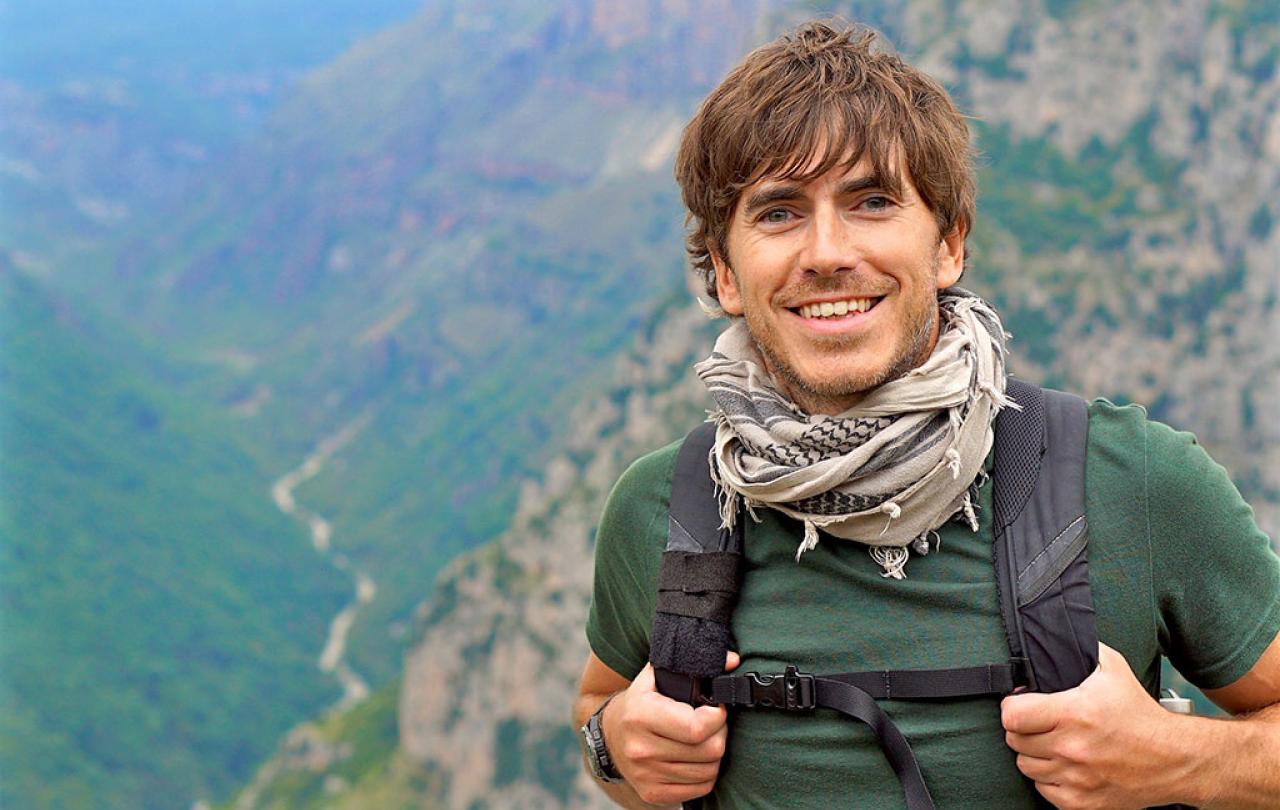
An enthusiastic hiker stands in front of a view down a valley, smiling and holding his backpack straps.
Simon Reeve on his travels.

It wasn’t until I took my seat in Exeter’s Great Hall the other Friday that I noticed the title of the Simon Reeve show I had bought tickets for over a year prior - “To the Ends of the Earth” - and it was to prove apt. 

The seemingly ageless TV presenter was his usual effervescent self as he regaled the audience with stories from some of his journeys to the distant place of the world - the Ends of the Earth.  

We were taken from the hottest to the coldest places, the wettest to the driest; and alongside humorous and poignant anecdotes, there was also an almost evangelistic zeal in Reeve’s frequent pleas to “green” our money and time. 

“Less screen time, more green time!” he revealed is a Reeve family motto. 

And if he could give us one piece of advice, he said, it would be to “green” our pension - ensuring that the money invested goes to good causes that reduce our carbon footprint, rather than, say, to tobacco or oil companies.  

It may not make us as much money, he said, but it would do more for the environment and reducing our carbon footprints than never getting onto another plane. 

Food for thought.  

Although, perhaps surprisingly, Reeve is actually somewhat of an advocate for tourism. 

For despite the carbon footprint and potential to tarnish some of the best places on Earth, tourism also provides an important source of income and an economic reason to keep beauty spots special, he explained. 

We can ask people as nicely as possible not to cut down trees or to look after wildlife, he said, but if they have an economic incentive, it’s likely to prove more persuasive. 

Perhaps my biggest takeaway from the show was the passion with which Reeve spoke about the climate, “Mother Earth”, “Mother Nature”, “the natural world”, and “the spinning rock on which we live” - all phrases that he used.  

At times, his language was almost spiritual.  

But perhaps another motivator that could spur us on to action could be the knowledge that each of us have been charged by our Maker - another word employed by Reeve - with the responsibility to care for our world. 

He talked about time in the great outdoors as being “good for the soul”. He even shared how on a recent visit to Greenland, it had made him - “as someone who is not religious” - consider whether there really might be a Creator, as it seemed as though the huge pool of ice there had been intentionally left there as a warning to the world not to melt it. 

And as I reflected later on all I had seen and heard, I wondered whether, without a religious conviction, we may be lacking a persuasive motivation for people to stop destroying our planet ever further. 

Humanists may argue that there's a shared humanity to fight for, but if we are just living for this one life, isn’t the most logical course of action to look out only for one’s own immediate interests?  

Might we need another incentive, in the way Reeve explained that money can encourage people to look after their local habitats? 

 I wondered whether Reeve had known when he chose the title of his show that he was quoting the last words of Jesus, when he said his disciples would be his witnesses in Judea, Samaria, and “to the ends of the Earth”.  

In the case of lovers of the planet like Reeve, perhaps their witness to the ends of the earth is the message of just how wonderful our planet is - and this is certainly a very valuable message.  

It is to be hoped that the many thousands who will have heard Reeve’s message on this tour and on the screen will do their own bit to make our planet a better place.  

But perhaps another motivator that could spur us on to action could be the knowledge that each of us have been charged by our Maker - another word employed by Reeve - with the responsibility to care for our world.  

I certainly find it a motivating factor. 

And in spite of all our faults, Reeve said that the real highlight of all his travels has been the people he has met, and this has also always been my experience. 

You can find such love in our species, he said - “the best species that there has ever been on our planet” - and I would agree, even if we reached the same conclusion based on a contrasting set of overriding beliefs.
Review
Creed
Film & TV
Friendship
4 min read

Testament soulfully re-tells the acts that changed the world

What happened after The Chosen?

Giles Gough is a writer and creative who hosts the God in Film podcast.

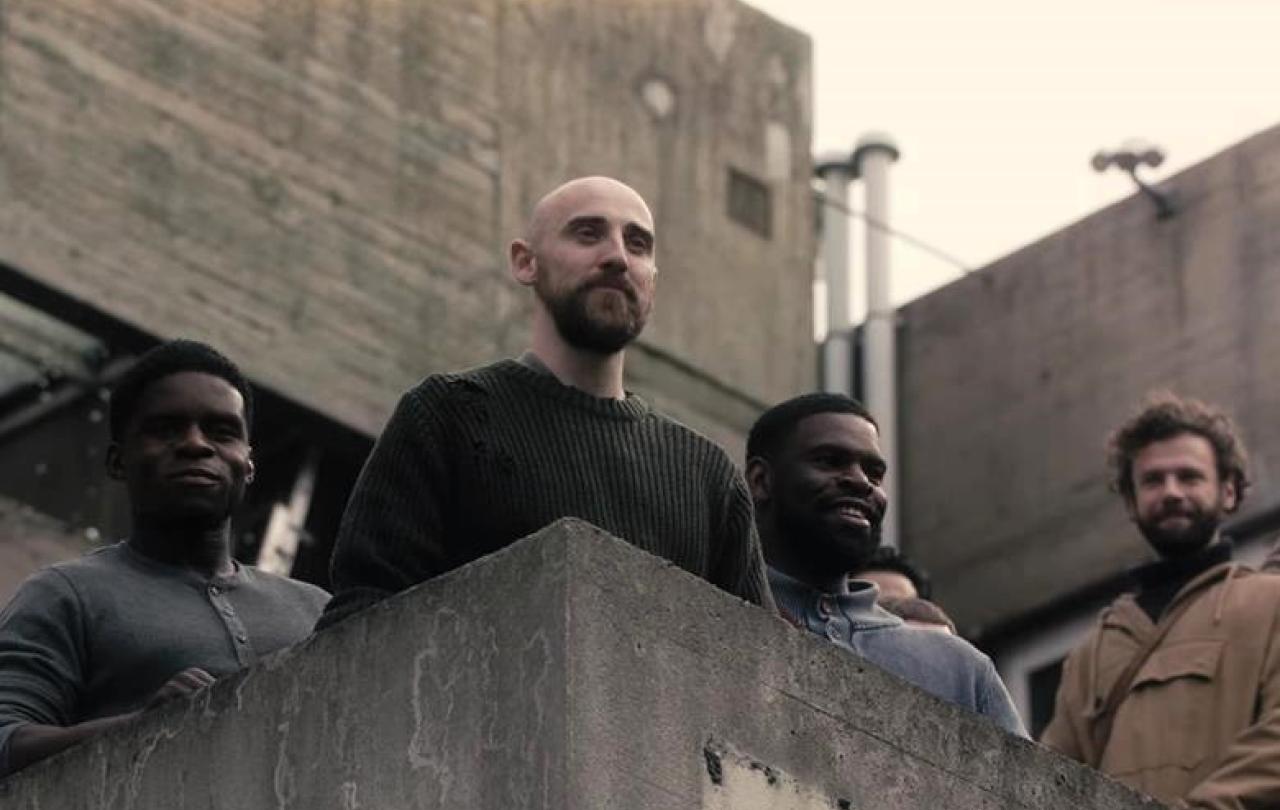
A man stands the landing of an external staircase and stares out.
Angel Studios.

Testament reimagines the story of how Jesus’ disciples spread the good news of him to the world by transplanting it to an alternate-modern era. Swapping Jerusalem for London. As the followers risk everything to preach the good news, the Temple races to silence them before the oppressive Imperium retaliates. But public miracles and divided loyalties force both sides to confront the true cost of their choices. In the first episode it asks the question, what would it be like if the Son of God had come down from heaven, come to your very hometown, and you’d missed him? 

Most re-tellings of the early church usually end the story either with Jesus’ resurrection, or his ascension into heaven. Testament starts the action just after Pentecost, fifty days after Jesus’ death and resurrection. In Christianity, Pentecost is the day when the Holy Spirit descended on the Apostles like “a violent wind” and gave them not just the ability to be understood in any language, but also the courage and conviction to go out and tell people about Jesus. We see much of the action through the character of Stephen, a young man who decides to follow Jesus after hearing the Apostles preach. Consequently, Stephen’s mother accuses him of heresy and throws him onto the street, making him fully dependent on this early Jesus movement.  

In the first episode, the storytellers seem to have presented themselves with a bit of a challenge, by starting the action at Pentecost. Not only does it seem like the most interesting events have just happened off camera, but we’re also meeting these characters in a moment of spiritual awakening and holy joy, which is notoriously hard to depict on screen. Especially with characters we’ve just met. Nonetheless, as they navigate the logistics of having so many converts all at once (the kind of happy problem any church minister would like to have) we see that the Apostles have a familiar, lived-in quality to their inter-personal dynamics. You can easily believe that these very different men have spent every day living and working with each other for the last three years until they’ve sanded off the rough edges of their relationships.  

Whilst the show doesn’t always hold together at first, it builds momentum by tackling some of the more difficult parts of the book of Acts with sensitivity and nuance. It’s helped by the performances being incredibly watchable. The colour-blind casting is a delight, and perhaps reflective of Christianity being the most ethnically diverse religion on the planet. Tom Simper, who plays Peter, has an incredibly expressive face and a compassionate manner. Kenneth Omole who plays John can be vulnerable as he returns to the garden of Gethsemane to mourn the absence of his friend and saviour. Yet the next scene, where he is confronted by a Temple priest, he emanates a quiet authority. You can’t take your eyes off him.

If nothing else, this show gives Saul a compelling backstory and a terrifying characterisation.

Making Stephen the point of view character is a bold narrative choice. Anyone with a passing knowledge of the New Testament might feel anxious for the character, and having him be played by such a young actor as Charles Beaven underscores the upcoming tragedy. Mogali Masuku plays Mary as a woman with her head thoroughly screwed on. Her storyline shows Mary ministering to addicts and victims of human trafficking, looking gangsters dead in the eye and telling them these lost souls belong to Jesus now. On the other side of the divide is Saul. Eben Figueiredo plays him with the type of zeal that allows people to do both wonderous and terrible things. If nothing else, this show gives Saul a compelling backstory and a terrifying characterisation. It’s Saul, not the Temple establishment, who is the main antagonist of this season.  

If there is one clear misstep, perhaps it’s the depiction of what the show calls ‘The Sentinels’, the foot soldiers of the ‘Imperium’, a stand-in for the Roman Empire. Rather than being dressed in modern military fatigues, they are clad head to toe in a red, faceless body armour. The type that would be more at home in the Star Wars universe. They’re possibly dressed like this to represent the empire’s overwhelming and sinister military power, but as we see repeatedly through world events, human cruelty looks painfully normal. 

The timing of this show seems noteworthy as well. This show drops roughly a year after Angel Studios, the producers of Testament, were forced to split from the creators of The Chosen. Following the lives of the Apostles as they begin to follow Jesus, The Chosen became a monster hit and the flagship show of Angel Studios’ catalogue. So a show following the lives of the Apostles after Jesus leaves them (albeit transplanted to a different time), might be an attempt by Angel Studios to recapture some of the popularity they have lost.  

Testament definitely has a faltering start, but it has all the ingredients to be compelling TV. If you can stick with this show as it finds its feet, you will be treated to a soulful depiction of an oft-overlooked part of the Jesus story. 

Watch the trailer

Support Seen & Unseen

Since Spring 2023, our readers have enjoyed over 1,000 articles. All for free. 
This is made possible through the generosity of our amazing community of supporters.

If you enjoy Seen & Unseen, would you consider making a gift towards our work?

Do so by joining Behind The Seen. Alongside other benefits, you’ll receive an extra fortnightly email from me sharing my reading and reflections on the ideas that are shaping our times.

Graham Tomlin
Editor-in-Chief