Review
Culture
Digital
Film & TV
5 min read

Local Hero’s 40-year-old lesson about relationships

As social media divides us and generates simulated experiences and friendships, it's a gorgeous and glorious antidote.
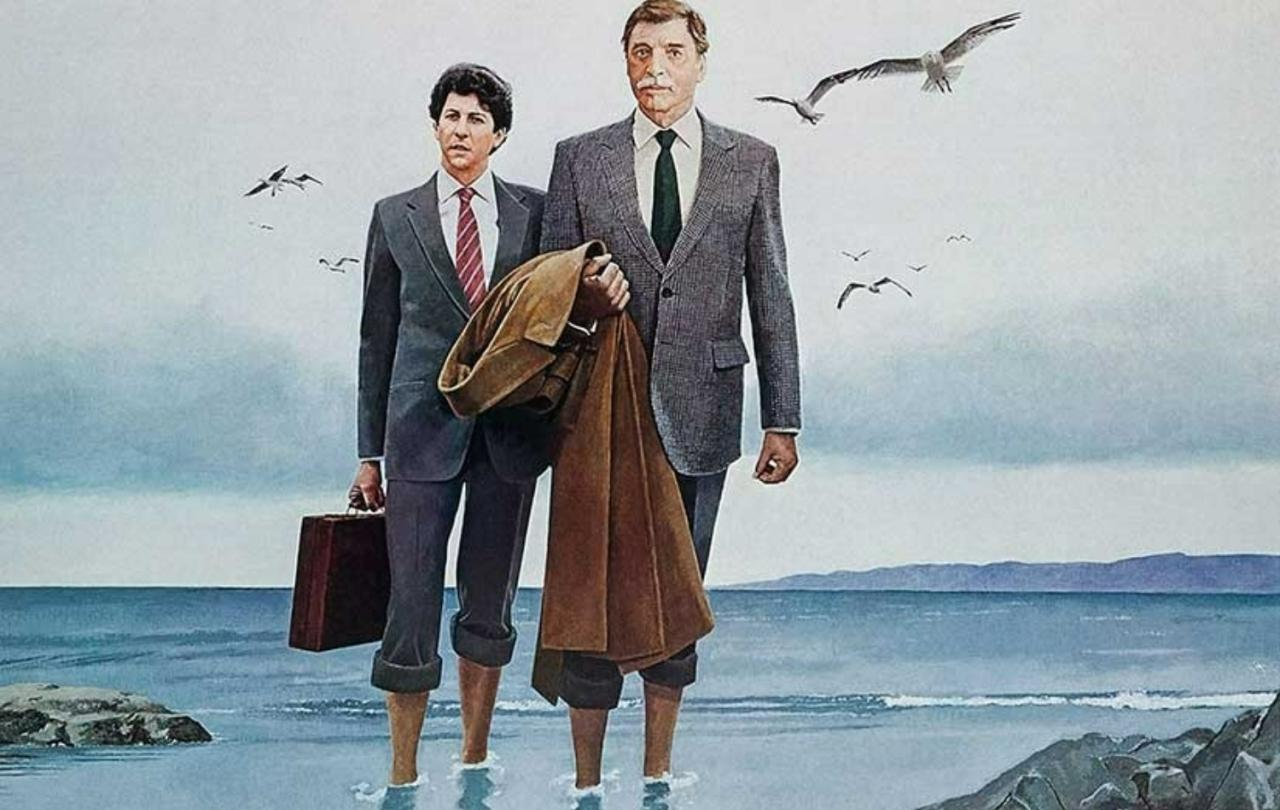
Two business men in suits hold coats and briefcases, stand in the sea with their trousers rolled-up above their ankles
Local Hero's iconic cinema poster.
Warner Bros.

This year marks four decades since the release of Bill Forsyth’s masterpiece, and it is a real joy to have the excuse to revisit it. Local Hero is a glorious warm-mug-of-tea of a film: charming, gentle, sweet, gorgeous, and funny in the kindest and most uplifting way. What’s more, its theme and message are as pertinent as they were forty years ago… more so, actually. 

Local Hero follows Peter Riegert’s Mac, a faux-Scotsman who is displaced from his busy life as an oil executive in Houston to the small Highland village of Ferness. There he is expected to oversee the sale of the village and beach so it can be developed into an oil refinery. The eccentric and astronomy obsessed owner of the oil-company Felix Happer, played by Burt Lancaster, thinks that Mac is just the right man for the job on account of his name sounding Scottish. 

Watch the Local Hero trailer

Upon arriving in Scotland Mac meets Danny Oldsen (Peter Capaldi) who will be his assistant from the Scottish branch of the company, and the two set off on the journey to Ferness – meeting Jenny Seagrove’s love interest and an ultimately unfortunate rabbit. When in Ferness Mac must contend with Denis Lawson’s hotelier-barman-accountant Gordon Urquhart, an affable but shrewd negotiator who is determined to get as much money as possible for the people of Ferness. During his stay Mac is baffled, bemused, and slowly bewitched by the colourful locals, from Urquhart’s wife Stella to Soviet fisherman Victor to shabby beachcomber Ben. 

I dare not say much more about the plot so as not to rob you, dear potential viewer, of the delightful experience of allowing Forsyth’s perfect writing and delicate directing envelop and clam you, take you by the hand and lead you through the story with grace and wit. The performances are lovely, Mark Knopfler’s haunting soundtrack (a balancing of folk, soft-rock, jazz, and electronica) complements the scenery, and the BAFTA nominated cinematography by Chris Menges captures that wild and rugged coastal landscape in all its glory. The Scottish landscape is really the unspoken lead of the film, and more often than not transports the viewer into the transcendent realms of the sublime! 

I chose my words carefully: the theme of the film is very much about the power of natural beauty to change the values and perspective of the individual. Mac begins the story as a high-powered and cynical corporate man – willing to lie about his name and preferring to do deals over Telex than have real human interaction with clients. Oldsen is young and ambitious, fascinated by the glamorous lifestyle of the US, and keen to do well in his chosen profession. Yet over the days and weeks that they spend in Ferness, their outlook begins to change.

What is wonderful about Bill Forsyth’s subtle storytelling is that we know all this not because of any grand speeches, but with little visual cues. 

The sheer beauty and simplicity of the coast takes hold of the businessmen and overwhelms their ambition and materialism with the power of the sublime. What is wonderful about Bill Forsyth’s subtle storytelling is that we know all this not because of any grand speeches, but with little visual cues. Slowly the dress of the two men devolves to mirror their thoughts and feelings: from the full corporate dress, to the removing of a tie, to by the end of the film dressing like a local in a proper cable-knit sweater. Mac comes to see that emptiness and vacuity of his life in Texas and yearns for the simple life by the sea surrounded by the majestic Scottish cliffs. Even as the locals become more and more excited by the prospect of their newly promised wealth, Mac and Oldsen come to regret their involvement in a scheme that will destroy the glory of the landscape. 


There is a message beneath the message: the sublimity of the natural world can only be truly experienced in the context of human relationships. 

This in itself would be enough for the film to have maintained its relevance for forty years – it's impossible to study current affairs today without encountering worries about climate change, pollution, over-industrialisation, and the loss of the natural world. The film’s clear conservationist message is as fresh as ever, but it isn’t the most powerful, for there is a message beneath the message: the sublimity of the natural world can only be truly experienced in the context of human relationships.  

As I watched the film again, I noticed that the power of the scenery in the background is complimented and elevated by the human connections in the foreground. Mac forges a real friendship with Urquhart and develops a real fondness for the local people, so although he loves the landscape it is the relationships it inspires that really move his heart. Oldsen may be wowed by the sea, but this is elevated by the love he feels for the mysterious, web-towed marine biologist Marina swimming in it. 

The great irony of the story is that Mac and Oldsen – isolated corporate men – come to want to protect the integrity of the landscape, while Urquhart and villagers are motivated to sell and abandon it as the local economy stalls. They have grown up with the scenery, they have been formed by it, it is in their bones, and they have been blessed by the cast-iron community bonds that such sublime surroundings inspire; it is on account of their total lack of individualism or atomisation that they have the confidence to leave the community behind. 

In the end, it is a fledgling relationship that saves the village. Happer, isolated and lonely at the top of the corporate ladder (so much so that he pays for his quack-psychiatrist to insult and berate him in the hopes of some emotional breakthrough – laugh-out-loud interludes in the storytelling), travels to Ferness himself to close the deal. Negotiations have stalled when Ben the beachcomber refuses to sell his stake in the village, quite an important stake…the beach itself.  

Star obsessed Happer arrives convinced that he can talk Ben round, but rather than a negotiation the interaction becomes a meeting of minds in which Ben convinces Happer that the beauty of the stars is a far better investment than oil. Ferness WILL BE SOLD, but so as to be an unspoiled spot where an astronomy observatory can be built. The unlikely relationship that blossoms between and billionare oil-baron and a bumbling beachcomber saves the landscape and the relationships which Mac has come to love so dearly. 

In a world where technology and social media continue to atomise and divide us, while at the same time giving us simulated experiences and the simulacra of friendship, Local Hero is a gorgeous and glorious antidote. It reminds us of the vital importance and power of human relationships, the pinnacle of our experiences which even mediate the sublime power of Scottish coastal scenery. An important message, and if I may, a comfortably Christian message: for relationship is at the core of who God is as Trinity, relationship is at the core of what God wants as he creates the world to be in communion with him, and relationship is at the core of how God brings about our salvation as he comes to us in the person of Jesus Christ who calls us his brothers and sisters and friends. 

Whoever you are and wherever you are, you should watch Local Hero immediately and be reminded of the beautiful and the sublime power of the natural world, and most importantly of all, the beautiful and the sublime power of human relationships.  
Review
Culture
Film & TV
Politics
War & peace
6 min read

Watching Bonhoeffer from below

Does a new biopic capture a compelling and complex character?

David Emerton is Director of St Mellitus College, East Midlands.

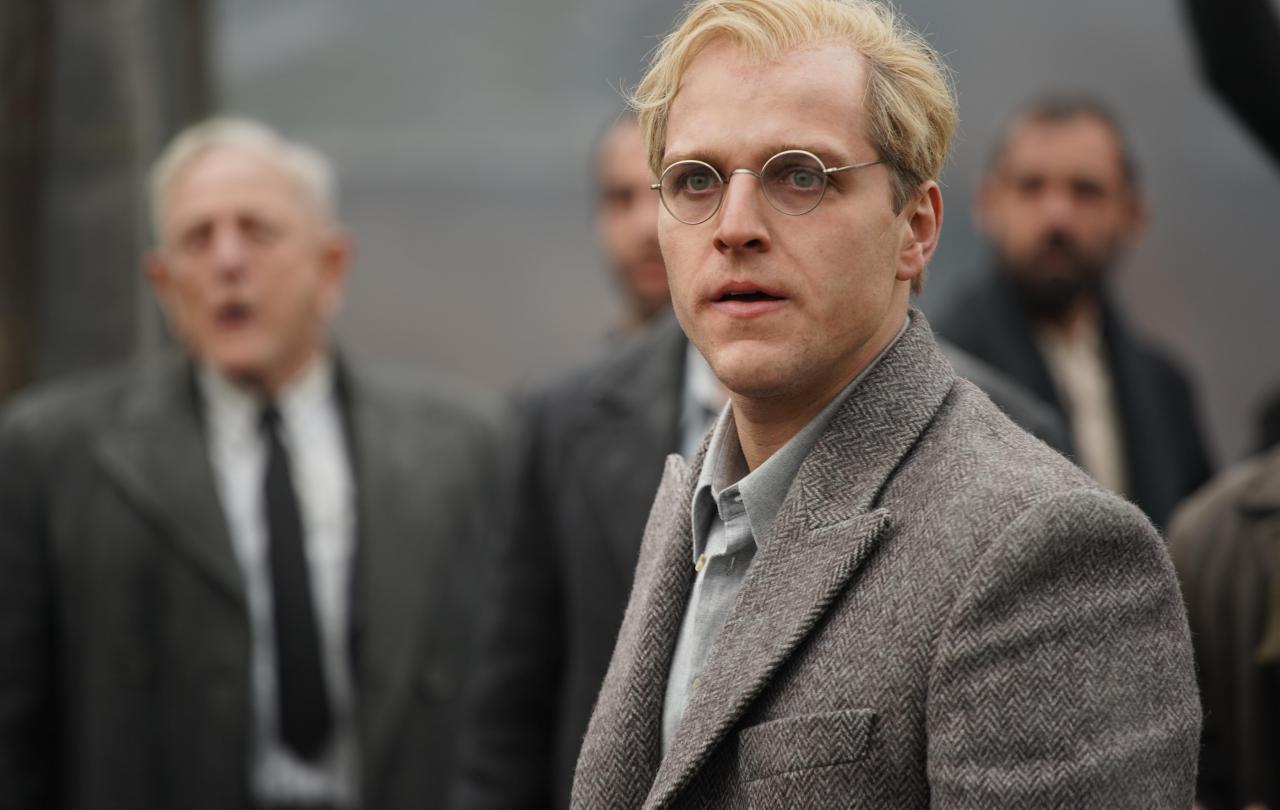
Two men, dressed in the style of the 1940s look around shocked.
Jonas Dassler as Dietrich Bonhoeffer.
Angel Studios.

Dietrich Bonhoeffer did not live to see his 40th birthday. 

Sentenced to death in a sham trial at Flossenbürg concentration camp, he was stripped naked, led to the gallows, and executed on the direct orders of Adolf Hitler in April 1945, essentially for treason. Ever since, Bonhoeffer’s life and thought has been subject to projects in wish fulfilment. Bonhoeffer has been secularised, liberalised, radicalised, and popularised by people across the religious and political spectrum, and in ways that evidence only casual concern for historical fact and little (or no) comprehension of his literary estate. Most recently and remarkably—in fact, repulsively—Bonhoeffer’s name has even been used by the right-wing Heritage Foundation to denounce the so-called “open-borders activism” and “environmental extremism” of the American Left in its Project 2025 wish list for the presidency of President-elect Donald Trump. 

It was with mixed feelings, therefore, that I sat down in a movie theatre in downtown San Diego a few weeks ago to watch the new film Bonhoeffer: Pastor. Spy. Assassin. Released by the Christian production company, Angel Studios, and written and directed by Todd Komarnicki (producer of Elf and writer of Sully), the film (coming to UK cinemas in early 2025) is trailered thus: 

“As the world teeters on the brink of annihilation, Dietrich Bonhoeffer is swept into the epicenter of a deadly plot to assassinate Hitler. With his faith and fate at stake, Bonhoeffer must choose between upholding his moral convictions or risking it all to save millions of Jews from genocide. Will his shift from preaching peace to plotting murder alter the course of history or cost him everything?” 

The accompanying image has the pacifist-preaching Bonhoeffer holding a gun. 

Like any big-screen biopic, Bonhoeffer mixes fact and fiction with a healthy dollop of artistic and cinematic license. This license is of course necessary for the screenwriting art: time needs compressing; biography needs enlivening; peoples’ character needs demonstrating; ultimately, the film needs watching. 

There is no doubt that Bonhoeffer spent time at Union Theological Seminary in New York and that whilst there he bemoaned the state of American theology, actively participated in the Abyssinian Baptist Church in Harlem, and became close friends with an African-American student, Frank Fisher. 

But learning to play jazz piano at a Harlem nightclub? Being beaten by a racist hotel owner with the butt of a rifle? And becoming an ardent advocate for African-American civil rights? 

There is no doubt, too, that, as Hitler rose to power, Bonhoeffer spoke out against the dangers inherent in the Führer concept and that throughout the 1930s he steadfastly critiqued Nazism and national socialist ideology. 

But were his words ever these? 

“I can’t keep on pretending that praying and teaching is enough.” “Dirty hands ... It’s all that I have to offer.” Or, in response to being asked by his friend and student, Eberhard Bethge, if Hitler is the first evil leader since Scripture was written: “No. But he’s the first one I can stop.” 

No one is going to dispute, either, that Bonhoeffer led an underground seminary at Finkenwalde to train future pastors of the Confessing Church in Germany; or that he said, “When Christ calls a man, he bids him come and die.” (Even if, in German, he more literally said, “Every call of Christ leads into death”). 

But what is disputable is that (as the film suggests) Finkenwalde was a safe haven from which a plot to assassinate Hitler was launched, and that Bonhoeffer’s most memorable aphorism of Christian discipleship was intended to be spliced (as it is in the film) into footage of a conspirator preparing a suicide bomb. 

And Bonhoeffer certainly did join the German Military Intelligence and act as something akin to a double-double-agent. He certainly did pass information about the conspiracy to international church leaders on his travels outside of Germany. He certainly did know about both “Operation Seven” (a plan to smuggle a small group of Jews and Jewish Christians out of Germany to safety in Switzerland), and the planned plot to assassinate Hitler. 

But to suggest (as the film does) that Bonhoeffer was central to these plans and personally involved in them, or that he asked Bishop George Bell to lobby Winston Churchill to supply a bomb that the conspirators could use to kill Hitler, is nothing more than highly contentious, even conspiratorial, conjecture. 

In a panoply of embellished facts, the film’s final scenes are in equal measure harrowing, arresting, and deeply moving.

Bonhoeffer’s life and thought is obviously compelling. 

It is also complex. 

Bonhoeffer left behind an array of books, essays, sermons, unfinished manuscripts, working notes, and letters, all of which are notoriously difficult to interpret, especially in the round. Bonhoeffer rides roughshod over this difficulty and complexity, and thereby trivialises the legacy of a modern-day, martyred Christian saint. It also tells in part an untrue story—the story of a man destined, indeed determined, to disavow a life of prayer, teaching, and diplomacy to become a would-be assassin and engage in violent political espionage and activism at any cost. 

This is a (very) far cry from the man who, in 1930, urges American Christians to remember that they have brothers and sisters “in every people,” not just in their own, and that if the people of God were united then “no nationalism, no hate of races or classes can execute its designs and ... the world will have its peace.” 

It’s a far cry from the man who, in November 1940, writes that “radicalism,” and “Christian radicalism” in particular, “arises from a conscious or unconscious hatred ... toward the world, whether it is the hate of the godless or of the pious.” 

And it’s a far cry from the man who, at Christmas 1942, reflects on the “incomparable value” of having learned “to see the great events of world history from below, from the perspective of the outcasts, the suspects, the maltreated, the powerless, the oppressed and reviled, in short from the perspective of the suffering.” 

Bonhoeffer therefore risks exposing Bonhoeffer’s legacy, as a theologian, pastor, and man of resistance, to yet further abuse. At a time when political and religious discourse is increasingly laced with xenophobic, authoritarian, and nationalistic rhetoric, and at worst Christian nationalistic rhetoric, this is not what is needed. It is not surprising that Bonhoeffer scholars across the world and Bonhoeffer’s own descendants have registered concern. 

But is Bonhoeffer nevertheless worth the price of a ticket? 

Perhaps surprisingly, I think that it is: if only for its denouement. 

In a panoply of embellished facts, the film’s final scenes are in equal measure harrowing, arresting, and deeply moving. Shortly before his execution, Bonhoeffer leads his fellow prisoners in morning prayer, breaking bread and drinking wine with them in commemoration of the death of Jesus Christ. Bonhoeffer then walks to the gallows in peace, knowing that for him, as a disciple of Jesus Christ, his death is but the beginning of life. 

It is such steadfast hope, in the face of all the humiliating absurdity of human contradictions (to borrow some words from Fyodor Dostoevsky), that the church and our world today is perhaps most desperately in need of. 


Bonhoeffer opens in UK and Irish cinemas on 7 March.

Join with us - Behind the Seen

Seen & Unseen is free for everyone and is made possible through the generosity of our amazing community of supporters.

If you’re enjoying Seen & Unseen, would you consider making a gift towards our work?

Alongside other benefits (book discounts etc.), you’ll receive an extra fortnightly email from me sharing what I’m reading and my reflections on the ideas that are shaping our times.

Graham Tomlin, Editor-in-Chief