Explainer
Attention
Culture
Mental Health
War & peace
4 min read

Keep calm and don’t cry: does Remembrance have emotional limits?

We gather to grieve—but only in ways that won’t make others uncomfortable
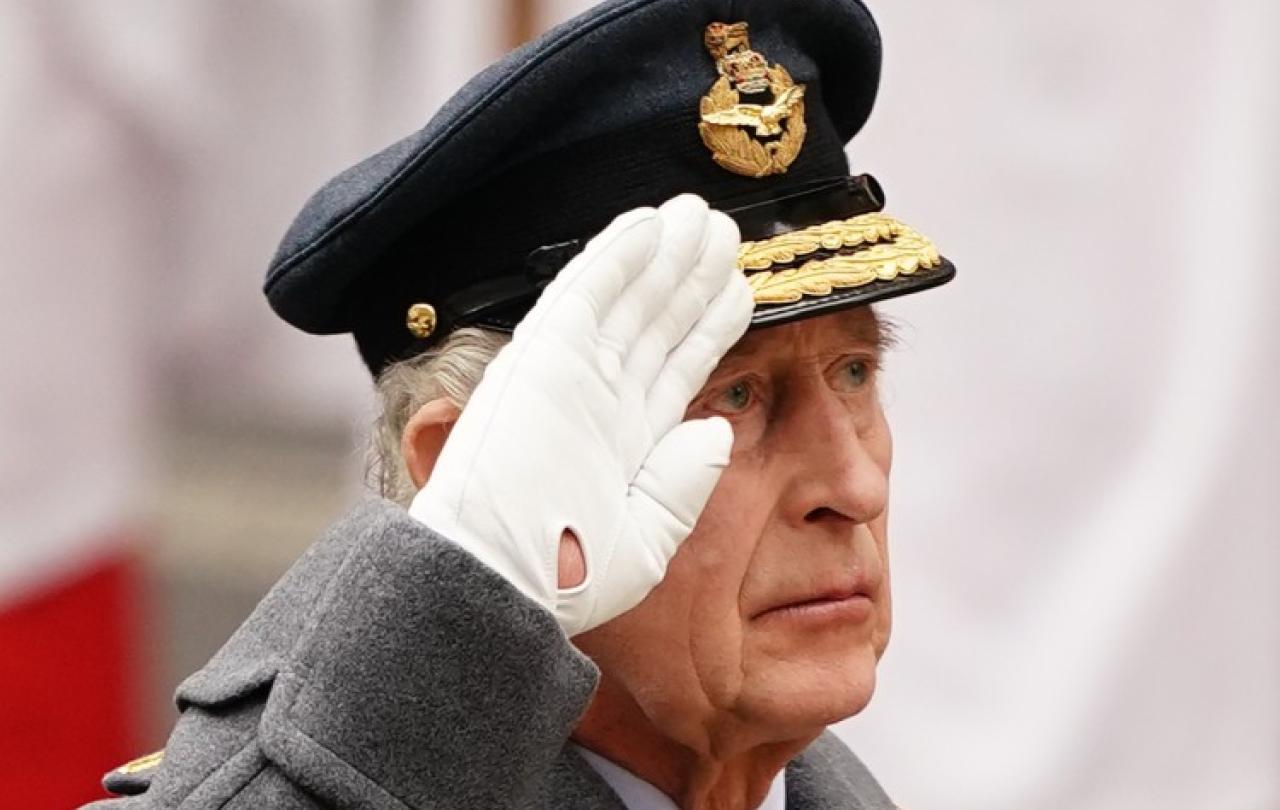
King Charles saltues.
King Charles, Remembrance Sunday, 2023.
The Royal Family.

In the coming days across Britain, the poppied public will gather around cenotaphs. Polished boots, flapping scarves, bowed heads, fidgety Brownie-Guides, regimented Cadets – all will pause in hushed reverence as the Last Post echoes in the cold air. It’s a scene that’s meant to unite us, a national ritual of grief and gratitude. 

But for one close friend of mine, it is a ritual that is almost unbearable. She doesn’t go to local remembrance events anymore. Not because she doesn’t care, but because she cares so deeply that she weeps. Real tears - big ugly ones. And while the music is designed to evoke poignancy, and the silence is meant to be solemn, she fears that her public displays of emotion are perceived by those around her as a bit over the top. Surely the British stiff upper lip ought not to tremble, let alone cry? We are the nation of Keep Calm and Carry On after all. So, she stays away. 

Philosopher Sara Ahmed, in her book The Cultural Politics of Emotion, offers some profound insights into why we act the way we do about our feelings. Ahmed writes that emotions are often cast as a kind of weakness – a betrayal of our ability to reason. They are something messy and animalistic, something we are meant to control. In this view, to show emotion is to reveal that you have been shaped by something or someone outside yourself. It reveals that you are vulnerable, only human after all. 

And yet – isn’t that exactly what Remembrance is about? When we gather at a cenotaph, we are not there to demonstrate the stiffness of our upper lips. We are there to grieve; we are there to be moved by the stories of young lives cut short, families broken, sacrifices made. The very design of the ceremony – the bugles, the silence, the laying of wreaths – is intended to stir emotion. Yet, paradoxically, there is a hidden social code of conduct that seems to say: but not too much

Ahmed explores several ways in which the social world shapes our emotional lives. Emotions, she argues, are not just private feelings bubbling up from within, they are also social, and they can be contagious. The atmosphere of a Remembrance service is just that – carefully crafted to invoke communal feeling: solemnity, pride, sadness, reverence. The power of such rituals lies in the way they gather us into a collective “we.” But that same collective can turn cold when someone expresses too much, breaks the silent script, or cries too loudly. 

In one of his letters to the first Christians, the apostle Paul wrote: “Rejoice with those who rejoice, weep with those who weep.” It’s a call not just to feel one’s own emotions, but to enter into the emotions of others, to share in them and show solidarity. And this, in essence, is what the cenotaph service is all about. It is a physical and symbolic place to “weep with those who weep” – to acknowledge that loss and grief are not individual experiences, but shared ones. A soldier’s death, whether in historic conflict or in the present day, is not just a family’s burden. A death on behalf of all of us belongs to all of us. 

So why do people seem uncomfortable when someone like my friend weeps openly in this space? Perhaps it is the long shadow of British wartime stoicism. At one time, the slogan “Keep calm and carry on” was intended to protect a struggling populace from giving in to despair, it was intended to create a shared emotion of resilience. But perhaps an unfortunate side effect is that it has perpetuated a notion that dignity lies in restraint. This is a cultural script, and it isn’t universal. In many parts of the world, public mourning is expected, even encouraged. Wailing, keening, clutching each other in grief – some cultures see these as honourable ways of expressing sorrow. They honour the dead by fully feeling their absence. 

We need to ask ourselves: what is lost when we suppress this kind of mourning? 

When we limit how people are allowed to feel – or, at least, how they are allowed to express their feelings – do we risk losing the very power of the ritual? Do we risk turning the cenotaph into a site of performance rather than connection, excluding those who feel too deeply to fit inside a narrow band of “acceptable” solemnity? 

This is not a call to abolish the dignity of Remembrance Day. But perhaps it is a plea to broaden our understanding of what dignity can entail. Sometimes, it looks like silent contemplation. But perhaps sometimes it looks like messy tears streaming down your face in front of strangers. Both can be powerful; both can honour the sacrifices of war. 

As Ahmed notes, shared emotion can create a sense of “we.” It is why we go to movies together, cry at weddings, laugh at sitcoms in the company of others – emotional moments bond us. In this way, emotions are not just personal, they are political. In the context of Remembrance, they remind us that war is a human tragedy, felt in human hearts. Even though today, fewer families have direct ties to the armed forces, and fewer people personally know someone who has served or died in uniform, yet, the cenotaph ceremony still calls us together and asks us to care, to remember, to mourn – and it gives us permission to cry before we carry on. 

Support Seen & Unseen

Since Spring 2023, our readers have enjoyed over 1,500 articles. All for free. 
This is made possible through the generosity of our amazing community of supporters.

If you enjoy Seen & Unseen, would you consider making a gift towards our work?

Do so by joining Behind The Seen. Alongside other benefits, you’ll receive an extra fortnightly email from me sharing my reading and reflections on the ideas that are shaping our times.

Graham Tomlin
Editor-in-Chief
Review
Art
Culture
Music
Romanticism
Taylor Swift
5 min read

Taylor Swift’s new album is fine, and that might be the problem

Ego, art, and the quiet tragedy of getting everything you ever wanted

Belle is the staff writer at Seen & Unseen and co-host of its Re-enchanting podcast.

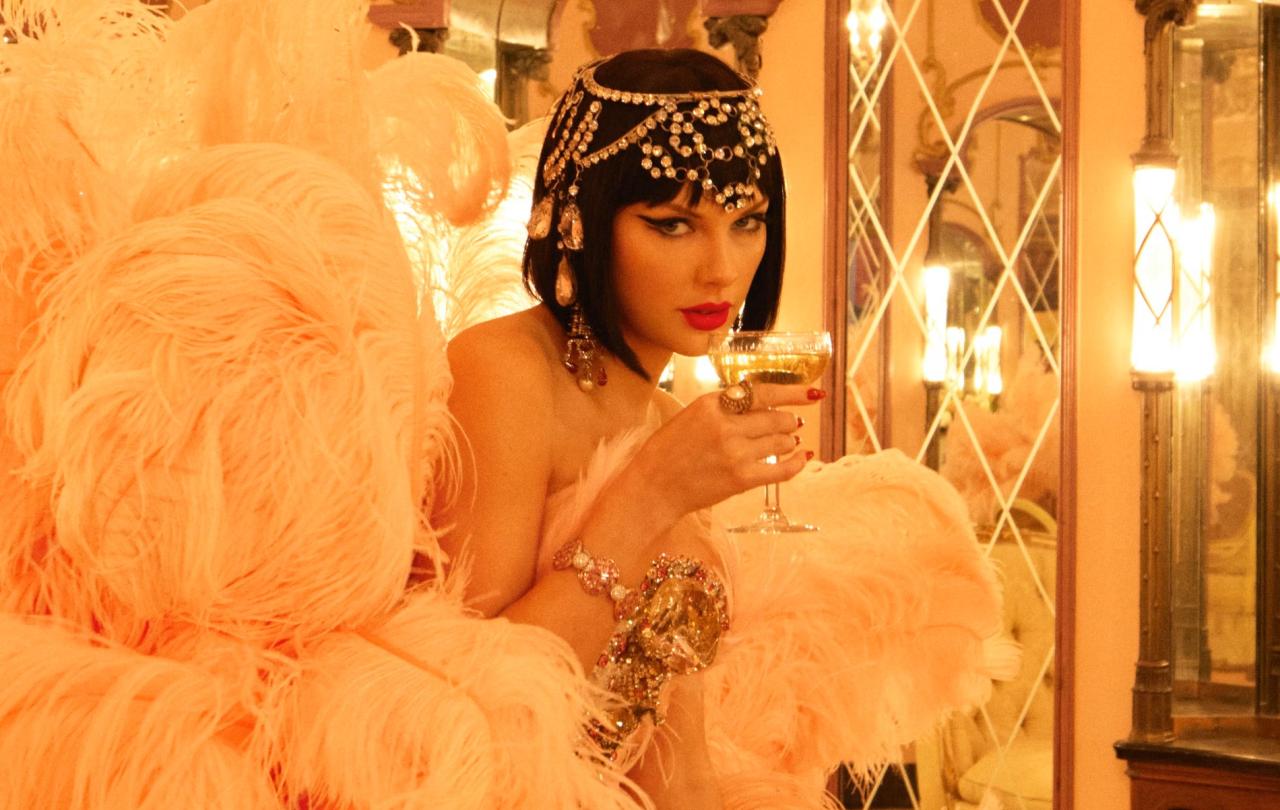
Taylor Swift, dressed as a showgirl, sips from a glass.
Taylor Swift, showgirl.
Taylorswift.com

Taylor Swift released an album last week and, from what I can see, the world seems to hate it.  

Life of a Showgirl was written and recorded while Taylor was on her two-year-long Era’s tour, hence the album’s title. She would fly to Sweden between tour dates to record with the infamous producers, Max Martin and Shellback. This matters. Why? Well, because this means that each song on this album has grown out of the soil of unfathomable success; record-breaking numbers and history-making impact, it’s not an exaggeration to say that the Era’s tour shifted the landscape of popular culture. Many critics have reflected on this context, citing ‘burnout’ and ‘frazzle’ as reasons why this album sits far below Taylor’s usual standard. 

They implore Taylor to take a day off: put her feet up, recuperate, and re-gather her musical senses.  

Then there are the critics who seem to be directing blame toward Taylor’s obvious happiness. If you didn’t know, she’s engaged to American footballer, Travis Kelce – and they, as a couple, are sickly sweet. Honestly, they’re defiantly mushy. They’re cheesy to the point of protest. They’re just happy – and, apparently, therein lies the problem. I’ve heard more than one critic quote Oscar Wilde in their takedown of Swift’s latest offering: 

 ‘In this world there are only two tragedies: one is not getting what one wants, and the other is getting it’. 

This album, they say, is proof that Taylor Swift is victim to the latter kind of tragedy. She’s got everything one could ever want, and the world seems pretty agreed that her music is suffering because of it. We like to keep our artists tortured, thank you.  

For the record, I don’t hate the album. But I don’t love it either. I resonate with The Guardian’s Alexis Petridis who writes that it simply ‘floats in one ear and out the other’. There’s nothing to hate about it, which, I guess, also means there’s very little to love about it.  I’m not outraged, nor am I enamoured – and I say that gingerly, because I fear that’s the worst review of all.  

So, in some ways I’m agreeing with the general consensus – Life of a Showgirl is not Taylor Swift’s best work. I don’t, however, think that her success, nor her happiness, are quite to blame for it. I think those are slightly lazy critiques, they’re shallow scapegoats. 

I think, rather, the problem with this album is that Taylor has made herself the biggest thing within it.  

When introducing the album on Instagram, she thanked her collaborators for helping her to ‘paint this self-portrait’ – the strange thing is that this ‘self-portrait’ feels considerably less honest or authentic than her previous, more conceptual, albums.  

I’ve spent a couple of days wondering why this is and have come up with two theories.  

Firstly, we tend to be far more honest to and about ourselves when we’re able to kid ourselves into thinking that it’s not actually our own selves that we’re talking about. For example, I think of Billie Eilish’s Grammy and Academy Award-winning song – What Was I Made For? – which she wrote to accompany Greta Gerwig’s Barbie movie. In an interview, Billie explained how writing a song about a Barbie somehow allowed her the space and freedom to create the most honest, raw, and revealing song she’d ever written.  

We’re self-preserving creatures, you see.  

If we’re knowingly speaking of, writing about, painting or in any way presenting ourselves - our ego gets in the way, preferring us to offer the world a shiny, carefully constructed façade.  

Taylor, in intentionally painting a ‘self-portrait’, has unknowingly offered us less than herself.  

And, now for my second theory. Every good self-portrait is actually about something bigger than its subject; they are able to point toward something more universal than the individual reflected. I think of Frida Kahlo’s self-portraits, the way she used her hair to communicate societal expectations, or how she framed herself with wildlife, or the time she painted a necklace of thorns around her own neck – leaving an uncomfortable feeling in the pit of the beholder’s stomach as they think about the nature of pain and liberty. She painted herself, endlessly. Kahlo pointed to herself in order to point through herself – she was never the subject that she was most interested in, she was never the biggest thing in her own self-portrait.  

Like I say, the problem with Taylor Swift’s okay-ish album is simply that she is the biggest thing within it. The key ingredient it’s lacking is awe; it leaves nothing to marvel at.  

And that’s rare for Taylor.  

I’ve often written that she is a Romantic in every sense of the word; concerned with the feelings and experiences that are powerful enough to knock us off our feet: big feelings, big thoughts, big truths, big questions, big mysteries, big language. These things have always been baked into her lyrics. 

This album, in comparison, feels small. It doesn’t transcend Taylor Swift’s feelings about – well, Taylor Swift. She hasn’t quite managed to point through herself, she is the sole subject of her own self-portrait.  

And therein lies its OK-ness.  

Honestly? Therein lies all of our OK-ness. Taylor Swift may be anomalous in many things, but not in this - the presence of ego means that we’re all prone to self-portrait-ise ourselves. Left unchecked we are (or at least, we can be), what Charles Taylor calls, ‘buffered selves’; thinking of ourselves as the maker and subject of all meaning, shielded from awe and wonder.  

But the best art will never flow from those who think themselves the biggest and deepest subject. Because, quite simply, we’re not.  

Support Seen & Unseen

Since Spring 2023, our readers have enjoyed over 1,500 articles. All for free. 
This is made possible through the generosity of our amazing community of supporters.

If you enjoy Seen & Unseen, would you consider making a gift towards our work?
 
Do so by joining Behind The Seen. Alongside other benefits, you’ll receive an extra fortnightly email from me sharing my reading and reflections on the ideas that are shaping our times.

Graham Tomlin
Editor-in-Chief