Article
Comment
Development
Politics
4 min read

Downsizing in DC undercuts the lives of millions in Nigeria

Nigeria’s Christian communities will bear the brunt of USAID’s demise.

Chris Wadibia is an academic advising on faith-based challenges. His research includes political Pentecostalism, global Christianity, and development. 

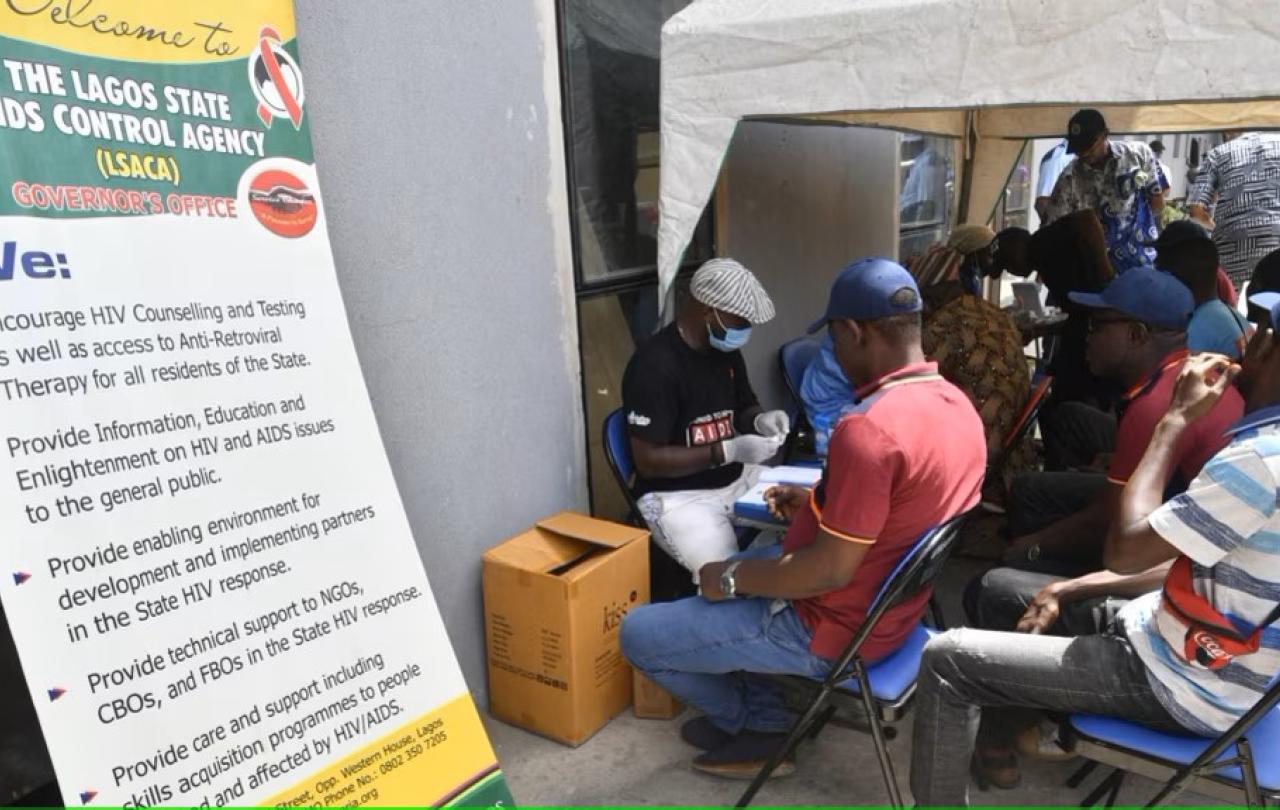
Patient wait in a street clinic beside a sign.
A health project clinic in Lagos, Nigeria.

Christendom, the global community of over 2.5 billion Christians living worldwide, has many geographical capitals. Nigeria, like the United States, is one of them. Upwards of 100 million people living in Nigeria identify as followers of the Christian religion. These Nigerians belong to Christian denominations like Roman Catholicism, Anglicanism, Baptist Christianity, and Pentecostalism. On 6 February the Trump Administration announced plans to downsize USAID, the US government agency that administers foreign aid. In 2023 it managed over $40 billion, and has played a significant role in delivering aid and development support in Nigeria for decades.  

Nigeria has one of the world’s lowest levels when it comes to spending on social issues. Its government’s underspending has trapped tens of millions of Nigerians in horrific, inescapable mazes of poverty. The significant challenges Nigeria faces are well-documented -socioeconomic, geopolitical, and religious ones. The protracted and infamously bloodthirsty Boko Haram insurgency (headquartered in the northeastern corner of the country) has led to the deaths of tens of thousands of Nigerians and displaced over two million people, disproportionately affecting vulnerable women and children.   

Abandoned by the government, many Nigerians look to their ethnic communities, religious groups, and even other state’s agencies and charities for the support and solutions they require to survive.  

In 2021 USAID commemorated 60 years of providing development assistance to Nigeria. Its historical activity has prioritised agriculture and food security, democracy, human rights, and governance, public health, and energy production. In just 2021, USAID provided Nigeria with more than $787 million in development and humanitarian assistance.  

Whilst USAID support for Nigeria has historically been blind to religion, the Trump-led downsizing of development and humanitarian assistance for millions of people living in Nigeria will especially impact tens of millions of Christians, They struggle to lead lives in a country rife with Christian suffering  that is ignored by powerful global actors with the financial, political, and military resources to intervene in substantive and peace-generating ways.  

Southern Nigeria is disproportionately developed compared to the North. Lagos, the economic capital responsible for a third of Nigeria's GDP, sits in the southwestern corner. The south contains a majority of the leading private universities, many of which are owned and funded by Christian churches, and is home to Nigeria's largest international airport. Literacy levels among Christians in Nigeria dwarf literacy levels among Muslims, especially when compared to Muslims living in the religiously archconservative northern states.   

The southern region of Nigeria has an appetite for development and the political will needed to implement an inclusive development vision that simply does not exist up north. Downsizing USAID activity in Nigeria will disproportionately affect Christians in Nigeria who for historical and contemporary reasons have been able to benefit from USAID assistance in ways developing themselves to help Nigeria compete in the global economy.    

In the current 21st century geopolitical climate US-Nigeria relations are far more likely to become more rather than less relevant. 

Muslims in Nigeria, if unbridled by extreme religious dogma, could just as easily undergo the processes of self-development needed to excel in 21st century economic marketplaces. However, as Nigeria's religious landscape stands today, tens of millions of Muslims simply lack access to opportunities to gain the education, training, and work experience that could unleash the full potential of the legendary Nigerian human capital famous globally.  

Millions of educationally and professionally ambitious Nigerian Christians view their work in vocational terms. Inspired by scripture and theological resources like Catholic Social Teaching and the Pentecostal Doctrine of Prosperity, these Christians intentionally seek out educational and professional opportunities because they believe their faith in Christ commands them to provide for their households and invest into their communities. They believe contributions to their homes and communities double as offerings to God himself. For over six decades, USAID has administered development and humanitarian assistance in Nigeria in ways hugely benefitting millions of Christians ignored by their government.  

Administering USAID aid in Nigeria has never been perfect. Bad actors, many of them government officials exploiting the authority of their offices, have stolen development funds intended for marginalized Nigerians and used it to fund their kleptocratic networks and lavish lifestyles. However, in the current 21st century geopolitical climate US-Nigeria relations are far more likely to become more rather than less relevant. USAID support provides a valuable source of American soft power able to win over the hearts of vulnerable Nigerians whose children might one day seize the reins of state power. It also continues the postcolonial project of assisting in the sociopolitical and economic development of the Giant of Africa.  

Downsizing USAID assistance to Nigeria undercuts investment in the lives of millions of Nigerian Christians disproportionately positioned to drive the country in the direction of evolving into just the kind of capable ally in Africa the US wants to work with long term.  

Join with us - Behind the Seen

Seen & Unseen is free for everyone and is made possible through the generosity of our amazing community of supporters.

If you’re enjoying Seen & Unseen, would you consider making a gift towards our work?

Alongside other benefits (book discounts etc.), you’ll receive an extra fortnightly email from me sharing what I’m reading and my reflections on the ideas that are shaping our times.

Graham Tomlin

Editor-in-Chief
Article
Comment
Community
Migration
Politics
5 min read

Starmer’s ‘island of strangers’ rhetoric is risky and wrong

The Prime Minister needs an English lesson.

Krish is a social entrepreneur partnering across civil society, faith communities, government and philanthropy. He founded The Sanctuary Foundation.

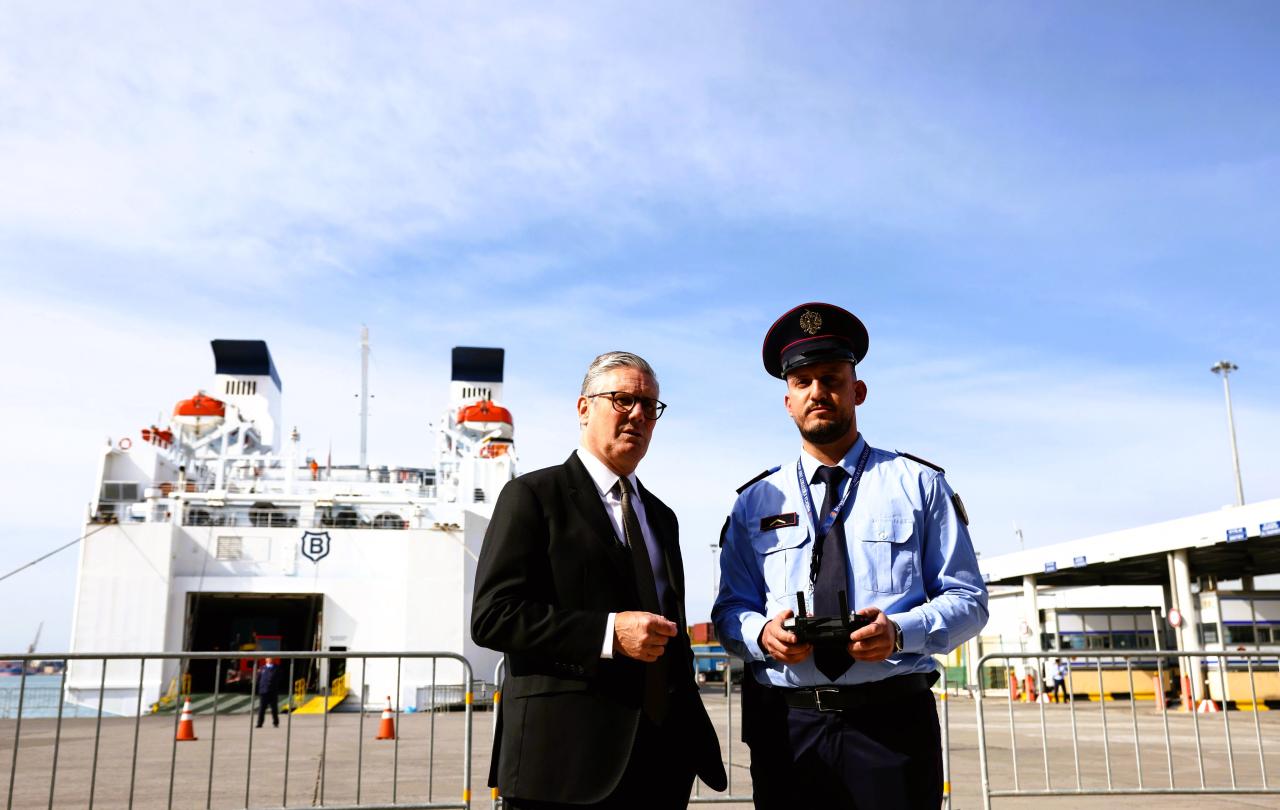
A prime minister stands next to an Albanian police officer in front of a ferry.
Border control. Starmer in Albania.
X.com/10DowningSt.

In a recent speech launching the UK government’s white paper on immigration, Prime Minister Keir Starmer expressed concern that the country risks becoming an “island of strangers.” It is a compelling phrase - yet, for many, a deeply worrying one. Some argue it echoes Enoch Powell’s notorious 1968 “Rivers of Blood” speech, in which the then Conservative MP for Wolverhampton claimed that people in the UK were being “made strangers in their own country”. Even if the reference was unintentional, the sentiment is divisive and dangerous. Here are five reasons why this narrative must be challenged.  

Geography: We are fundamentally connected  

First and foremost, the United Kingdom is not a single island. To describe it as such is not only geographically inaccurate but symbolically unhelpful and politically careless. This sort of language risks excluding all those UK citizens who live in the other 6,000 islands that make up our country - islands such as the Isle of Wight, Anglesey, the Hebrides, Orkney, Shetland and the Channel Islands, as well as the 2 million UK citizens who live in Northern Ireland. Many of our families, mine included, are testament to the fact that between the British Isles there are connections and marriages. We are islands, plural, united by a national bond of friendship and collaboration, and a shared story of connection across water.  

Sociology: We are intrinsically social  

The notion that the UK is becoming “an island of strangers” contradicts what we know about how human societies function. We are fundamentally relational - forming and building connections in our schools, workplaces, neighbourhoods, shops, and clubs on a daily basis. Even if we do not know the names of those who live across the street, we have a great deal in common. They are not strangers, but neighbours. In times of crisis, as shown during the Covid pandemic, neighbourliness is a critical front-line defence. To undermine that by calling our neighbours ‘strangers’ is a recipe for social breakdown. True social cohesion can never come through exclusion only by being deliberately nurtured through acts of welcome, the language of inclusion and recognition of shared purpose and identity.  

Language: What we say matters 

In his speech, the Prime Minister gave credence to the claim that migrants fail to integrate because they don’t speak English. He said: “when people come to our country, they should also commit to integration, to learning our language.” But English proficiency is not the main barrier to social cohesion. As a country that proudly recognises multiple languages: Welsh, Scottish Gaelic, Irish, Cornish, British Sign Language, we should understand this. And as a nation who fails miserably at learning other world languages we should appreciate the enormous effort it takes to learn any level of English. The vast majority of migrants put us to shame in how quickly and readily they learn to communicate effectively. Might I suggest that the Prime Minister - whose speech contained questionable language that was factually untrue, politically dangerous and socially offensive - might benefit from an English lesson himself? 

Honesty: We benefit from migration 

When the Prime Minister claimed he was launching a strategy to “close the book on a squalid chapter for our politics, our economy, and our country,” he implied that migration is to blame for many of the difficulties the UK is facing. This is not a new tactic — some of the world’s darkest moments have been preceded by politicians stoking fear and resentment against immigrants for political gain. We must resist this rhetoric. Perhaps we could start by asking exactly which migrants are being blamed for this so-called "squalid chapter"? Is it the 200,000 people from Hong Kong who have arrived under the British National Overseas scheme, bringing skills and making major contributions to our economy? Or the 250,000 Ukrainian refugees who have been welcomed with open arms and helped knit communities closer together? Is it the 30,000 Afghans who supported British forces, risking their lives to do so? Or the 750,000 international students contributing £35 billion a year to the UK economy, sustaining our universities and global reputation for outstanding education and research? What about the 265,000 non-British NHS staff who work tirelessly to care for our sick and elderly? Blaming migrants for the UK’s problems is dishonest and dangerously divisive, potentially alienating the very people who are often most invested in making the country stronger, safer, and more successful.  

Integrity: We need to fix the real problem  

The Prime Minister’s use of the phrase “island of strangers” strikes a chord, not because we are all strangers to one another - we are not - but because many of us increasingly feel isolated in our own communities. There is evidence to support this emotional response. According to the Office for National Statistics, around 27% of adults in the UK report feeling lonely always, often, or some of the time. A report titled A Divided Kingdom, published just a day after the government’s immigration white paper, highlights growing intergenerational divides with only 5.5 per cent of children in the UK living near someone aged 65 or older, and just seven per cent of care home residents regularly interacting with anyone under the age of 30. Young adults are increasingly working remotely, reducing opportunities for casual, everyday social contact. Rising numbers of people live alone, and digital technology — while connecting us in some ways — often replaces the richness of face-to-face relationships. 

These shifts are not caused by immigration, and blaming migrants for the disconnections and discontent we feel only distracts us from addressing the real causes of social fragmentation. We need to find ways to reconnect with one another in person, recognising in those around us the image of God, our common humanity and the opportunity for service. 

Starmer’s narrative must be challenged before it becomes a self-fulfilling prophecy. The great English poet and cleric John Donne famously wrote: 

 “No man is an island, entire of itself; every man is a piece of the continent, a part of the main.”  

It would be sad if, in our modern world, we lost sight of that truth and ended up becoming estranged islanders floating on a sea of fear and xenophobia. 

Celebrate our 2nd birthday!

Since Spring 2023, our readers have enjoyed over 1,000 articles. All for free. 
This is made possible through the generosity of our amazing community of supporters.

If you enjoy Seen & Unseen, would you consider making a gift towards our work?

Do so by joining Behind The Seen. Alongside other benefits, you’ll receive an extra fortnightly email from me sharing my reading and reflections on the ideas that are shaping our times.

Graham Tomlin
Editor-in-Chief