Essay
Belief
Culture
Weirdness
5 min read

The cost of selling spirituality

A $3.7 trillion industry ‘market’ for spiritual consciousness and wellness says something about today. Daniel Kim explores what’s driving this commodification and its market failure.

Daniel is an advertising strategist turned vicar-in-training.

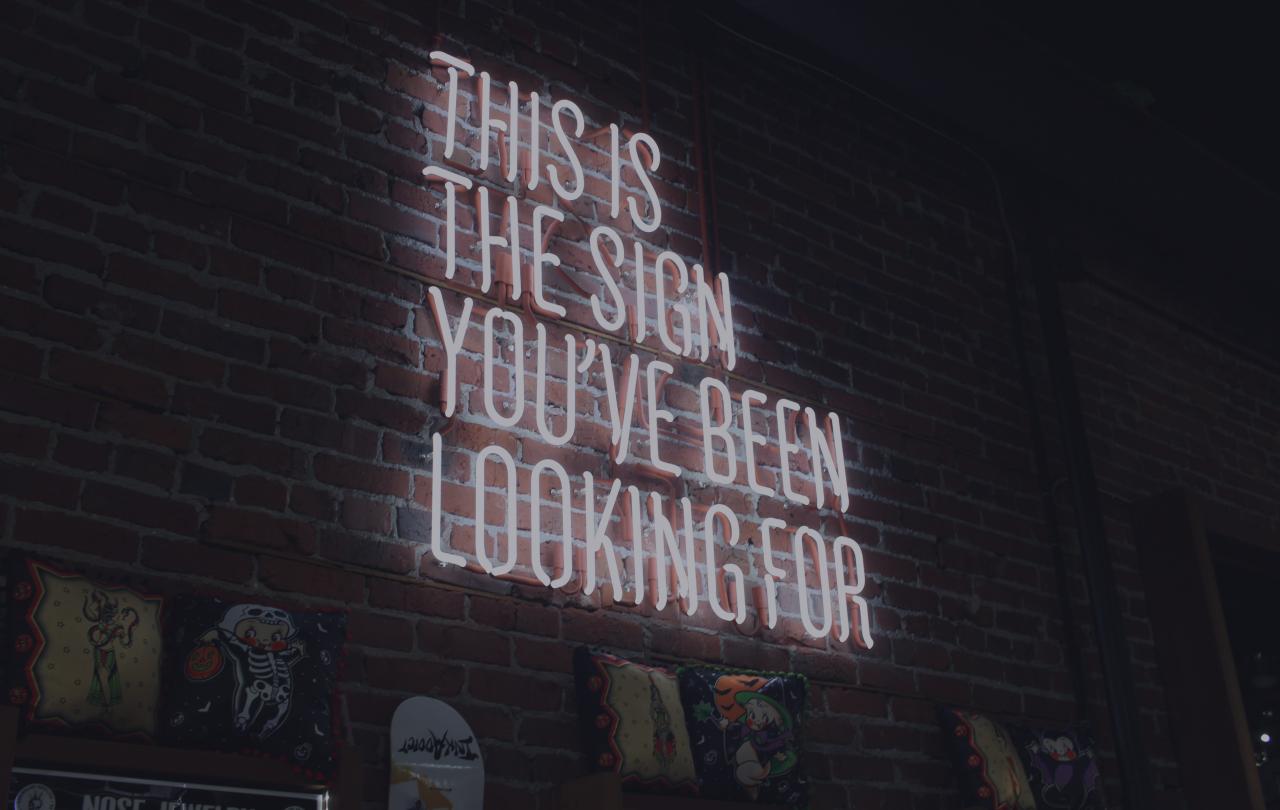
A white neon sign against a brick wall reads: 'This is the sign you have been looking for.
Sign o' the times.
Austin Chan via Unsplash.

Apparently, Scorpio women from Gen Z are the most passionate about astrology, while Taurus Gen X men are the most skeptical. At least, that’s according to a delightfully insightful consumer report put together by the Peoplestrology website after surveying 2,800 people. I’m a Taurus 1995 MillZennial man so I’m not sure where that puts me. I’m also a trainee Anglican vicar which may contribute more to my demographic features, but that’s beside the point.  

We are increasingly fascinated by spirituality and religious practices. We are at a point where we can no longer assume that ticking “No Religion” on a survey means you’re an atheist or that you don’t believe in a supernatural realm or a God. In fact, a report by Theos found that only 51% of people in the UK who claimed ‘No religion’ also claimed that ‘they don’t believe in God’. That’s unreal. Another unbelievable insight from the 2022 UK religious data was the ‘Shamanism’ is now the UK’s fastest growing religious movement. Meanwhile, #WitchTok had 18 billion views in 2021, even hitting the mainstream when it got its own BBC article last year. For the uninitiated, these are TikToks that introduce people to witchcraft practices. A quick wander around the Waterstones ‘What We Recommend’ tables is enough to see the huge push to retrieve ‘ancient traditions’ that help people navigate the spiritual wilderness of modern life. Marcus Aurelius’ Stoicism, and the Confucian classics, are making their comeback. It goes beyond self-help.  

I used to work in a Soho advertising agency. I remember sitting on a teal coloured mid-century sofa with colleagues discussing star signs and pagan mythology over a coffee break. As the Christian, I was the one feeling like the cynical sceptic. That’s a strange experience and feels like cultural whiplash. Flashback ten years and secondary school in the mid-noughties and early-tens was brutal as a Christian. I watched Richard Dawkins' polemic God Delusion documentary during my religious education classes and my fellow classmates laid into Christianity like it was the most vile and stupid thing in the world. Anyone who believed in a supernatural reality was equally vile and stupid. Today, the New Atheist movement seems like a strange late-twentieth century aberration that has very much given way to a re-spiritualising world. In some cruel corners of Reddit, the New Atheist is even a subject of ridicule. 

It’s possible to discern two impulses going on in this re-spiritualisation. On one side of the heart, there are those who are reaching for the spiritual but not the religious - wanting connection with something bigger than themselves to provide meaning and an experience of transcendence. On the other hand, there are those who lean more religious but not spiritual - we want something to provide structure and order to our lives. There’s less of a concern about the spiritual experience but a desire to reign in the chaotic life - I used to have agnostic friends who would pop into a Catholic Mass because they liked the stability of the ritual. These are two ends of a continuum and invariably we are all somewhere in the middle. Both impulses are profoundly important ingredients to a life that is full of meaning. 

This, in my opinion, is an exciting and positive move in our society. It turns out that humans really can’t live on ‘bread’ alone - not least live on careers, brunches, or think-piece articles - and we certainly can’t live on ‘content’ alone. There is a spiritual vacuum, and we’re reaching for the oxygen. 

But in all of this, there’s a serious concern. Because wherever there’s demand, there is profit to be made - and right now, there is ample spiritual demand.

The ‘market’ for spiritual consciousness and wellness will be a $3.7 trillion industry. 

When reflecting on astrology’s role in contemporary society, the Peoplestrology report deems it the ‘perfect solution for our hyper-individualised culture’ and the report ends with an ominous recognition that the ‘market’ for spiritual consciousness and wellness will be a $3.7 trillion industry. The valuation of the ‘spirituality marketplace’ and the emphasis on ‘hyper-individualism’ has me seriously worried. It opens the door to the commodification of religio-spiritual practices and extracting capital value from people’s genuine spiritual search. It can become a product that we use rather than a profound source of ultimate meaning. And it’s already happening.  

Sacred Design Labs, for example, is a consultancy that looks to ‘translate ancient wisdom and practices to help organizations develop products, programs, and experiences that uplift social and spiritual lives.’ Their vision is genuinely very positive - it’s to make the workplace a less sterile and meaningless place. Don’t we all want that? However, they are also  perfect examples of the trend in  capitalising on this burgeoning market. To illustrate the point, one New York Times article recounts where the consultancy was hired to pull together hundreds of religious practices and categorise them by emotional states in order to give them possible uses in different corporate contexts. This exercise made the client ‘realize how many useful tools existed inside something as old-fashioned as his childhood church’. I’m glad that religious practices are getting a hearing in mainstream corporate contexts, but it saddens me to hear words like ‘useful’ being used to describe them. That’s only a hop and a skip away from ‘efficient’ or ‘profitable’.  

The inconvenient truth is that this commodification of spirituality is not just something corporations can be guilty of. We as late-modern individuals can be guilty of stripping religious practices out of their religious context and incorporating them into our self-care programmes. Tara Isabella Burton, author of Strange Rites: New Religions for a Godless World, calls this the ‘bespoke-ification of religion’. As Burton notes - ’We risk seeing spirituality as something we can consume, something for us, something for our brand’. And when we turn spirituality into a product, we turn it into something trivial. 

The irony is that this is profoundly counter-productive. Haven’t we agreed that hyper-individualism, and the commodification of everything, were precisely the things that led us to the spiritual vacuum we are now living in? If there was anything that Karl Marx, Aldous Huxley, and Billy Graham could agree on, it’s at least that. Are we doomed to repeat the radically individualistic cycle of dismantling the very thing that we are desperately grasping after - deep connection with our community, with our work, with our bodies, with our universe, and perhaps, just maybe, with our God? Satisfying our spiritual hunger is about more than just increasing our efficiency and decreasing our blood pressure. It’s about answering some of the most important questions any human individual can ask. Who am I? What am I made for? Is there a God or a spiritual dimension to the universe? Am I free or fated? What happens after I die? All these questions require us to look beyond ourselves, and to stare into the wild edges of human experience.   

If we are going to embark on a journey of spiritual discovery, whether it’s through astrology, pagan mythology, silent retreats, Tibetan Buddhism, or dare I say, Christianity, we can’t let our spiritual hunger be commodified for profit. Neither can we let it shrink back to the hyper-individualism that will keep us locked away in a prison called “self”. Our spiritual wellness is too important for that; it is worth more, infinitely more, that $3.7 trillion or a subscription service advertised to you on Instagram.

Article
Culture
Holidays/vacations
Mental Health
Wildness
5 min read

This is why we must go down to the sea

Stepping off the shore restores more than our sanity

Paul is a pioneer minister, writer and researcher based in Poole, Dorset.

A sunset over an island casts golden light on the sea and a beach.
An Argyll beach.
Nick Jones.

It’s that time of year again. Much of Britain has been enjoying (or possibly enduring) a heatwave, the summer holidays are approaching, and our thoughts naturally turn toward an escape from our ordinary, often urban, landlocked, lives. And for many of us that escape will be to the sea. It’s true, we really do like to be beside the seaside. As a nation our souls seem to suffer from an annual experience like that described in John Masefield’s poem Sea-Fever as we head coastwards muttering ‘I must go down to the sea again...’  

We want to holiday by the sea – as the market for second homes in places like Cornwall will confirm. We also want to live permanently by the sea, or at the very least by the water. Some experts estimate that properties by the water have an average increased value of around 48 per cent. Water sells. It does so perhaps because proximity to it provides something of a mental escape from the overwhelming rigidity and linearity of our predominantly urban environments.  

Iain MacGilchrist has argued that our modern lives suffer from the triumph of the left-brain hemisphere’s attention to the world. This is a focussed attention that is all about controlling and getting. It leads to the creation of a self-contained and ordered world with little attention to context. And so little attention to the natural, complex, fluid reality of creation. MacGilchrist goes on to correlate the rise in a variety of mental illnesses characterised by what he calls ‘right hemisphere deficits’ with industrialisation and the development of our culture of modernity.  

In his book Blue Mind Wallace Nichols explores the evidence for the positive effect of water on the brain. He highlights how a proximity to water can heal, restore, give us a sense of connection and promote calm. He argues that water can shift our minds into what he calls ‘drift’, the kind of mental attention which generates calm. Being with, on, better still in water, is undoubtedly good for us. No wonder we are drawn to it.  

Yet at the same time water, and particularly the sea, has been a source of terror. A no-go area ‘where there be dragons’, OK, lobsters for sure, probably sharks, and whales like Moby Dick. The sea remains one of the last places of mystery, an unfathomed, unfathomable place of endless dark water. We know more about the far reaches of the universe than we do about the truly deep ocean. Mythical creatures of the deep, whether Nessie, or one of various giant specimens hauled unsuspectingly from the ocean, continue to populate the diminishing space of our wonder and fear of the unknown.  

So whilst elucidating the psychological benefits of water is certainly helpful, it’s all a bit…tame. Is it just another way of humans turning the wild and numinous into something we now think we understand? Something we can now control and apply in our lives for our own benefit and comfort? Have we demystified the sea? Reducing its mysteries to little more than a balm for our troubled modern minds? A lure for our attention and our debt in an overheated housing market? 

In the Christian tradition the sea is a place of profound paradox. Creation begins with God’s Spirit hovering over the water. However, the Hebrew scriptures also present the sea as a place of God’s absence. The sea is the place of monsters and mystery, and death. It’s also the place of perhaps the most famous whale in all literature. The whale that swallows the hapless Jonah. Jonah’s story expresses the deep paradox of the sea as a place of death and yet also a place of divine encounter. It is in the depths of the sea, and the digestive system of the whale, that Jonah’s epiphany takes place and his journey starts anew. 

Stories of Jesus also deal with this paradox of wildness and encounter in the chaos of the sea. In the story of the calming of the storm the wild threat of the sea is not rendered as simply something to be avoided. Jesus is not a fixer making all daily dangers obsolete. Rather the story says that it is precisely in such moments of wildness, fury and terror that his powerful presence can be encountered.  

To step off the shore and into the sea is to enter the possibility of the death and (paradoxically) the real possibility of deeper life.

It’s for these reasons perhaps that, John Good, a friend of mine, has formed a Christian community that’s based around encounter with the sea. Located as it is in an area almost surrounded by the sea, it started as a social enterprise helping people access the water who otherwise lacked the equipment or resource to do so. Pretty soon it became clear that this was transformational for people. Enabling families otherwise excluded from a life-giving resource to enjoy it as much as anyone else was powerful. One person referred to the experience by saying that on that day the sea had been ‘her saviour.’ Ocean Church began with a gathering on three large, tethered paddleboards some metres offshore. They now run retreats and pilgrimages on the sea, practice centering prayer (a form of Christian meditation or contemplative prayer) on the sea and continue to explore what it means to meet God on the water.  

We yearn for the sea, and the water, for more than a balm for the mind. The sea remains that place, in our mechanised, technological world with its constant lure of control and mastery, where an immersion in dangerous mystery can still be experienced. To step off the shore and into the sea is to enter the possibility of the death and (paradoxically) the real possibility of deeper life. To be held buoyant by the sea and look to the horizon is to get it touch with our finitude in the context of the vastness of the seas. It is to engage with our utter dependency on the creation which we inhabit and to connect with the presence that holds that creation together.  

To step into the sea is even therefore a step of faith. A step in the direction of our own vulnerability. A brave step away from the world in which our technology, our algorithms, our machines and our skyscrapers dupe us into a faith in our own control, our own supremacy. A step into the depths. ‘Deep calls to deep’ says the psalmist as ‘all your waves and breakers have swept over me.’ As many of us step into the sea this summer it may certainly be a step toward a restored sanity, but it might also be a step toward a restored soul.   

Support Seen & Unseen

Since Spring 2023, our readers have enjoyed over 1,500 articles. All for free. 
This is made possible through the generosity of our amazing community of supporters.

If you enjoy Seen & Unseen, would you consider making a gift towards our work?
 
Do so by joining Behind The Seen. Alongside other benefits, you’ll receive an extra fortnightly email from me sharing my reading and reflections on the ideas that are shaping our times.

Graham Tomlin
Editor-in-Chief