Explainer
Art
Culture
Identity
5 min read

Controversial art: can the critic love their neighbour?

What to do when confronted with contentious culture.

Jonathan is Team Rector for Wickford and Runwell. He is co-author of The Secret Chord, and writes on the arts.

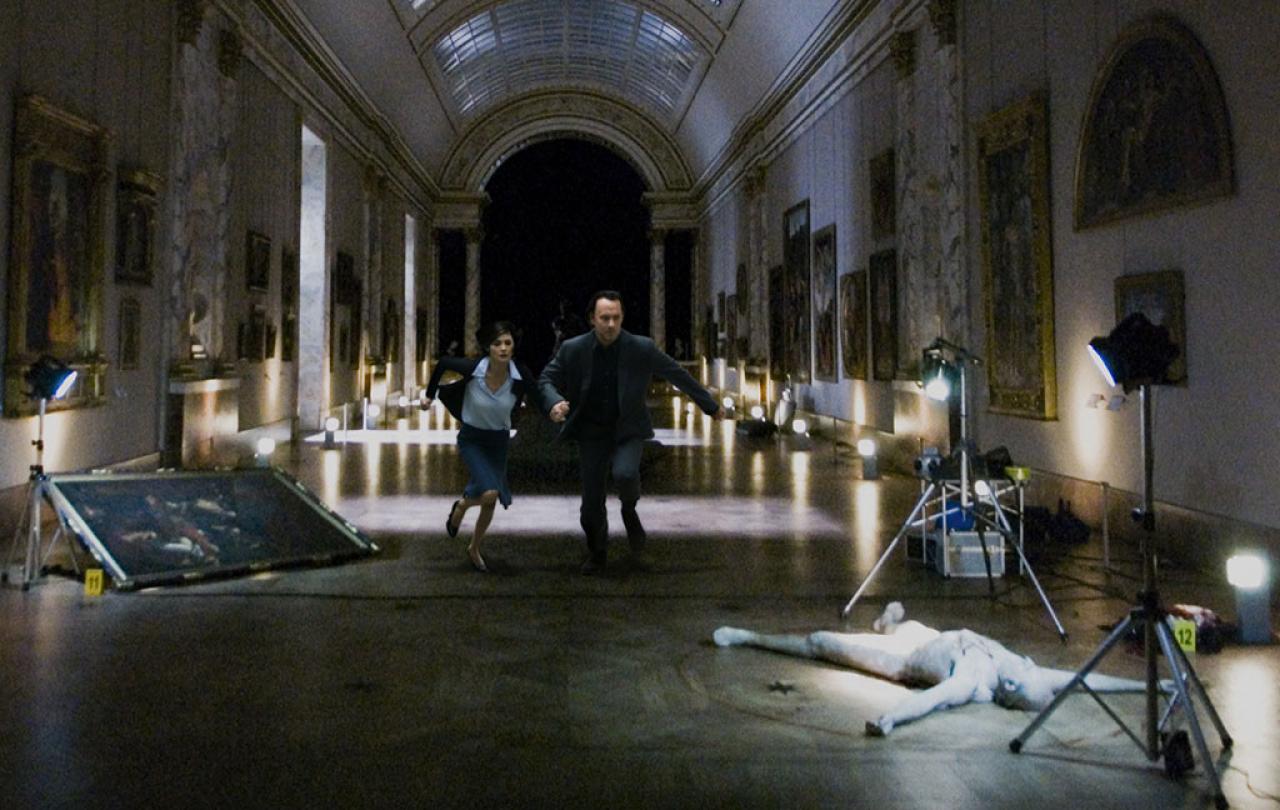
Two people run though a darkened art gallery towards a body lying amongst photography paraphanalia
Audrey Tautou and Tom Hanks, The Da Vinci Code.
Sony Pictures.

In the wake of the controversy over the Olympic opening ceremony, based as it was on a fundamental misunderstanding on the part of Christians as to what was being portrayed, you may be perplexed or confused by the different ways Christians respond to controversial art or media portrayals that are perceived to be an attack on core Christian beliefs. If that is you, here are some thoughts as to why it is that Christians react in a range of different ways.  

Our responses are always underpinned by depth of relationship with and commitment to Jesus, the one who has turned our lives upside down and filled us with his Spirit. Our sense of what it is that Jesus has done for us and what it is that relationship with Jesus means to us is the determinative factor affecting our response when we perceive the One we love and who loves us to have been maligned or mocked. 

For some, we feel a need to stand with or defend Jesus whenever we perceive that he is under attack, and we have seen that instinctive response apparent in reactions to the Olympic opening ceremony. However, instinctive emotive responses run the risk of pre-empting more reasoned or reflective responses. That has certainly been the case here, as what many Christians perceived to have been a parody of the Last Supper was not actually that at all. Instead, the sequence was a portrayal of the feast of Dionysius, so had nothing to do with the Last Supper at all.  

Christians, as here, are often too quick to make allegations of blasphemy without actually understanding what is being portrayed. I have, unfortunately, seen many similar examples within my lifetime. In the 1970’s and 80’s films like Monty Python’s Life of Brian and Martin Scorsese’s The Last Temptation of Christ resulted in thousands of Christians demonstrating outside cinemas, while Christian organisations, like the National Viewer’s and Listener’s Association headed by Mary Whitehouse, lobbied for those films to be banned.  

God does not need human beings in order to be defended, particularly from perceived mockery. 

However, interestingly, the release of The Da Vinci Code in 2006, although it dealt with similarly controversial material for Christians, did not result in mass protests. Instead, through seeker events, bible studies, websites and booklets, churches encouraged discussion of the issues raised by the film while clearly contesting the claims made about Christ and the Church. 

The protests against such films often did not tally with the content of the films themselves and displayed a lack of understanding of them, their stories and meaning. As Richard Burridge, a former Dean of King’s College London, has said of Life of Brian, “those who called for the satire to be banned after its release in 1979 were ‘embarrassingly’ ill-informed and missed a major opportunity to promote the Christian message”. Life of Brian portrayed the followers of religions as unthinking and gullible and the response of Christians to that film reinforced that stereotype.  

As a result, the Church had to learn again that the way to counter criticism is not to try to ban or censor it but to engage with it, understand it and accurately counter it. The Da Vinci Code events, bible studies, websites and the like that the Church used to counter the claims made in The Da Vinci Code featured reasoned arguments based on a real understanding of the issues raised, making use of genuine historical findings and opinion to counter those claims. These created a conversation with the wider community that was far more constructive than the kind of knee-jerk reactions we have seen to the opening ceremony of the Olympic Games. 

Some of these knee-jerk reactions derive from a sense, in the West, that the dominant place Christianity used to have in society has been eroded leading some to think that our values and beliefs are under threat. This reveals an underlying insecurity which it is surprising to find in those who believe that God is all-powerful and in control of human history. God does not need human beings in order to be defended, particularly from perceived mockery.  

Indeed, the reverse is the case, as, in Jesus, God deliberately entered human history to experience human life in all its facets, including real mockery and suffering, to show that such experiences are not defining and can be transcended through love and sacrifice. Such a God does not require those who follow to become defensive themselves when the path of mockery is actually the path to resurrection and renewal.    

Cultural comment is as much about love for neighbour as any other aspect of Christian life. 

So, what might a more constructive and productive response to controversies entail? Taking time to reflect and to understand what it is we are experiencing would be a much better place to start. The Olympic opening ceremony was a celebration of French culture, which highlighted images from the Louvre in particular. Leonardo da Vinci’s ‘Last Supper’ is in Italy and does not include a blue Dionysius. With some reflection and investigation, that would quickly have become apparent. Similarly, the scene to which Christians objected in The Last Temptation of Christ was just what it said on the tin, the last temptation Jesus faced. It was a temptation that he rejected, and the film was all the more powerful as a depiction of the incarnation as a result. 

Then, we can see that what the Christ who embraced human life through the incarnation calls us to is a charitable hermeneutic (how we interpret), when it comes to receiving, understanding and commenting on the culture around us. Cultural comment is as much about love for neighbour as any other aspect of Christian life. Our charitable hermeneutic was summed up for us by St Paul when he wrote of going through life looking for “whatever is true, whatever is honourable, whatever is just, whatever is pure, whatever is pleasing, whatever is commendable”. Sister Wendy Beckett, the cultural commentator who most recently has best exemplified this charitable hermeneutic achieving huge popularity as a result, wrote of “a beautiful secret … that makes all things luminous … a precious gift in this confused and violent world”.  

With the beautiful secret of a charitable hermeneutic, we might, perhaps, look again at the Olympic opening ceremony and appreciate the intent of Thomas Jolly, the artistic director behind the ceremony, when he said that religious subversion had never been his intention: “We wanted to talk about diversity. Diversity means being together. We wanted to include everyone, as simple as that.” 
 

Review
Culture
Film & TV
Romance
8 min read

Meet our top 5 rom coms for Valentine's Day

Love is the core of every truly good sweeping story.
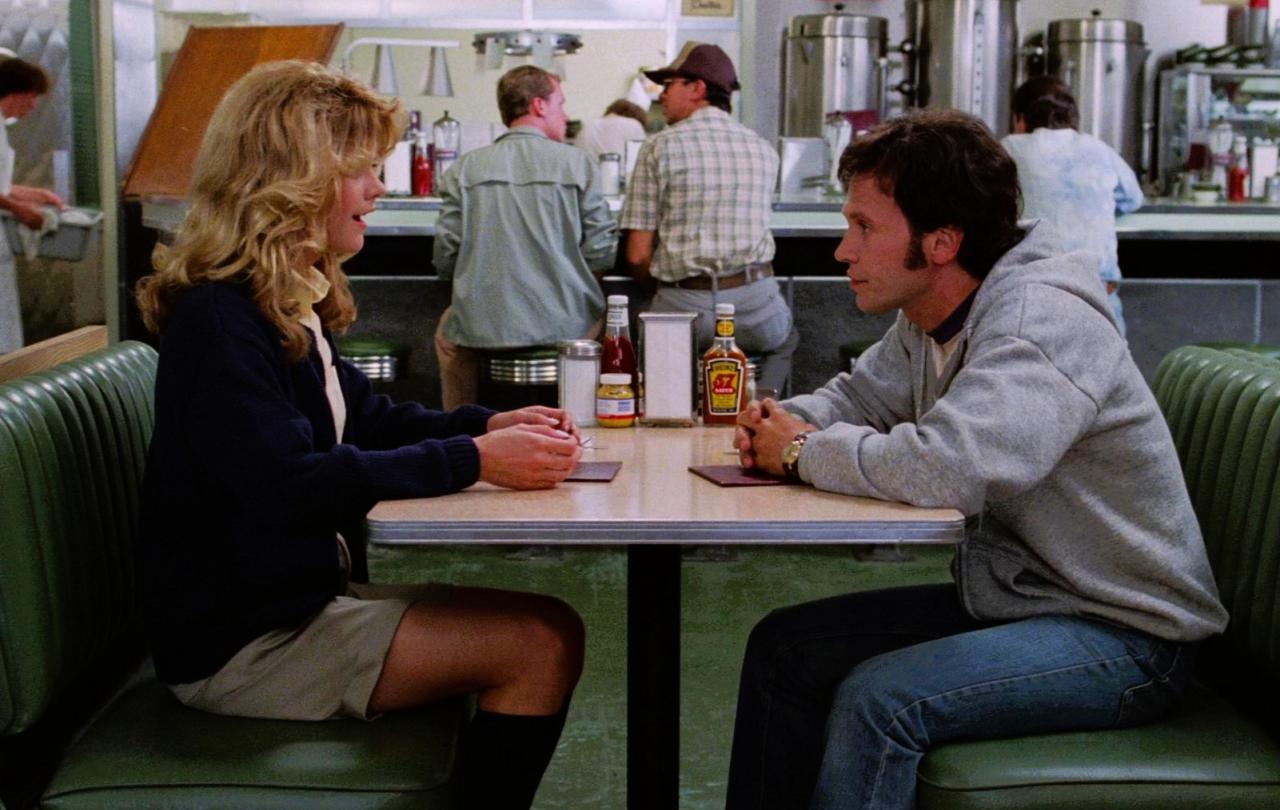
A couple sit at a table in a diner talking intensely.
Castle Rocl.

1. The Apartment

Billy Wilder’s directorial tour-de-force is a timeless classic – proof for the sceptical that black-and-white films lose nothing in their monotone. Comedy legend Jack Lemmon plays C.C. "Bud" Baxter, an office worker who desperately seeks preferment. He impresses his superiors by allowing them to use his Upper West Side apartment to entertain their mistresses away from the gaze of their wives. He is also desperately seeking love, in the person of elevator operator Fran Kubelik. The only problem is that she is spoken for – she is the mistress of the big boss. Baxter juggles his ‘apartment schedule’, the disapproval of his neighbours, and his sorrow at seeing Fran slip away. 

The script is the perfect combination of laughs and smiles. The performances are excellent, especially Lemmon’s balletic physical comedy (the spaghetti strained through a tennis racket scene stays with me like an old friend). The message is important: love hurts. The film resonates just as much now, in our world of HR and workplace boundaries, as it did then. Baxter, and ESPECIALLY Fran, are victims of those with power; except they don’t use violence or coercion to exert their control, they use the promise of acceptance, of love. Love is not a trifling emotion, as some of the most vapid frippery of Valentine’s Day may suggest, but the deepest motivation a human being can have – look at what Jesus does out of love. It is a dangerous thing when treated as instrumental and disposable, and can yield terrible and tragic results if abused. Thankfully, The Apartment ends on a note of hope and expectation…but it really has you on the edge-of-your-seat up until the end, and gives you and new appreciation for the sanctity of romance and love.  

2. Notting Hill

We had to have a Richard Curtis pic – I’m a patriot after all! Naturally Four Weddings is excluded because of that one…appalling…unforgivable line…OF COURSE ANDIE MACDOWELL NOTICED THAT IT WAS RAINING! 

Anyway. Notting Hill is such a lovely and gentle film. Hugh Grant is effortless as divorced and timid bookseller William Thacker. His life is comfortable yet a little empty, with his only real company being his unspeakable lodger Spike – Rhys Ifans in a career-defining role. His life is turned upside-down when Hollywood superstar Anna Scott (Julia Roberts) enters his shop, leaves, and then has him spill orange juice all down her front. Romance develops between the two but is continually stalled by the very different worlds they inhabit: Thacker lives a quiet life in Notting Hill, and Scott is a globe-trotting paparazzi-magnet who cannot seem to keep any aspect of her stage-managed life private. I won’t go into anymore of the plot, as you’ll know it even if you haven’t seen the film…it’s a National Treasure by now. 

The wonderful message of this film, other than London property prices were ludicrously generous back in the day, is that love is a feeling and a force that can cross any boundaries. This is a modern-day quasi-Romeo and Juliet: two people from seemingly incompatible worlds allowing their love to break down barriers and overcome obstacles…except here we have a happy ending! Love is the greatest leveller this world knows (there is no Jew nor Greek, slave nor free, man nor woman) – it is the equaliser of the human experience and fount of understanding, empathy, and mercy. 

3. Knocked Up

I’m afraid we move to less elevated fare and instead begin the descent into puerility. One can expect nothing less from director Judd Apatow, who has made his name by combining the compulsory schmaltz of a rom com with the sweary gross-out humour of our less-civilised age. Nevertheless, this film has real merit.  

Katherine Heigl is Allison Scott, an ambitious reporter for an entertainment news channel. She goes out to celebrate her well-earned promotion, has a little (or a lot-tle) too much to drink, and ends up having a one-night stand with aspiring internet celebrity pornographer Ben Stone (Seth Rogen). Their dalliance leads to the inevitable – pregnancy. Allison finds herself in the invidious position of having dinner with Ben, to inform him of her maternal state, only to realise that she finds him repulsive. He is everything she isn’t: she is ambitious, organised, and stable, while his greatest achievement is a collection of bongs and a potential website detailing moments of on-screen nudity. They are chalk-and-cheese…and yet they both decide to try and make their lives compatible to raise their child together. 

It's not a clever film, and the laughs are all guilty guffaws at over-the-top toilet humour, but it does have heart. It is the story of two people who don’t find love in a glance across a crowded room, or through a shared interest, but through a shared struggle. It is the story of two people who learn through difficulty, pain, and self-sacrifice what it means to live for another; even if that other person is yet to be born. At the centre of this film – after digging through tranches of (apparently hilarious) excrement – is the message that love is not instantaneous or easy, but something that is worked towards and maintained through giving up one’s own wants and pleasures for the good of another. I wonder which two-thousand-year-old story embodies this theme? 

4. The Princess Bride

The phrase ‘cult-classic’ might as well have been invented to describe this film. It is a mad-cap tale incorporating piracy, palace intrigue, and a giant. I…I…I can’t even try to give a plot synopsis. It goes all over the place, as if it where story-boarded by an over-imaginative seven-year-old who’s been given a surfeit of sugar (sorry William Goldman). The humour, essential for the ‘com’ to the ‘rom’, is more-often-than-not accidental, but humour there is in spades. Its silly, and its sweet, and its certifiable…but it works. 

What puts The Princess Bride in my Top 5 is the epic sweep of the film. I’m pretty certain it didn’t intend to be a rom com, but I count it as one, and so it is the only rom com that manages to also be a mythopoetic tale. Perhaps Shrek is in the same league…but I can’t forgive the sequels and the overuse of Eddie Murphy. The Princess Bride is a wonderful reminder that love is a great, epic, poetic, mythic, legendary force in the world. Love has started and ended wars, it has rewritten the tablet of history over and over again, and is not a ‘story’ that can be confined to a ‘meet-cute’ between two unreasonably attractive people in a New York coffee shop – it is the very language of reality, and so is the lens through which we must view not only ourselves and our immediate loved ones, but the whole of the universe and the whole of human history. Love is the core of every truly good sweeping story – especially that story that begins with the loving creation of heaven and earth, their salvation in the love of the Cross, and their reconstitution as the New Heaven and New Earth where love of God is the primary vocation of all. 

AAAAAND…it starts and ends with Peter Falk as a grandfather lovingly telling this story to his sick grandson…the heart melts… 

5. When Harry Met Sally…

In the kingdom of rom-coms Nora Ephron is the Empress to whom all others bow, and this is her greatest conquest! When Harry Met Sally… is epic in its sweep, but in a very different way to The Princess Bride. It is epic in that it is a love story that takes over a decade to play out. Harry Burns (Billy Crystal) and Sally Albright (Meg Ryan) meet by chance in 1977. Serendipity is at work: he is dating her best friend, and so, as a matter of convenience, the two share a car to journey from Chicago to New York. As in many rom coms their personalities couldn’t be more different, and although they share chemistry, Sally chafes at Harry’s confident assertion that men and women cannot be friends. The journey ends unhappily, and the two have no intention of every meeting again. 

Five years pass and the pair find themselves on the same flight. Serendipity strike again when Harry learns that Sally is dating his neighbour. The chemistry is sparking reactions, but when Harry suggests they become friends Sally declines, citing his previous assertion about male/female friendship. 

Another five years pass – and so a serendipitous meeting is in the diary – and there is a chance meeting in a bookshop. Both are now single and have faced the sting of love lost. They strike up a friendship. The friendship matures and deepens, and those around them can see that they are falling in love, yet their determination to be friends leads them to have romantic attachments to other people. This falls apart after a night of high-emotion and comfort turns into amorous passion. Their friendship is seemingly ruined, and both miserably start to live like without the other. 

UNTIL… 

On New Year’s Eve 1988 Harry realises that he cannot be whole or happy without Sally and runs to find her at a party, to declare his love for her in the greatest speech in rom-com history! The cinema cheers! What makes When Harry Met Sally… dear to my heart is that seeming serendipity I keep mentioning, because it teaches us a vital lesson about love. There is no true chance, no true serendipity in love. Love is the very glue that binds all creation together. The Scriptures, the great mystics of the faith, the very person of Jesus Christ, teach us that God is love and that this love is all and is in all. There is no coincidence in love – love really is what makes the world go round. In the end, just as Harry and Sally seemed destined to be together, we are destined to be united with God in love. 

I started this list a little sceptical and burnt-out with the romance of Valentine’s Day. Having reengaged with these five films I am revivified and reconverted to the great name of love. Love drives us, heals us, and ultimately embraces us in eternity. What a wonderful legacy for St Valentine to have.

Join with us - Behind the Seen

Seen & Unseen is free for everyone and is made possible through the generosity of our amazing community of supporters.

If you’re enjoying Seen & Unseen, would you consider making a gift towards our work?

Alongside other benefits (book discounts etc.), you’ll receive an extra fortnightly email from me sharing what I’m reading and my reflections on the ideas that are shaping our times.

Graham Tomlin

Editor-in-Chief